
Baked Mostaccioli with Italian Sausage
By Emma
Certified Culinary Professional
·
Recipe tested & approved
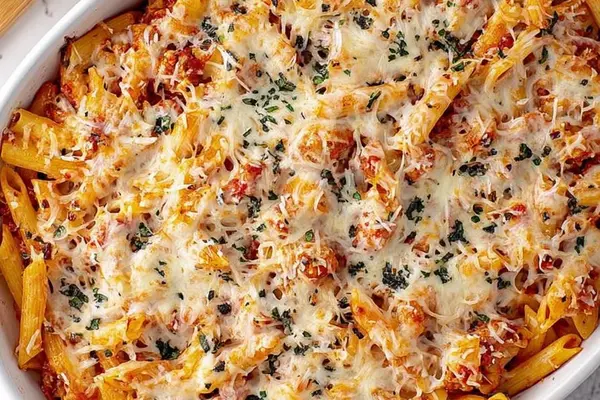
Baked mostaccioli layered with Italian sausage, creamy ricotta cheese, and melted mozzarella. This hearty pasta casserole feeds 10 and delivers comfort food at its best.
Prep:
18 min
Cook:
28 min
Total:
46 min
Servings:
10 servings
Boil water. Not just warm — rolling boil that sounds angry. Mostaccioli goes in when it’s loud, one minute before the box tells you. That bite matters.
Why You’ll Love This Easy Mostaccioli Recipe
Takes 46 minutes start to finish — 18 minutes of prep, 28 in the oven. Weeknight dinner that doesn’t feel rushed.
Comfort food in one dish. No sides needed. Sausage, cheese, pasta, sauce. It’s all there, and it works because the ricotta keeps everything creamy instead of baked-dry like some casseroles get.
Everyone eats it. Kids, adults, people who claim they don’t like ricotta. The fresh basil twist cuts through the richness so it doesn’t feel heavy.
Freezes well. Make two, eat one, freeze one. Reheat low and slow with a splash of water if needed — doesn’t dry out or turn rubbery like some baked pastas do.
One bowl gets dirty. Mostly. You mix the filling in that bowl, dump pasta in, layer it into the casserole. No fussy plating. Just scoop and serve.
What You Need for Baked Mostaccioli with Ricotta Cheese
One pound mostaccioli or penne. Tubular pasta works better here than long noodles — sauce sticks inside instead of sliding off.
Whole-milk ricotta. Not the part-skim stuff. Full fat makes it creamy when it bakes instead of turning grainy and tight.
One pound Italian turkey sausage, cooked and drained. Or ground beef. Or mushrooms if you’re going vegetarian — they brown up sweet and give you umami without meat.
Three cups marinara sauce. Jarred is fine. No sugar added is better, but it’s not a dealbreaker.
Two cups shredded part-skim mozzarella, split. Half goes in the mix, half on top for that golden crust that actually crackles.
One cup freshly grated parmesan. Not the green can. Real parmesan, grated fresh right before you use it — it melts different, tastes sharper.
Three cloves garlic minced. One small onion diced fine. A beaten egg. Garlic powder, onion powder, salt, pepper. Fresh basil — quarter cup chopped, and this matters because it keeps the dish from tasting one-note.
Olive oil for the pan. Two teaspoons for the pasta toss after draining.
How to Make Easy Baked Mostaccioli
Oven goes to 345°F. Not 350. Not 375. 345. It needs to heat steady while you’re doing everything else. Spray the casserole dish with cooking spray or oil. Gets annoying when cheese welds itself to the sides.
Pot of salted water gets hot until it’s actually boiling — you want that rolling thing happening, not a simmer. Mostaccioli goes in. Set a timer for one minute less than the box says. So if it says 10, pull it at 9. Al dente means it has a bite when you chew. Mushy is a mistake you can’t fix.
Drain it. Don’t rinse it. Toss it immediately with two teaspoons olive oil while it’s still steaming. Oil keeps every noodle separate so it doesn’t clump into a pasta brick when it cools. Skip this and you’ll regret it. Pasta gets starchy and sticks to itself.
How to Get Baked Mostaccioli Ricotta Perfectly Creamy
Big bowl. Whisk the ricotta with the beaten egg first. This makes the ricotta looser, creamier. It becomes actual glue that’ll bind everything together when it bakes instead of staying chunky and weird.
Fold in the minced garlic, diced onion, garlic powder, onion powder, salt, pepper, and parmesan. Don’t dump these in cold at the end. Fold them in now so they distribute evenly. Bland ricotta is its own kind of sad.
Mix in your cooked sausage — drain the fat off first unless you used turkey, which is lean already. Add the marinara sauce. This is where it gets thick and red and smells like dinner. Stir in the fresh basil. It’s a twist that saves you from that heavy, one-note cheese-and-tomato feeling. The herb is bright against all the richness.
Add the cooked mostaccioli. Fold it. Not stir it aggressively like you’re mad at it. Fold. Every noodle should get coated but not crushed. Add one cup of the shredded mozzarella and fold that through too. Mozzarella is the stretchy one. It holds the casserole together when it melts, keeps the texture from being dry.
Pour everything into the prepped casserole. Flatten the top a bit with a spatula but don’t press down like you’re making a pancake. You want layers with air in them so heat moves through evenly.
Dump the remaining one cup mozzarella on top. Spread it heavy and even. This is your crust. It’ll brown and bubble into patches of gold, get slightly charred at the edges. Watch it. This is what makes it good instead of just fine.
Mostaccioli Baked Recipe Tips and Timing
Oven’s at 345. Casserole goes in uncovered. Set a timer for 23 minutes but don’t trust it completely. At 23 minutes start looking. You want thick bubbling around the edges, golden patches spotting that cheese crust on top. The center should bubble slightly but not violently. When you tap the middle of the casserole, it should feel firm but still give a little if you press gently. Not jelly-wobble. Not rock-hard.
Bubbling and golden takes about 25 to 30 minutes total. Depends on your oven because every oven runs a bit hot or cold. Listen for the crackle and pop sounds — that’s when the cheese is doing its thing, structuring, getting set.
Pull it out. Let it sit 10 minutes before you dig in. The flavors settle. The texture sets up enough to slice clean instead of falling apart like soup. It’ll still be hot. Still pull strings of cheese.
Leftovers cool uncovered, then cover tight. Stays good in the fridge four or five days. Freeze in portions if you want — goes three months easy. Reheat low and slow in the oven at 300°F until it’s warm through, or microwave with a splash of water if you’re in a hurry. Low heat stops the mozzarella from turning rubbery and weird.
Best Mostaccioli Dish Variations and Swaps
Ground beef instead of turkey sausage works fine. Tastes richer, a bit heavier. Brown it same way, drain fat.
Mushrooms. Diced fine, sautéed until they’re dry and browned, mixed in with the ricotta filling. Umami punch without meat. Vegetarian and it actually works.
Part-skim mozzarella reduces the grease pool that sometimes sits on top. Some people like that. Some people prefer the full-fat richness. Both work. Full-fat tastes better. Part-skim is less heavy.
Fresh garlic and onion instead of the powders — use both, actually. Fresh garlic raw diced into the ricotta mix gives sharp bite. Garlic powder adds warmth. Same with the onion. Both together beats one or the other alone.
No fresh basil? Skip it rather than using dried. Dried basil in a baked casserole tastes like dust. Just don’t.
Sauce too thick when you mix everything? Stir in a bit of reserved pasta water — the starchy kind you drained off. Loosens the sauce, helps it coat every noodle evenly. Acts like glue.
Baked Mostaccioli with Italian Sausage
Prep:
18 min
Cook:
28 min
Total:
46 min
Servings:
10 servings
Ingredients
- 1 pound mostaccioli or similar tubular pasta
- 1 (15 ounce) container whole-milk ricotta cheese
- 2 teaspoons olive oil
- 3 cloves garlic minced
- 1 small onion finely diced
- 1 large egg lightly beaten
- 1 teaspoon garlic powder
- 1 teaspoon onion powder
- 1 teaspoon salt
- 1/2 teaspoon black pepper freshly ground
- 1 cup freshly grated parmesan cheese
- 1 pound Italian turkey sausage crumbled and cooked (sub ground beef or mushrooms for veggie)
- 3 cups marinara sauce (homemade or jarred, no sugar added preferred)
- 2 cups shredded part-skim mozzarella cheese divided
- 1/4 cup fresh basil chopped (twist addition)
- cooking spray or some olive oil for casserole greasing
Method
- 1 Preheat oven to 345°F let heat steady feel warm on skin from oven door. Spray casserole with olive oil mist or a slick layer of cooking spray. Important so cheese doesn’t stick to sides messing with clean out.
- 2 Bring big pot salted water to roar and wild boil. Cook pasta one minute less than package says. Al dente means toothsome bite, not mushy. Drain pasta well and immediately toss with 2 teaspoons olive oil to keep fingers separate and shiny. Never skip this or pasta balls up and dries out fast. Set aside to cool just a bit.
- 3 In large bowl, whisk ricotta with the beaten egg first. Makes it creamy glue to bind stuff later. Then fold in garlic, onion, garlic powder, onion powder, salt, pepper, and parmesan cheese. These aromatics punch up bland ricotta. Important step. Don’t dump seasonings in last minute or it's weak.
- 4 Mix in cooked cooked sausage meat (drained off fat unless turkey for lean), chopped basil, and marinara sauce. The fresh herb twist adds brightness against the thick cheese and tomato tang. Stir until mixture sings with color and texture.
- 5 Add pasta to that creamy, meaty mixture. Fold carefully. You want every noodle slicked but not smashed. Dump about 1 cup shredded mozzarella in and swirl evenly through. Mozzarella melts but also stretches, binds, holds casserole’s shape later — no desiccated pasta here.
- 6 Pour entire gooey bowl into the casserole dish. Flatten surface a bit with spatula but no pressing down like pancake. You want aeration in layers so bake cooks evenly.
- 7 Heavily layer the remaining 1 cup mozzarella evenly spread on top. It'll brown and bubble into golden crust—watch it closely. This step crucial for crunch and luscious cheese pull. Skip this and you lose texture fight.
- 8 Bake uncovered around 25-30 minutes. Start checking bubbles and golden edges at 23 minutes. Look for thick bubbling cheese on top and browned patches spotting crust edges. Tap center to feel firmness but still giving slightly. It should not wobble like jelly or be dry and cracked. These tactile clues beat timers.
- 9 Remove from oven. Let sit 10 minutes before serving for flavors to settle and easier slicing. If leftovers, cool fully uncovered then cover tight or double foil. Freeze in portions if needed. Reheat at low temp preventing drying or rubbery cheese. Add splash water if too dry in microwave.
- 10 Pro tips: Ground beef or mushrooms instead of turkey sausage cuts fat or adds umami. Use part-skim cheeses to reduce grease pool on top. Fresh garlic and finely diced onion give stronger flavor than powders but powders save time. Don't over stir after adding cheese or pasta breaks. Use a wide spoon or spatula for folding gently. If sauce too thick, stir in a bit of reserved pasta water—acts like glue and loosens sauce for even coating. Pasta cooked straight to Müller method often sticks; oil toss is life saver.
- 11 I learned to watch for the pop and sizzle sounds mid-bake — bubbling cheese layers crackle softly when structure ready. Avoid baked dryness by covering loosely with foil if you notice fast browning but cheese not bubbling enough. It’s a balancing game, experience tells when. Fresh basil added at mixing stage, never top, or it wilts ugly in oven. Visual cues also beat guess timing: bubbling and rich golden crust means done.
Nutritional information
Calories
410
Protein
25g
Carbs
38g
Fat
18g
Frequently Asked Questions About Mostaccioli Recipe Easy
Can I make this baked mostaccioli ahead of time? Yes. Mix everything, layer it in the casserole, cover it, stick it in the fridge for up to two days. Bake straight from cold — add about 5 minutes to the cook time. It’ll take a minute to come up to temperature.
What if the top browns too fast but the center isn’t bubbling enough? Cover it loosely with foil. This slows the browning on top while the inside keeps cooking. Uncover it for the last few minutes if you want that golden crust back.
Can I use a different pasta instead of mostaccioli? Penne works exact same way. Rigatoni too. Anything tubular that sauce can get inside of. Long noodles like spaghetti get weird because they don’t hold sauce right. Stick with the shapes.
How do I know when it’s actually done baking? Bubbling around the edges, golden patches on the cheese on top, the center feels firm when you tap it but still gives a little bit. Not wobbling. Not cracked and dry. It’s a feel thing more than a timer thing. Temperature-wise, 165°F in the center if you want to be exact.
Can I freeze the whole casserole before baking? Yeah. Assemble it, don’t bake it, freeze it uncovered until solid, then wrap tight. Bake from frozen — add 15 to 20 minutes to the cook time, maybe cover with foil partway through so the top doesn’t burn while the center catches up.
What if it comes out too dry? Probably cooked it too long or your oven runs hot. Next time pull it sooner. If it’s already cooked, drizzle a tiny bit of marinara on top when you reheat, or mix in a splash of pasta water. Doesn’t fix it completely but helps.
You’ll Love These Too
Explore all →
Maple Blueberry Quick Bread Recipe

Buffalo Chicken Stuffed Peppers Recipe
Butternut Pumpkin Pasta Sauce with Sage
Herbed Butter Board with Figs & Pistachios
Pumpkin Cake Cheesecake Recipe
Pecan Tart Bars with Marzipan & Toasted Nuts
Grilled Chicken Breasts with Honey Soy Marinade
Cheesy Risotto Arancinis with Taleggio

Copper Mule Drink Recipe with Bourbon

White Sangria Recipe with Strawberry & Pineapple
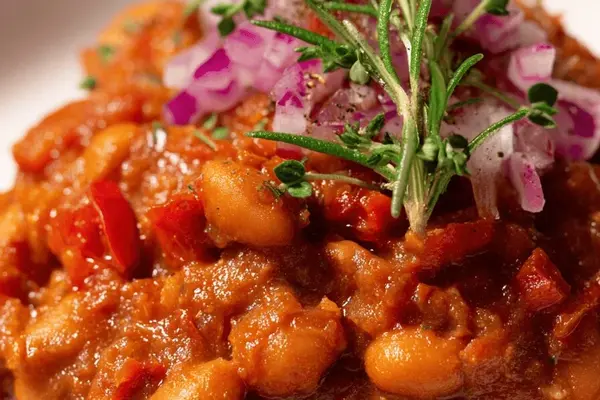
Pinto Bean Chili with Smoked Paprika
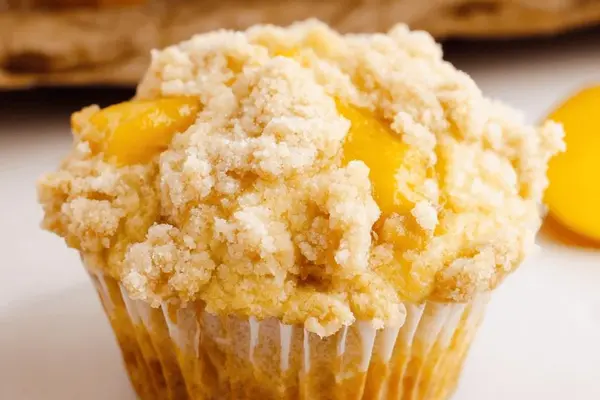
Peach Cobbler Muffins with Crumb Topping
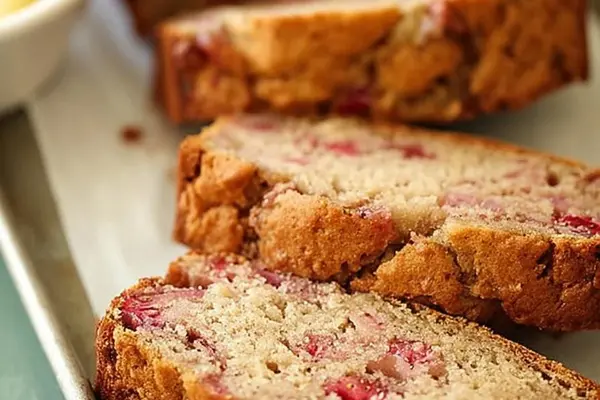
Easiest Bread Recipes: Strawberry Pecan
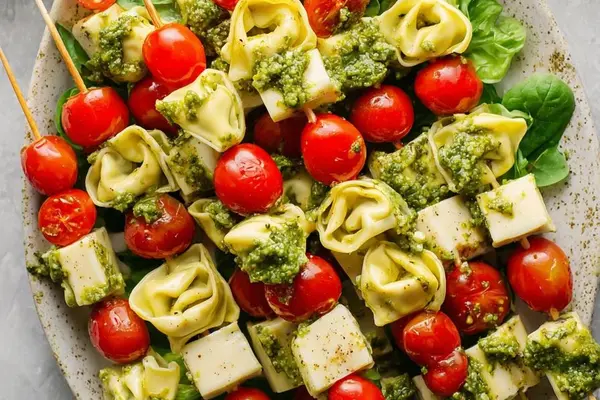
Lemon Arugula Tortellini Skewers with Mozzarella
Porta Bella Mushroom Recipe with Polenta
Savory Mushroom Rice with Butter & Wine
Chocolate Crepes with Whole Wheat Flour
Breakfast Burrito with Eggs, Mushrooms & Spinach
Apple Pie with Crescent Rolls & Sprite
