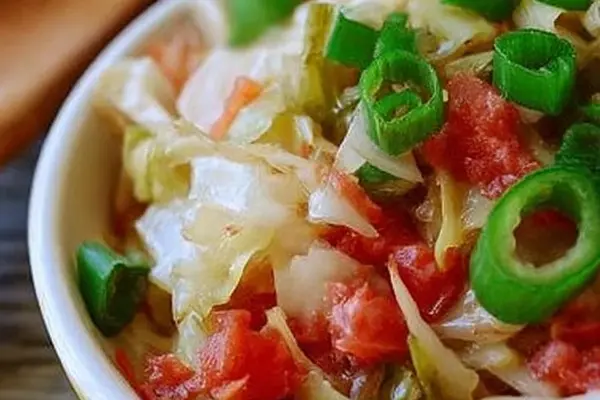
Cabbage Sauteed with Bell Peppers & Tomatoes
E
By Emma
Certified Culinary Professional
•
Recipe tested & approved
Cabbage sauteed with bell peppers, zucchini, and fresh tomatoes in butter. Quick, easy side dish that stays tender and flavorful, not soggy.
Prep:
12 min
Cook:
16 min
Total:
28 min
Servings:
4 servings
Melt the butter first. Medium heat. Let it foam but don’t let it brown — bitterness creeps in fast and ruins everything. This is your flavor base. Don’t skip it.
Why You’ll Love This Sautéed Cabbage
Takes 28 minutes total. Twelve to prep, sixteen to cook. No standing around. Works as a side dish for basically anything — grits, crusty bread, roasted chicken, whatever you’ve got. Doesn’t need much company. One skillet. One pan. Cleanup’s not nothing, but it’s fast. Southern vegetable that tastes better the next day, kind of. The flavors settle.
What You Need for This Sautéed Cabbage Recipe
Butter. Three tablespoons. Not oil. Butter changes everything here — that’s where the flavor lives. A medium green bell pepper. Diced. Not minced. One small zucchini. Also diced. Replaces onion usually — milder, earthier. Sweats into the pan instead of getting sharp. A medium head of cabbage. Shredded. Green works. So does red cabbage sautéed the exact same way — takes a minute or two longer. Two medium fresh tomatoes. Chopped. Not canned. Makes a difference. Salt. A tablespoon and a half. Freshly ground black pepper — three quarters of a teaspoon. Maybe more.
How to Make Sautéed Cabbage
Melt the butter in a wide skillet over medium heat. Watch it. Foam is good. Brown is disaster. Takes maybe 2 minutes. You’ll see it go from hard to liquid to foaming.
Add the bell pepper and zucchini next. Stir them around. Let them sit with the butter for about 4 to 5 minutes until they’re soft but still have some bite to them. Stir often — not constantly, just when you think about it. Listen for gentle sizzling. If it roars, heat’s too high. Drop it down.
How to Get Sautéed Cabbage Tender But Still Crisp
Now the cabbage. Toss it in handfuls. Stir constantly at first — you want it coated with butter, catching those little crackles when raw cabbage hits hot pan. That’s where flavor happens.
After the cabbage’s mixed in completely, add the chopped tomatoes. Stir. Let it go for around 15 minutes. Watch it change. Raw green goes translucent. Leaves collapse slightly. Juice comes out of the tomatoes and softens everything but doesn’t turn it to mush.
You’re looking for that balance — wilted but still with texture. Still juicy. Smell shifts too. Sharp raw veggie smell becomes something sweeter and deeper. That’s your signal.
Sautéed Cabbage Tips and Common Mistakes
Salt goes in near the end. Not at the start. Salt too early and it pulls water out of the cabbage and you end up with a soggy mess instead of something with body. Season after 14 minutes or so. Stir well so it’s even. Then let it sit off heat for a couple minutes while the salt settles.
Taste it. Adjust. Maybe more salt. Maybe pepper. If you’re feeling bold, a pinch of cayenne — just a pinch. Changes the whole thing.
Drain excess liquid if it pools. Shouldn’t happen if your heat’s right, but sometimes it does. Don’t panic. Just pour it off and turn heat up for 30 seconds to tighten it up.
Red cabbage sautéed takes a minute or two longer than green. It’s tougher. Same method. Same result. Purple cabbage too.
Cabbage Sauteed with Bell Peppers & Tomatoes
Prep:
12 min
Cook:
16 min
Total:
28 min
Servings:
4 servings
Ingredients
- 3 tablespoons butter
- 1 medium green bell pepper diced
- 1 small zucchini diced
- 1 medium cabbage head shredded
- 2 medium fresh tomatoes chopped
- 1 1/2 teaspoons salt
- 3/4 teaspoon freshly ground black pepper
Method
- =Step 1=
- 1 Melt butter over medium heat in a wide skillet or Dutch oven. Should foam lightly but not brown. The butter is your flavor base here; don’t rush the melting stage or burn it, or bitterness creeps in.
- =Step 2=
- 2 Add bell pepper and zucchini next. Zucchini replaces the usual onion for a milder, earthier note. Let them sweat, stirring often, about 4 to 5 minutes until soft but still with some bite. Listen for gentle sizzling. If it’s roaring, the heat’s too high.
- =Step 3=
- 3 Toss in the shredded cabbage in handfuls. Stir to coat with butter and catch those lovely little crackles as cabbage hits the heat. Add the chopped tomatoes after you’ve mixed cabbage thoroughly. Cook until cabbage is tender but still slightly crisp and juicy; usually around 15 minutes. No mush here. Look for a slight translucence and gentle collapse but not total breakdown.
- =Step 4=
- 4 Season gently with salt and pepper near the end. Salt too early can draw too much water out–watch texture carefully. Stir well to distribute seasoning evenly. Let flavors marry a few minutes off the direct heat.
- =Step 5=
- 5 Taste. Adjust salt, pepper. Maybe a pinch of cayenne if you’re feeling bold. Serve immediately with something robust enough to stand up to its boldness — maybe grits or crusty bread.
- 6 Common signals to watch: the smell transforming from sharp raw veggies to sweeter sautéed notes, the slight wilt of cabbage leaves, and no excessive liquid pooling. If it looks soggy, turn up heat briefly or drain excess moisture next time.
Nutritional information
Calories
120
Protein
2g
Carbs
8g
Fat
10g
Frequently Asked Questions About Sautéed Cabbage Recipe
Can I use oil instead of butter for this sautéed cabbage? Oil works. Tastes different. Not as good, but it works. Cabbage will still soften. Won’t have that butter richness at the end.
How do I know when the sautéed cabbage is done? It stops looking raw. Leaves go translucent. Still has a slight crunch. Doesn’t fall apart when you stir. That’s done. Usually takes around 15 minutes but depends on your heat and how thick you shred it.
Can I make sautéed cabbage with bacon? Yeah. Cook the bacon first, pull it out, use the fat instead of some of the butter. Crumble it back in at the end. Different dish but good.
What’s the best sautéed cabbage recipe if I want it softer? Just cook it longer. 20 minutes instead of 15. Let it collapse more. Stir it less — less stirring means less breaking apart, more time to soften. Either way works.
Does this sautéed cabbage recipe work cold the next day? Yeah. Probably better. Flavors settle. Texture gets softer overnight. Serve it cold or reheat it. Both fine.
Can I add more vegetables to this sautéed cabbage? Sure. Carrots work — add them with the pepper. They’ll take the full time. Mushrooms too, but add them after the pepper’s soft. Napa cabbage sautéed works the same way as green — just adjust time down a bit, it’s thinner.
You’ll Love These Too
Explore all →
Sesame Salmon Edamame Bowl Recipe

Maple Rosemary Twist Cocktail Recipe

Crispy Fried Calamari Rings with Panko

Nacho's Pulled Pork Egg Rolls Recipe

Easy Tomato Soup with Roasted Red Peppers

Nutritional Yeast Popcorn with Lime Zest
Monster Cookie Bars with Oats & M&Ms

Blue Lagoon Cocktail Recipe
Simple Fudge Recipe with Condensed Milk

Maple Buttercream Cake with Cinnamon
Spicy Penne Pasta with Merguez and Harissa
Vegetable Broth Recipe with Smoked Paprika

Veggie Wraps with Grilled Tofu & Sesame Mayo

Pasta Jar Mix with Sun-Dried Tomatoes

Ginger Chicken Fried Rice with Mushrooms
Asparagus Soup with Poached Eggs

Roasted Sweet Potatoes with Smoked Gouda
Buttermilk Herb Vinaigrette with Fresh Dill

Chicken Casserole with Sweet Potatoes