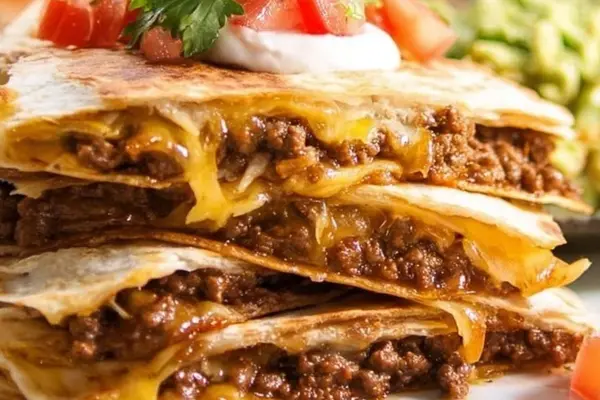
Cheesy Beef Quesadillas with Ground Beef
By Emma
Certified Culinary Professional
·
Recipe tested & approved
Cheesy beef quesadillas made with ground beef, tomato sauce, and sharp cheddar cheese in buttered tortillas. Crispy, melty, and ready in 20 minutes.
Prep:
7 min
Cook:
17 min
Total:
24 min
Servings:
4 servings
Lay tortilla flat in the skillet. Handful of cheese. Beef on top. More cheese—that’s what holds it together. Second tortilla over it all. Watch the bottom get crispy before you flip. 24 minutes total from cold pan to eating.
Why You’ll Love This Cheesy Beef Quesadilla
Tastes like you put effort in when you didn’t. Comes together in under 25 minutes—beef cooks while you breathe. Melty and crispy at the same time. Not just one or the other. Leftovers reheat fine. Cold they’re kind of better, actually. Spicy enough if you want it, mild if you don’t. Red pepper flakes do the thinking for you.
What You Need for Cheesy Beef Quesadillas
A pound of ground beef. Ground turkey works. Not quite the same but close.
Garlic paste. Minced fresh garlic if you have it—same thing, slightly more work.
Onion powder. A teaspoon. Sounds small but it matters.
Salt. Three quarters teaspoon. Kosher, not table.
Tomato sauce. Two tablespoons. Canned diced tomatoes work—just drain them first, mash them up a bit.
Red pepper flakes. Half teaspoon to start. Go higher if you like heat. Go lower if you don’t. This is where the spice lives.
Four large flour tortillas. Soft ones, not the crispy kind.
Sharp cheddar. Two cups shredded. Monterey Jack works if you want it milder—swap half and half if you’re unsure.
Butter. A tablespoon total. Not oil. Butter.
How to Make Cheesy Beef Quesadillas
Get a large skillet hot on medium. Throw the ground beef in. Don’t touch it. Let the bottom crust up and brown. This takes maybe three minutes.
Break it up with a spatula. Stir it around. Cook it until there’s no pink left—another three, four minutes. The color goes from red to brown all the way through.
Drain the fat off. Too much grease and the quesadilla gets soggy, falls apart when you flip. You want some of it. Just not a puddle.
Put the beef back in. Garlic paste goes in now. Onion powder. Salt. Tomato sauce. Red pepper flakes. Stir it hard until everything gets coated and you can’t see the beef plain anymore.
Let it bubble. Turn the heat down to medium-low. Let it sit for five minutes. The sauce thickens. The smell gets sharper. The beef darkens a bit more.
While that’s happening, get another large skillet going on medium-low. This is your cheese skillet. Add half a tablespoon of butter. It should foam right away but not turn brown. Swirl it around so the whole bottom gets covered.
How to Get Crispy Cheesy Beef Quesadillas
Lay one tortilla flat in that buttered skillet. Grab a handful of cheese—scatter it all over. Rough, that’s fine. Then the beef mixture. Then more cheese on top. That cheese is the glue. It has to coat the top tortilla too or the filling falls out when you flip.
Place the second tortilla on top. Press down gently. Don’t smash. Just enough to make it stick.
Spread the remaining butter over the top tortilla with a spatula or a brush. Go light. Just enough to make it crisp up.
Don’t move it. Let it sit there for maybe three minutes. Watch the edges—they’ll start to look crispy and golden. The cheese starts bleeding through to the outside if you look close. The bottom gets golden brown and holds together when you move the spatula around underneath.
Flip it. Fast but careful. The filling wants to shift. It won’t if you’re confident.
Cook the second side until it’s equally golden. The cheese melts all the way through. Press it lightly for even heat—especially in the middle where cheese pools sometimes.
It comes out. Rest it for two minutes. The cheese sets and firms up a bit. Makes slicing easier. Keeps your hands from burning off.
Do it again. Second quesadilla. Same amount of butter, same beef, same cheese.
Cheesy Beef Quesadilla Tips and Common Mistakes
Too much filling and it bursts when you flip. Filling and cheese—that ratio matters. The cheese holds it. The filling is bonus.
Butter matters. Oil makes it different. Brown butter makes it nutty. Stick with regular butter foaming in the pan.
Don’t flip early. The bottom needs to be crispy and set or the whole thing falls apart. Seriously. Wait. Count to three. Then flip.
Cheese won’t all melt if your heat’s too high. Medium-low is the speed. Crust happens, interior melts. Both happen at medium-low.
Ground turkey is leaner. It doesn’t brown the same way. Needs a bit more time. Not a bad thing, just different.
The beef mixture can be made the day before. Keeps in the fridge. Reheat it gently before building the quesadillas.
Leftover quesadillas reheat in a dry skillet on low heat—about two minutes per side. Butter’s optional. They crisp back up without it.
Cheesy Beef Quesadillas with Ground Beef
Prep:
7 min
Cook:
17 min
Total:
24 min
Servings:
4 servings
Ingredients
- 1 pound ground beef (sub ground turkey for leaner option)
- 1 teaspoon garlic paste (can use freshly minced garlic)
- 1 teaspoon onion powder
- 3/4 teaspoon salt
- 2 tablespoons tomato sauce (sub with canned diced tomatoes, drained, mashed)
- 1/2 teaspoon red pepper flakes (adjust to heat tolerance)
- 4 large flour tortillas
- 2 cups shredded sharp cheddar cheese (swap half cheddar half Monterey Jack for milder flavor)
- 1 tablespoon butter (for skillet)
Method
- 1 Heat large skillet over medium heat. Add ground beef. Let it sit undisturbed until edges start to brown. Break up with spatula, continue cooking until beef loses pink. Drain excess fat carefully—too much grease ruins texture.
- 2 Return beef to pan. Toss in garlic paste, onion powder, salt, tomato sauce, red pepper flakes. Stir vigorously to get everything coated. Let it bubble, reduce heat to medium-low. Simmer 5 minutes. Beef should darken, sauce thickens slightly, aroma sharpens.
- 3 Meanwhile, preheat a separate large skillet on medium-low. Add half tablespoon butter. Butter should foam immediately but not brown. Swirl to coat surface.
- 4 Lay tortilla flat in skillet. Scatter handful of cheese evenly, add beef layer, top with more cheese—the glue holding it all. Place second tortilla over filling carefully.
- 5 Spread remaining butter over top tortilla gently with spatula or brush. Let it cook undisturbed several minutes. Watch edges crisp, cheese starts melting through if you squint. When bottom tortilla is golden brown and stable, time to flip.
- 6 Flip quesadilla fast but carefully to keep filling intact. Cook second side until equally golden and cheese fully melted. Press quesadilla lightly for even heating.
- 7 Remove from pan. Rest 2 minutes (cheese sets, easier slicing). Repeat for remaining quesadillas with remaining butter and ingredients.
Nutritional information
Calories
1129
Protein
61g
Carbs
38g
Fat
81g
Frequently Asked Questions About Cheesy Beef Quesadillas
Can I use a different cheese? Monterey Jack. Oaxaca if you can find it. Muenster works. Stay away from anything too soft or it won’t hold a shape.
How spicy is this? Half a teaspoon of red pepper flakes is medium. Maybe mild depending on the flakes. Double it if you want heat that hits. Leave it out entirely if you’re cooking for someone who doesn’t like spicy.
Can I make these ahead? The beef mixture—yes. The quesadillas themselves—no. They get soggy. Make the filling, refrigerate it, assemble and cook when you’re ready to eat.
Why does mine fall apart when I flip? Not enough cheese. The cheese is what keeps it together. More cheese than you think you need.
Can I use corn tortillas instead? They work differently. Corn is more fragile. They don’t crisp the same way. Try it if you want—just be extra careful on the flip.
What’s the best way to serve this? Sour cream on the side. Salsa if you have it. Fresh cilantro. Lime wedge. All optional. Stands on its own fine.
Can I double the recipe? Yeah. Make more beef filling. Cook quesadillas one at a time—they need the attention. Stacking them keeps them warm.
You’ll Love These Too
Explore all →
Coconut Panna Cotta with Dark Spiced Rum
Chocolate Brownies with Espresso and Mini Chips
Cauliflower Couscous with Pistachios
Basmati Chicken Stir-Fry with Peanuts
Nordic Shrimp Tartare Salad with Asian Pear
Blueberry Danish with Cream Cheese & Lemon
Menchie Frozen Yogurt Popsicles Recipe

Spice and Hot Chocolate with Cinnamon
Hot Honey Mustard Sauce Recipe
Caramelized Onion Dip with Feta & Cream Cheese
Kumara and Potato Salad with Chicken
Slow Braised Brisket with Red Wine & Beef Stock
Fudgy Brownies with Black Beans & Cocoa
Maple Ginger Pork Chops With Quinoa
Marshmallow Hot Chocolate Cubes Recipe
Chicken Tacos with Chipotle & Mango
Homemade Reese's Peanut Butter Cups Recipe
Chicken Chorizo Olive Skewers Grilled
Sausage Egg Cheese Crescent Rolls