Chocolate Marshmallow Roll Recipe
By Emma
Certified Culinary Professional
·
Recipe tested & approved
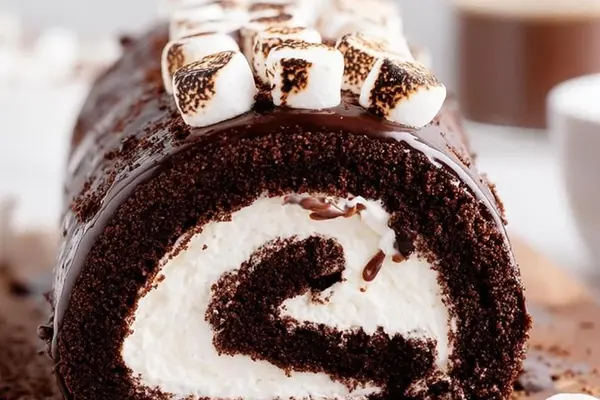
Chocolate marshmallow roll with cocoa sponge cake, marshmallow fluff buttercream, and mini marshmallows. Rolled tight, chilled firm, and ready to slice.
Prep:
30 min
Cook:
12 min
Total:
4h 40min
Servings:
10 servings
Warm cake. Marshmallow in the middle. Chocolate on top. Four hours and forty minutes total, most of it just sitting in the fridge.
Why You’ll Love This Chocolate Marshmallow Roll
Tastes like something you’d buy at a bakery. Costs maybe five bucks to make. The cake part stays soft — spongy, really — even after days. Doesn’t dry out like regular sheet cakes. Mini marshmallows melt into the filling. Creates these pockets of gooey sweetness that hit different. Looks fancy enough to serve at dinner. Isn’t complicated. Just feels that way. Actually improves overnight. The flavors flatten together into something better than the day you made it.
What You Need for a Chocolate Marshmallow Roll
Flour. Cocoa powder. Baking powder. Salt. Standard stuff.
Eggs — four of them. Room temperature works better but cold doesn’t wreck it.
Sugar. Three quarters cup in the cake. Three cups in the frosting. Yeah, it’s a lot.
Vegetable oil. Coconut oil if you have it, but vegetable’s cleaner here. Doesn’t fight the chocolate.
Vanilla. Two different kinds actually — regular vanilla in the cake, clear vanilla in the buttercream. Keeps the frosting white instead of beige.
Butter. Half a cup. Room temperature. Non-negotiable. Cold butter won’t blend with the marshmallow fluff.
Marshmallow fluff. Seven ounces. That’s the jar kind, the stuff that comes pre-whipped. Half a cup of mini marshmallows for inside, plus more for the top.
Half and half. Four tablespoons to start, adjust from there. Controls how thick the frosting gets.
Chocolate syrup for drizzling. Just pick one. Doesn’t matter which brand.
Parchment paper. Spray. Powdered sugar for dusting. The unglamorous stuff that actually matters.
How to Make a Chocolate Marshmallow Roll
Heat your oven to 345. Not 350 — 345. The lower temp bakes more evenly, especially on a thin sheet. Line the jelly roll pan with parchment, spray it lightly. Parchment’s the whole game here. Without it, you’re peeling cake.
Sift together flour, cocoa powder, baking powder, salt. Sounds fancy. It’s just breaking up lumps so the batter mixes right. Do it in a bowl.
Beat eggs, sugar, oil, and vanilla on high. Actually high. Five to six minutes. The mixture should go pale yellow and thick. You’re trying to whip air into this. If you skip that step, the cake stays dense. Doesn’t work.
Fold in the flour mixture. Use a spatula. Fold slowly. This is where people panic and stir, which deflates everything. Just fold. Slowly. Until you don’t see white streaks anymore.
Pour into the pan. Use an offset spatula to smooth it. The more even it spreads, the more even it bakes. Tap the pan once on the counter. Gets rid of air pockets.
Bake for eleven to thirteen minutes. Watch the edges. They should pull slightly away from the sides. The top should look set with no jiggle in the middle. Overbake by a minute and it gets dry fast.
Pull it out. Run a knife around the edges right away while it’s hot. This stops it from sticking.
Now the weird part. Dust a clean kitchen towel with powdered sugar. Seriously coat it. Don’t skimp.
Place the towel face down on top of the hot cake. Flip the whole thing. Cake lands on the towel. Parchment stays on top for a second.
Peel the parchment off slowly. If it sticks, use a little steam from a kettle or just ease it up gently. Torn edges don’t matter. You’re rolling it anyway.
Dust the top with more powdered sugar.
How to Get a Perfect Chocolate Marshmallow Roll
Start rolling from the short end while it’s still warm. Warm cake rolls without cracking. Roll it up like a sleeping bag, firm but not aggressive. Set it down still rolled and let it cool completely. Cooling it in the rolled state sets the shape.
Once it’s cool, make the frosting. Beat room temperature butter and clear vanilla together for about a minute and a half. Should look creamy.
Add the marshmallow fluff. Beat for another minute. It’ll look thick and sticky and kind of lumpy at first.
Add powdered sugar slowly. Half cup at a time. Alternate with the half and half. Keep the speed medium so you don’t coat your kitchen in sugar dust. The frosting should be thick but spreadable. Not like concrete. Not like soup. Somewhere in between. You control this by adjusting the half and half. Need it thicker? Skip the next splash. Need it looser? Add a tablespoon more.
Unroll the cake slowly. Cracks happen. They’re fine. Nobody sees the inside of a roll.
Spread the frosting evenly over the whole thing. Use the offset spatula. Stay away from the edges a little — if frosting goes all the way to the edge, it squishes out when you roll.
Scatter mini marshmallows all over the filling. Not packed tight. Just scattered. They melt slightly into the frosting later, which is the whole point.
Roll it back up. Firmly but gently. Wrap it tight in plastic wrap.
Chill it. At least four to six hours. Better overnight. The buttercream firms up so slicing stays clean instead of smushed.
Chocolate Marshmallow Roll Tips and Common Mistakes
The sponge cake fails if you don’t whip the eggs enough. People rush this. Don’t rush it. Five minutes minimum. The batter needs to be pale and thick or the cake stays heavy.
Some people fold in the flour too aggressively. They stir it. The cake ends up dense. Fold means fold. Use a spatula. Turn the bowl. Fold. Turn again. Takes thirty seconds longer. Matters.
Overbaking kills it. Thirteen minutes is the max. The cake keeps cooking a tiny bit after it comes out, so pull it when the top looks barely set.
The rolling works because the cake is warm. If you let it cool first, it cracks. Do the towel flip immediately. The warmth helps.
Mini marshmallows are smaller than regular marshmallows. Use mini. Regular ones are lumpy in the frosting.
Don’t skip the chilling. Four hours minimum. Overnight is better. The buttercream sets up and the flavors settle together.
Slicing works best with a serrated knife. Dip it in hot water, wipe it dry, slice, dip again. Warm knife cuts through buttercream without dragging.
Chocolate Marshmallow Roll Recipe
Prep:
30 min
Cook:
12 min
Total:
4h 40min
Servings:
10 servings
Ingredients
- 1 cup all-purpose flour
- 1/3 cup unsweetened cocoa powder
- 1 tsp baking powder
- 1/4 tsp salt
- 4 large eggs
- 3/4 cup granulated sugar
- 1/4 cup vegetable oil (can substitute melted coconut oil but watch flavor)
- 1 tsp vanilla extract (or clear vanilla if you want no color)
- powdered sugar for dusting
- 1/2 cup unsalted butter, room temperature
- 1 tsp clear vanilla flavoring
- 7 ounces marshmallow fluff (substitute with homemade marshmallow cream if needed)
- 3 cups powdered sugar
- 4 tbsp half and half (adjust for desired buttercream consistency)
- 1/2 cup mini marshmallows (plus extra for garnish)
- chocolate syrup for drizzling
- nonstick spray for pan
- parchment paper to line pan
Method
- Chocolate Sponge Cake
- 1 Preheat oven to around 345°F for more even heat; line a 10x15x1 jelly roll pan. Parchment paper is vital for peeling later, spray lightly over it.
- 2 In a bowl, sift together flour, cocoa powder, baking powder, salt. Whisk to mix evenly—lumps ruin the crumb.
- 3 In a large bowl, beat eggs, sugar, oil, and vanilla on high for 5-6 minutes. Look for thick, frothy, pale yellow. If skipped, batter won’t hold air.
- 4 Gently fold flour mixture into eggs. Use a spatula, fold slowly but thoroughly—don't deflate the batter. Keep air bubbles alive.
- 5 Pour batter evenly into the pan. Use offset spatula for smoothness; important so cake bakes uniformly. Tap pan once on counter to release trapped air.
- 6 Bake ~11-13 minutes. Watch the edges—they pull slightly from pan when done, top looks set with no jiggle. Overbaking dries sponge out fast.
- 7 Remove from oven. Run a knife around edges to loosen the cake immediately.
- 8 Dust a clean kitchen towel liberally with powdered sugar—don’t skimp. This stops sticking when rolling.
- 9 Place the sugar-dusted towel face down on cake immediately. The warmth helps sugar stick to pan and sponge without tearing.
- 10 Cover with a large cutting board or flat sheet pan. Use oven mitts. Quickly flip the whole setup so cake rests on towel, pan upside down on the board.
- 11 Slowly peel parchment paper off the cake. If it sticks, ease with a little steam or gentle tug but be gentle to avoid tears.
- 12 Dust top of cake with more powdered sugar to keep surface dry and ready for rolling.
- 13 With short end of towel, begin rolling the cake up gently but firmly. Roll while warm helps avoid cracks. Set aside to cool completely rolled.
- Marshmallow Buttercream
- 14 Beat softened butter and clear vanilla on medium-high for about 1-1.5 mins till creamy. Scrape bowl sides.
- 15 Add marshmallow fluff, beat 1 min more until fully combined. Texture thick and sticky.
- 16 Slowly add powdered sugar in ½ cup increments, alternate with half and half. Lower speed when adding sugar—avoid powder cloud. Adjust half and half to get spreadable but not runny consistency.
- Assembly
- 17 Unroll the cooled cake slowly; some cracks are normal, don't fret.
- 18 Spread buttercream evenly over cake using offset spatula, avoid edges to prevent filling from oozing out.
- 19 Scatter mini marshmallows evenly on the filling. They melt slightly into filling later, giving patches of gooey sweetness.
- 20 Re-roll cake gently but firmly to maintain shape. Wrap tightly in plastic wrap.
- 21 Chill at least 4-6 hours, preferably overnight. Chilling firms up buttercream, makes slicing neat.
- 22 Before serving, drizzle chocolate syrup over the top and sprinkle extra mini marshmallows for decoration and texture contrast.
- 23 Slice into ten ~½-inch pieces. Use serrated knife for clean cuts.
Nutritional information
Calories
513
Protein
4g
Carbs
78g
Fat
23g
Frequently Asked Questions About Chocolate Marshmallow Roll
How long does this last in the fridge? Four or five days. Stays soft the whole time. Might get a little denser by day four, but still good. Freezes fine too — up to a month wrapped tight in plastic.
Can I use regular marshmallows instead of fluff? Not the same thing. Fluff is already whipped and light. Regular marshmallows would need blending first and honestly, not worth the effort. Just get the fluff.
What if my cake cracks when I roll it? Cracks happen. Roll it anyway. The frosting hides everything. If it’s falling apart, you either overbaked it or didn’t roll while warm. Next time, don’t skip the warm rolling part.
Do I have to use clear vanilla in the frosting? No. Regular vanilla works. The frosting just comes out beige instead of white. Tastes identical. Looks different though.
Can I make this ahead? Yeah. Make it a day or two before. Wrap it tight. The flavors actually get better overnight. Just don’t slice it until you’re ready to serve. Whole roll keeps better than sliced pieces.
What’s the difference between vegetable oil and coconut oil here? Coconut oil adds a coconut taste. Vegetable oil doesn’t add anything, just makes the cake tender. Pick vegetable oil if you want pure chocolate. Coconut oil if you want a hint of coconut. Both work.
How many pieces does this make? About ten if you’re doing half-inch slices. Maybe eight if you’re hungry. Depends how you cut it.
Can I skip the mini marshmallows in the filling? Sure. Frosting’s good on its own. The marshmallows just add texture and sweetness. If you skip them, you’ve still got a solid chocolate roll.
You’ll Love These Too
Explore all →
Shrimp in Coconut Curry with Eggplant
Slow Cooker Pork Tenderloin in Chianti
Vegetarian Lasagna with Ricotta and Zucchini
Grilled Yakitori Chicken Wings
Moroccan Lentil Chickpea Stew with Saffron
Pork Terrine with Blackcurrant Liqueur
Curried Chicken Toasts with Cucumber
Almond Pound Cake with Lemon Zest

Cookies With Lemon Glaze: Vegan Royal Icing

Mediterranean Chicken Crescents with Feta
Caramel Sheet Cake with Espresso & Brown Sugar
Citrus Mousse Cookies with Finger Lime
Taco Chicken in a Crock Pot
Piña Colada Recipe with Rum and Coconut Cream
Maple Glazed Oatmeal Cookies with Cinnamon
Recipe For Bean Salad With Wild Rice
Cauliflower Gratin with Spelt Grains
Lobster Croque-Monsieur with Béchamel Sauce
Lentejas Soup with Beef & Mushrooms