Peppermint Bark Ice Cream Recipe
By Emma
Certified Culinary Professional
·
Recipe tested & approved
Crush peppermint candies between towels with a rolling pin. Large shards, not powder. That crunch matters.
Why You’ll Love This Peppermint Bark Ice Cream
No bake, no fuss, ready in 40 minutes total. Tastes like the Haagen Dazs peppermint bark you’d pay $8 for, except you made it in your kitchen for three dollars. Chocolate sets up fast so you’re not standing around waiting. The candy cane bark gets that rustic shard thing going—uneven, textured, looks expensive. Cold texture contrast works. Crispy shell, soft underneath. Stores forever if you don’t eat it first.
What You Need for Homemade Peppermint Bark
Dark chocolate. Three cups of melts or semi-sweet chunks. White chocolate same amount. Peppermint oil—the real stuff, not extract. Half a teaspoon minimum, maybe a full teaspoon depending on the brand. Twelve hard peppermint candies, the classic round kind. Waxed paper or parchment. That’s it. No cream, no eggs, no complications.
How to Make Peppermint Bark Ice Cream
Set the hard candies in a ziplock between paper towels. Crush them with a rolling pin. Don’t pulverize. You want visible shards that catch light and crunch when you bite down. Powder goes bitter and disappears into the chocolate. Shards stay interesting.
Spread waxed paper flat on a cookie sheet or counter. Keep it smooth so nothing sticks. Tape down the corners if the paper keeps curling—sounds silly but it saves fifteen minutes of frustration.
Dark chocolate goes in the microwave. Twenty-five to thirty second blasts. Stir after each one. Stop when bits still show but they’re soft enough to stir smooth. That stopping point matters. The carryover heat finishes the job without burning. Burned chocolate smells sharp and grainy. Can’t fix it. Toss it.
Spread the dark chocolate thin across the waxed paper. Maybe ten by twenty-two inches. If it firms too fast and gets stiff, scrape it thinner or warm your hands under warm water and smooth it out before it hardens completely.
Layering the Christmas Bark Candy
Wait until the dark layer’s mostly firm. Still slightly tacky when you touch it—like a fingertip makes a small indent then springs back. This is the window. Small window.
Melt white chocolate same way. Thirty second intervals. Stir constantly. It goes grainy faster than dark chocolate. You want creamy, glossy, pourable. Not scorched.
Drop peppermint oil in. Start with half a teaspoon. Stir it. Taste a tiny bit on your finger. Peppermint oil is potent. If it tastes faint, add another drop or two. Too much overwhelms everything. Find the balance where you taste both chocolate and candy cane equally.
Pour the white chocolate over the dark layer. Thin, even, quick. White melts can actually melt dark chocolate underneath if you spread it slowly. Ruins the layer thing. If it looks like it’s blurring together, stick it in the fridge for five minutes to firm the base, then finish the white layer next try. Doesn’t happen often but when it does you’ll understand why I mention it.
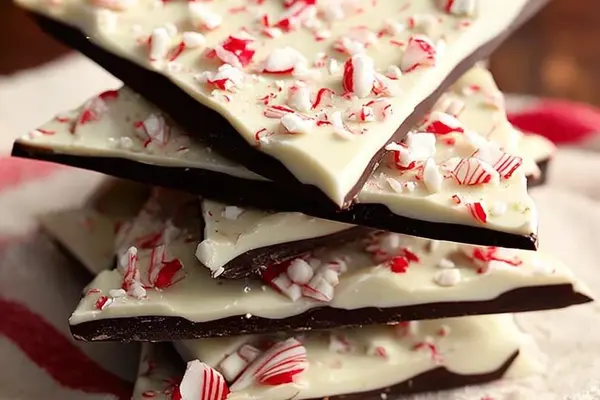
Sprinkle the crushed peppermint shards over the white chocolate while it’s still soft. Cover it generously. Avoid the fine powder at the bottom of your bag—that stuff gets bitter and pasty when mixed with chocolate. The big chunks lock in that fresh peppermint snap. Every bite should have some.
Easy Peppermint Bark Tips and Mistakes
Let it sit at room temperature or in the fridge until solid throughout. Don’t move it. Don’t touch it. Just leave it alone. Once it’s firm, break it into shards with your hands. Uneven pieces look better than clean cuts anyway.
Store it in an airtight container or the crisp texture goes soft. Moisture kills bark. It’ll still taste fine but the crunch disappears. Not worth it.
Ghirardelli peppermint bark is good. This is better because you control the crunch level, the peppermint intensity, the shard size. Costco version tastes like watered-down peppermint. Make this instead. Costs less. Takes thirty-five minutes. Looks like you know what you’re doing.
Temperature matters more than you’d think. Too warm and the dark layer doesn’t hold against the white. Too cold and the white chocolate gets textured. Cool room temperature, actually. Around 65 degrees. If your kitchen runs hot, use the fridge in thirty-minute bursts instead of letting it set on the counter.
White chocolate burns easier than dark. Microwave it carefully. Thirty seconds, stir, thirty seconds, stir. Don’t leave it unattended. Burned white chocolate smells like wet dog mixed with plastic. Also unfixable.
Peppermint Bark Ice Cream Recipe
Prep:
35 min
Cook:
5 min
Total:
40 min
Servings:
12 servings
Ingredients
- 3 cups dark chocolate candy melts or semi-sweet chunks
- 3 cups white chocolate candy melts
- 1 teaspoon pure peppermint oil
- 12 standard peppermint hard candies, unwrapped
- Waxed paper or parchment
Method
- 1 Set broken peppermint candies inside a ziplock between towels. Crush lightly with rolling pin. Don't powder it. Large shards make that rustic look I love, and give a nice crunch.
- 2 Spread a big sheet of waxed paper on a cookie tray or flat counter space. Keep it steady—keeps the bark from sticking and aids cleanup.
- 3 Microwave dark chocolate in 25-30 second blasts. Stir each round. Stop heating just shy of fully melted, bits of it still visible but soft. Then vigorous stirring melts the rest. Burning? Chocolate smells sharp, grainy. Bail out early next time.
- 4 Quickly spread the dark chocolate on waxed paper. Thin, about 10 by 22 inches. If it starts firming too fast, scrape thinner or warm hands slightly to smooth before it sets rock hard.
- 5 When mostly solid but still tacky (fingertip touch, slight indent), melt white chocolate same 30-second intervals. Stir often. Goes grainy if rushed. You want creamy, never scorched.
- 6 Drop peppermint oil in white melts, start with half teaspoon. Stir well, taste carefully. Potent stuff. Add another tiny drop if faint. Too much overwhelms the candy's softness.
- 7 Pour white chocolate spread over dark layer thinly. Work fast here—white melts can melt dark beneath, ruining the textured layers. If it blurs, refrigerate briefly to firm dark layer before white step next try.
- 8 Sprinkle crushed peppermint chunks generously over white chocolate, avoiding dusty powder at bottom of bag. That powder gets bitter and unappealing when mixed in. Bigger pieces lock in freshness, add interest in every bite.
- 9 Let rest undisturbed at cool room temp or fridge until fully firm and solid. Break roughly into shards. Store airtight or moisture ruins crisp texture.
Nutritional information
Calories
320
Protein
4g
Carbs
35g
Fat
22g
Frequently Asked Questions About Peppermint Bark Ice Cream
Can you make vegan peppermint bark this way? Yeah. Use dairy-free chocolate melts. Works exactly the same. Might need an extra ten seconds per microwave round because they don’t melt as fast. Still tastes good.
What if you don’t have peppermint oil? Don’t use peppermint extract. Extract’s watery and has alcohol that can make the chocolate seize. Skip the peppermint flavoring entirely, crush more candy canes into the white layer instead. More effort but the bark comes out really good.
How long does homemade peppermint bark keep? Two weeks airtight. Maybe three if your kitchen stays cool. After that the peppermint flavor fades and the chocolate starts tasting stale. Not dangerous, just not the same. Eat it faster than that.
Can you add rum or vodka to make rum and peppermint bark? A teaspoon, maybe a teaspoon and a half. More than that messes with the chocolate’s ability to set. The alcohol evaporates a little while it cools. Tastes good but don’t go overboard. And it won’t harden if you add too much.
Is this the same as blue bell peppermint bark flavor but as actual bark? Sort of. Blue bell’s version has that exact taste profile but smoother because it’s ice cream. This one’s chunkier, crunchier, more like eating actual candy. Close enough though. If you love blue bell peppermint bark ice cream you’ll eat this straight from the container.
Why crushed candy canes instead of just grinding them finer? Texture. Large shards stay crispy longer and give you this surprise crunch in the middle of soft chocolate. Powder dissolves into the chocolate and becomes part of the background flavor instead of having its own moment. Make it once with shards and you’ll never powder it again.
You’ll Love These Too
Explore all →
No-Bake Raspberry Pie With Gelatin
Grilled Marinated Potatoes

Hearty Chicken Bone Stock with Apple Cider

Ricotta Tartlets with Fresh Tomatoes

Marinated Italian Eggplants with Garlic
Banana Foster French Toast with Dark Chocolate

Cherry Pie Dough Bombs: Fried Biscuit Bites

Apple Chamomile Cocktail Twist Recipe
Honey Baked Ham with Brown Sugar Glaze
Pork Medallions with Tangerine Glaze

Cosmopolitan The Drink Recipe
Pinto Bean Chili with Smoked Paprika

Green Juice with Kiwi, Orange & Kale

Pickled Eggs with Chipotle & Horseradish
Grilled Pork Chops with Wild Rice & Sesame
Crunchy Peanut Brittle with Maple Syrup
Peanut Butter Caramel Mousse Recipe
Cabbage & Hamburger Casserole with Quinoa
Slow Cooker Beef Ragu with Red Wine