Coconut Pecan Candy | No Bake Treats
By Emma
Certified Culinary Professional
·
Recipe tested & approved
Scoop and roll. That’s it. Takes 16 minutes flat and tastes like you spent way longer on it. No oven, no thermometer, no watching anything burn while you check your phone.
Why You’ll Love This No Bake Coconut Pecan Candy
Fifteen minutes from ingredients to finished. Just scooping and rolling — nobody can mess this up. Works as a snack, a gift, or something to make when you forgot dessert was supposed to happen. Keeps a week in the fridge. Cold and chewy. Actually gets better the next day somehow. No special equipment. Bowl, spoon, hands. That’s the whole setup. Tastes expensive. Feels homemade. The pecan in the middle gets people every time.
What You Need for Coconut Pecan Balls
Two and one-eighth cups coconut flakes, but split them — about half goes in the mixture, the other half just for rolling at the end. Use medium texture. Not the fine powdery stuff. Not the big shreds. Medium.
Sweetened condensed milk. One cup. The sweetness comes mostly from here and the powdered sugar, so don’t try to cut it down.
Three-quarters cup powdered sugar. Not granulated. The powder stuff.
Vanilla extract. A teaspoon. Real or imitation both work.
Salt. One quarter teaspoon. Sounds small. Matters.
Twenty-five pecan halves. Or more if you want a pecan in every single one. Haven’t tried other nuts but almonds would probably work the same way.
How to Make No Bake Coconut Pecan Candies
Set half a cup of coconut aside first — that’s your rolling coating. Don’t skip this step. You need it later or everything sticks to everything.
In a medium bowl, dump the condensed milk, powdered sugar, vanilla, and salt. Mix gently. Not like you’re whipping cream. Just fold it together until you can’t see the powdered sugar anymore. Stir slow. Air doesn’t belong in this.
Pour in the remaining coconut flakes — the one and five-eighths cups left. Fold it in with a spatula or spoon. Press down as you go. The mixture should get compact and sticky, thick enough to hold together when you squeeze it. If it feels too wet, add another tablespoon or two of coconut. The texture matters more than exact amounts here.
Grab a one and a half tablespoon scoop or just use a heaping spoon and eyeball it. Scoop out a ball of mixture. Press a pecan half into the center with your finger. Wrap the coconut around it — fold the edges over, press and roll in your palms until it’s tight and solid. A loose ball falls apart. A tight one holds.
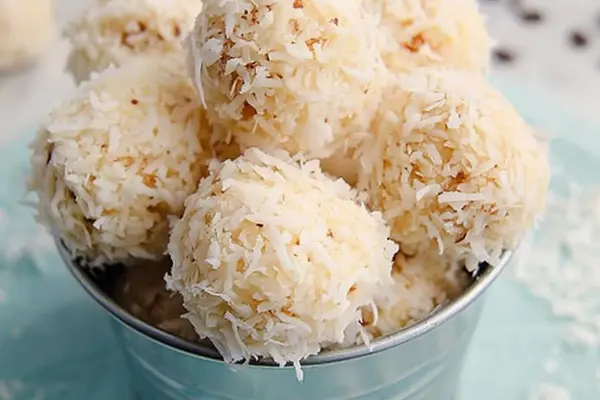
Roll it in the reserved coconut flakes. The outside gets that glittery, slightly dry coating. Prevents sticking. Makes them look intentional.
Keep going until you run out of mixture. Should get twenty-five to thirty depending on scoop size.
No Bake Candy Tips and Common Mistakes
The texture is everything. If you overstir the condensed milk mixture, you get air bubbles. Sticky and thick is what you want — not fluffy. Fold it the way you’d fold whipped cream if you wanted to ruin it, except that’s actually right here.
Don’t skip the reserved coconut for rolling. People see that glitter and think it’s fancy. It’s not fancy. It’s functional. Prevents sticking.
Pecan halves stay centered if you press the ball around them firmly. Loose wrapping means the pecan pops out when someone bites it. They should get a surprise in the middle, not a surprise rolling around loose.
Storage matters. Airtight container in the fridge keeps them about a week. They dry out if you leave them on the counter — texture goes from chewy to chalky. Cold makes them firmer and better anyway.
Variations worth trying. Swap the pecans for almond halves or even peanut halves if you want. Same method works. The cayenne thing — pinch of it mixed into the base mixture — sounds weird but it works. Heat cuts through the sweet in a way that makes you come back for another one.
Coconut Pecan Candy | No Bake Treats
Prep:
16 min
Cook:
0 min
Total:
16 min
Servings:
25 servings
Ingredients
- 2 1/8 cups shredded sweetened coconut flakes, divided
- 1 cup sweetened condensed milk
- 3/4 cup powdered sugar
- 1 teaspoon vanilla extract
- 1/4 teaspoon salt
- 25 pecan halves
Method
- 1 Set aside about half a cup of the coconut flakes for rolling later; use a coarse, medium texture for better cling rather than finely shredded or shredded too long.
- 2 In a medium bowl, mix sweetened condensed milk, powdered sugar, vanilla extract, and salt until just combined. No beating; aim for gentle folding for even distribution without fluffing air in. Pour in remaining coconut flakes.
- 3 Fold and press coconut into milk mixture with spatula or spoon. This isn’t stirring to fluff but more compacting to pack coconut firmly. Texture should be sticky and hold shape when pressed. If too wet, add a couple tablespoons more coconut flakes.
- 4 Using a 1 1/2 tablespoon scoop or balanced heaping spoon, scoop out mixture. Press one pecan half in center with fingers. Wrap the coconut mixture around nut, pressing and rolling in palms. Should be tight. It’ll feel dense when done.
- 5 Roll formed ball in the reserved coconut flakes. This coats sticky ball and prevents clumping together later. Glittery, slightly dry outer layer.
- 6 Repeat for remaining mixture; should make about 25-30. Balls unlike snowballs. Firm, sweet, aromatic with subtle nut oils.
- 7 Store in airtight container. Keeps fridge about a week. They dry out if left out too long. For softer, swap pecan for almond or peanut halves. For twist, toss a pinch of cayenne pepper into mix—heat punches through sweet.
Nutritional information
Calories
120
Protein
1g
Carbs
15g
Fat
6g
Frequently Asked Questions About No Bake Coconut Pecan Treats
Can I make these ahead? Yeah. Make them up to a week early. Store them in the fridge in an airtight container. The longer they sit, the more the flavors settle. Day two is better than day one.
What if my mixture is too wet? Add coconut flakes. A tablespoon at a time. Press them in and see if it holds shape. Should feel sticky but firm when squeezed.
Do I have to use sweetened coconut? Unsweetened works but you’ll need to add more sugar. Not worth it. Sweetened flakes are why this works without cooking.
Can I use liquid milk instead of condensed? No. The condensed milk is thick and sweet — that’s the whole point. Regular milk makes it a runny mess.
How long does this take? Sixteen minutes if you don’t mess around. Most of that is rolling. The mixing part takes maybe five.
What’s the best way to store them? Airtight container. Fridge. They’ll keep their texture better cold. Room temperature and they start drying out after a few days.
Can I freeze these? Haven’t tried it but probably. Thaw in the fridge. The texture might get softer.
Why do they need to be rolled in coconut? Keeps them from sticking together. Also looks better. You could skip it but then you’ve got naked candy balls that glue themselves in the container.
You’ll Love These Too
Explore all →
Moroccan Lamb Soup with Saffron
Cinnamon Plum Tart with Custard Cream
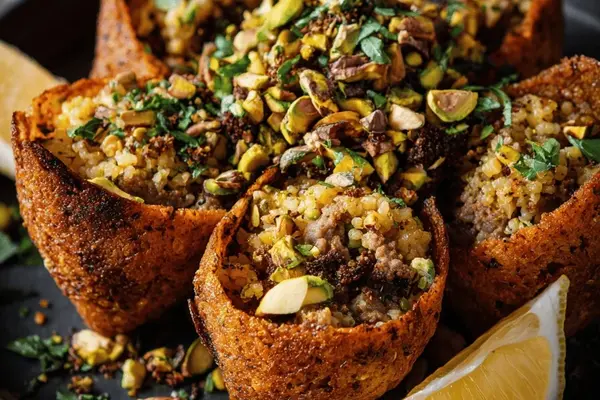
Lamb Dishes Middle Eastern: Crispy Kibbeh
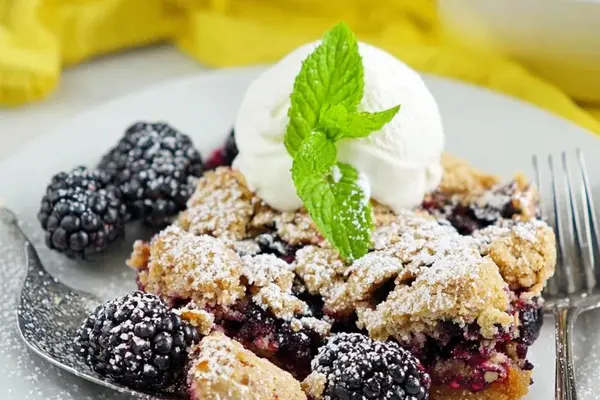
Blackberry Buckle Recipe with Almond Flour

Braised Italian Sausages Red Wine Recipe
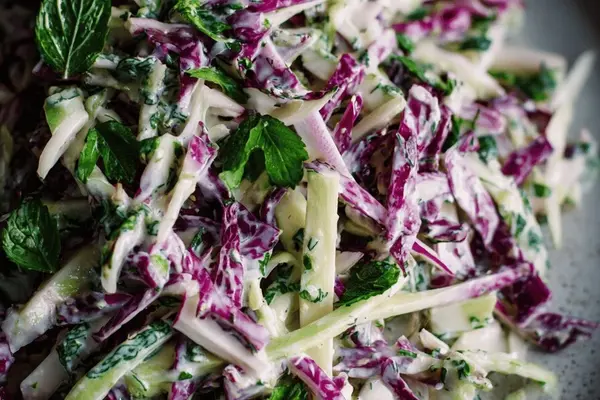
Crunchy Cabbage Salad with Yuzu Dressing

Citrus Syrup Recipe with Lime, Orange & Ginger
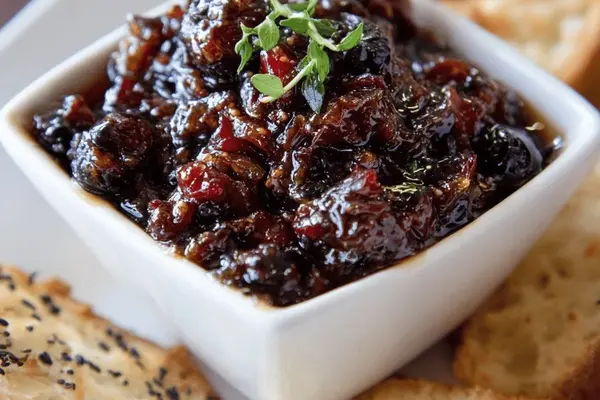
Chutney Fig with Blueberries & Balsamic
Roasted Vegetable Medley with Smoked Paprika

Crispy Skillet Beef Tacos with Tangy Sauce
Kahlua Chocolate Cheesecakes with Oreo Crust

Macaroni Cheese in a Crock Pot
Make Ranch Dressing with Lemon & Lime
Black Bean Burritos with Cilantro Rice
Key Lime Bars with Biscoff Cookie Crust
Chicken Drippings Gravy Recipe
Buckwheat Crepes with Maple Syrup

Limoncello Spritz Cocktail Recipe
Avocado Chocolate Cookies with Walnuts