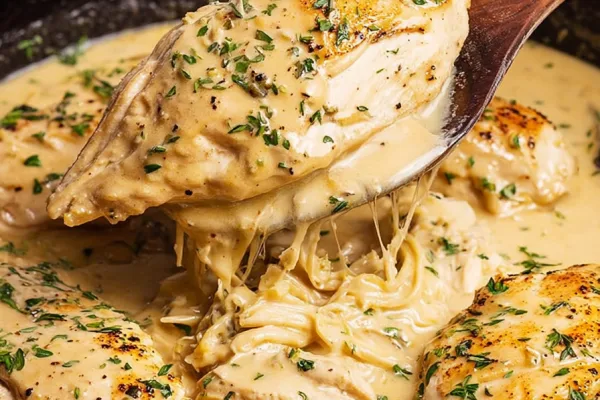
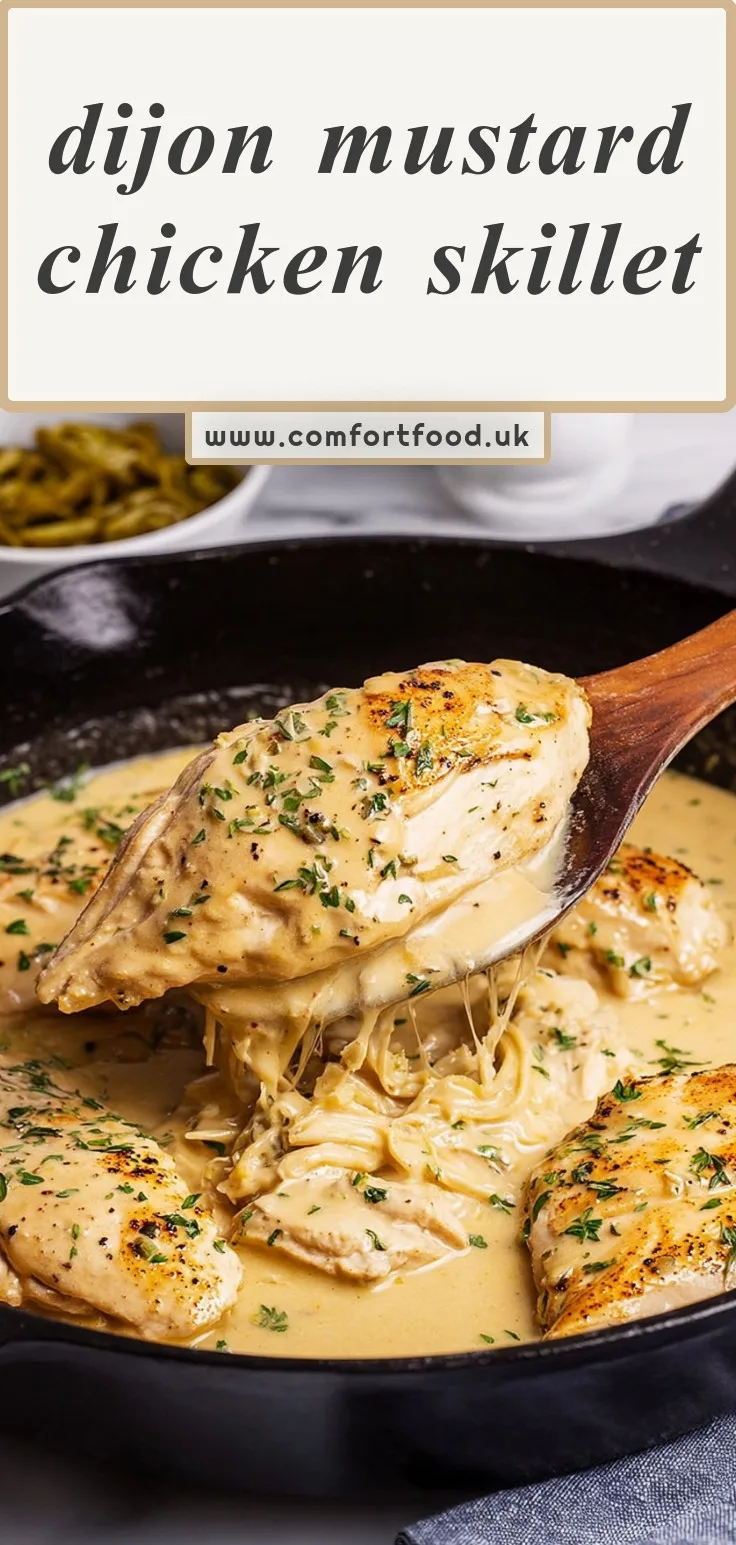
Dijon Mustard Chicken Skillet
By Emma
Certified Culinary Professional
·
Recipe tested & approved
Dijon Mustard Chicken Skillet starts with thin, seasoned chicken breasts seared golden, then simmered in a tangy mustard, cream, and white wine sauce with garlic and thyme for a quick meal in 30 minutes.
Prep:
10 min
Cook:
20 min
Total:
30 min
Servings:
4 servings
I made this Dijon mustard chicken skillet last Tuesday and I’m still thinking about how fast it came together. The chicken gets pounded thin so it cooks in like 8 minutes total, and the sauce builds itself in the same pan while you’re standing there. It’s one of those recipes where you don’t really have to think much.
Why You’ll Love This Recipe
- Ready in 30 minutes start to finish
- The butterflied chicken breasts cook evenly and stay really juicy, not dried out on the edges like thick ones always do
- Two kinds of mustard make the sauce tangy but not sharp
- You deglaze with white wine so all those brown bits turn into flavor instead of getting wiped away
- One skillet means you’re not washing a bunch of pans later
- The sauce is creamy but light enough that you don’t feel heavy after
The Story Behind This Recipe
I needed something fast on a Tuesday after work and I had chicken breasts that needed to get used. There was Dijon in the fridge door and some cream left from the weekend, so I just started cooking without a real plan. The mustard chicken skillet thing came together because I remembered my mom used to make something similar but hers took forever and used a casserole dish. I wanted the same tangy sauce but faster, so I pounded the chicken thin and kept everything in one pan. It worked better than I expected and now I make it probably twice a month when I don’t want to think too hard about dinner.
What You Need
You’ll need 2 skinless boneless chicken breasts, and they’re going to get butterflied then pounded thin to about 1/4 inch. This matters because thick chicken never cooks right in a skillet. Salt and black pepper for seasoning both sides, nothing fancy.
Olive oil goes in the pan first to get the chicken golden. Then 1 small shallot that you’ll mince up, plus 1 clove garlic also minced. Shallots are milder than onions and they don’t overpower the mustard, which is the whole point here.
You’ll deglaze with 1/4 cup dry white wine or chicken stock if you don’t have wine open. I used wine because it was already on the counter. The sauce needs 2 tablespoons unsalted butter, 1 tablespoon Dijon mustard and 1 tablespoon whole grain mustard. Both mustards together give you tang and texture without making it too sharp.
1 teaspoon fresh thyme leaves, not dried, and 1 teaspoon Worcestershire sauce for that background savoriness you can’t quite name. Then 1/4 cup heavy cream to mellow everything out and make it creamy but not heavy. Don’t skip the whole grain mustard — the little seeds pop when you eat them and remind you this isn’t just boring chicken.
How to Make Dijon Mustard Chicken Skillet
Butterfly both chicken breasts by slicing them horizontally almost all the way through, then open them like a book. Pound them with the flat side of a meat mallet until they’re uniformly 1/4 inch thick, which sounds fussy but takes maybe 2 minutes and makes the whole thing work. Season both sides with salt and pepper.
Put your large skillet over medium heat and add olive oil. Let it warm for about 1 minute until it’s shimmering, not smoking. Lay the chicken breasts in carefully and don’t touch them for 3 to 4 minutes while the bottom turns golden brown.
Flip them over and cook the second side another 3 to 4 minutes until it’s equally golden. The chicken will still look pale on the edges but that’s fine because it goes back in later. Transfer it to a plate lined with paper towels to drain.
Leave the skillet exactly as it is, still hot with all those brown bits stuck to the bottom. Add your minced shallot and garlic right into that same pan. It’ll hiss a little, which is good, and you just sauté them until they smell good and turn translucent, about 1 minute.
Pour in the 1/4 cup white wine or chicken stock to deglaze. Grab a wooden spoon and scrape all those browned bits off the bottom while the liquid bubbles and reduces slightly. This is where the flavor lives.
Drop in the 2 tablespoons butter and stir as it melts into the wine. Add the 1 tablespoon Dijon mustard, 1 tablespoon whole grain mustard, 1 teaspoon fresh thyme leaves and 1 teaspoon Worcestershire sauce all at once. The sauce will start bubbling gently and you just let it go for 3 to 4 minutes, thickening up but staying silky. Stir in the 1/4 cup cream and give it a final blend.
Return the chicken breasts to the skillet, nestling them down into the sauce. Spoon some over the tops and turn the heat down to low. Let everything simmer quietly for 5 minutes so the flavors marry and the chicken warms all the way through. The sauce reduces but stays pourable, not thick like gravy.
When you pull the chicken out to plate it, the sauce in the pan will look thin but it’ll cling to the meat once it hits the plate — I didn’t expect that the first time and almost kept reducing it. Ladle extra sauce over everything and serve it with couscous, rice or buttered noodles to catch what runs off.
What I Did Wrong the First Time
I crowded both chicken breasts into a skillet that was too small because I didn’t want to get out the big one. They steamed instead of searing and the edges never got golden, which meant no brown bits for the sauce later. The whole thing tasted flat and pale.
I also added the cream way too early, right after the wine, and it broke into weird grainy bits instead of staying smooth. Now I wait until after the mustards and butter have bubbled together for a few minutes first. The sauce comes together properly every time now.
Dijon Mustard Chicken Skillet
Prep:
10 min
Cook:
20 min
Total:
30 min
Servings:
4 servings
Ingredients
- 2 skinless, boneless chicken breasts
- Salt and black pepper
- Olive oil
- 1 small shallot, minced
- 1 clove garlic, minced
- 1/4 cup dry white wine or chicken stock
- 2 tablespoons unsalted butter
- 1 tablespoon Dijon mustard
- 1 tablespoon whole grain mustard
- 1 teaspoon fresh thyme leaves
- 1 teaspoon Worcestershire sauce
- 1/4 cup heavy cream
Method
- 1 Butterfly both chicken breasts and pound with the flat side of a meat mallet until uniformly 1/4 inch thick. Season both sides with salt and pepper.
- 2 Place a large skillet over medium heat and add olive oil. Let the oil warm about 1 minute until shimmering. Lay the chicken breasts in the pan and sear without moving them until the bottom turns golden brown, about 3 to 4 minutes. Flip and cook the second side until equally golden, another 3 to 4 minutes. Transfer chicken to a plate lined with paper towels to drain excess oil.
- 3 With the skillet still hot and untouched, add minced shallot and garlic. The pan will hiss slightly; sauté just until fragrant and translucent, about 1 minute.
- 4 Pour in white wine or chicken stock to deglaze the pan. Scrape the browned bits from the bottom with a wooden spoon, watching the liquid bubble and reduce slightly.
- 5 Drop in butter, stirring as it melts. Add Dijon mustard, whole grain mustard, fresh thyme leaves, and Worcestershire sauce. Let the sauce bubble gently for 3 to 4 minutes, thickening slightly but staying silky. Stir in cream, giving the mixture a final blend.
- 6 Return chicken breasts to the skillet nestling them into the sauce. Spoon some over the top and reduce heat to low. Let everything simmer quietly for 5 minutes to marry flavors and warm the chicken through. The sauce will reduce but remain pourable.
- 7 Plate the chicken and ladle extra sauce over. Serve with couscous, rice, or buttered noodles to catch every bit of the tangy, creamy sauce.
Nutritional information
Calories
320
Protein
30g
Carbs
4g
Fat
20g
Tips for the Best Dijon Mustard Chicken
Don’t move the chicken while it sears. Pressing down on it with a spatula makes it stick and tears the golden crust you’re trying to build, so just let it sit undisturbed for the full 3 to 4 minutes.
If your shallot starts browning too fast after you add it, pull the pan off the heat for 10 seconds before deglazing. Burned garlic tastes bitter and ruins the whole sauce, and I learned that the hard way on my second attempt.
The sauce looks thinner in the pan than it tastes on the plate. It clings to the meat once you spoon it over and cools slightly, so resist the urge to reduce it forever or you’ll end up with something thick and gloopy instead of silky.
Use room temperature cream if you remember to pull it out ahead. Cold cream takes longer to blend into the mustards and sometimes separates if the pan’s too hot, which happened once when I was rushing.
Taste the sauce before you return the chicken and add a pinch more salt if it needs it. The mustards are salty but not always salty enough, and fixing it at the end when everything’s plated is annoying.
Serving Ideas
I spoon this mustard chicken skillet over Israeli couscous because the pearls catch the sauce in their little pockets. Regular couscous works too but it soaks up too much liquid and gets mushy if you’re not fast.
Roasted asparagus on the side cuts through the richness without adding more cream or butter to the plate. Sometimes I’ll do green beans if that’s what I have, but they need to be crisp, not soft.
A chunk of crusty bread for wiping the plate clean is non-negotiable in this house. I buy a baguette on the way home and reheat it for 5 minutes while the chicken simmers.
Variations
Swap heavy cream for half and half if you want something lighter, but add it off the heat and stir constantly or it might separate. The sauce won’t be as thick but it’s still tangy and good.
Boneless skinless thighs instead of breasts work if you prefer dark meat. They take an extra minute per side to cook through and the sauce tastes richer because of the extra fat, which I actually like better sometimes.
Add a handful of baby spinach right at the end when you return the chicken to the pan. It wilts in 30 seconds and makes the whole thing feel less heavy, plus it looks greener on the plate which tricks you into thinking it’s healthier.
If you don’t have fresh thyme, use 1/2 teaspoon dried but add it earlier with the shallots so it has time to bloom in the heat. Fresh tastes brighter though, so grab it if you can.
FAQ
Can I use chicken thighs instead of breasts?
Yes, boneless skinless thighs work great and stay even juicier than breasts. Pound them to the same 1/4 inch thickness and cook for about 4 to 5 minutes per side since they’re slightly thicker. The sauce tastes richer with thighs because of the extra fat.
What if I don’t have white wine?
Use chicken stock or even water in a pinch. The sauce won’t have the same depth but the mustards and Worcestershire still carry enough flavor that it works. I’ve done it with stock when I didn’t have wine open and it was fine.
Can I make this ahead?
The chicken skillet recipe tastes best fresh, but you can sear the chicken and make the sauce a few hours ahead. Store them separately in the fridge and reheat the sauce gently on the stove, then add the chicken back for the final simmer. Don’t reheat everything together from cold or the chicken dries out.
How do I store leftovers?
Put the chicken and sauce in an airtight container in the fridge for up to 3 days. The sauce thickens as it cools, which is normal. Reheat gently in a skillet over low heat with a splash of stock or cream to loosen it back up.
Can I freeze this?
The chicken freezes fine but the cream sauce sometimes separates when you thaw it. If you’re planning to freeze it, stop before adding the cream and stir that in fresh when you reheat. Freeze for up to 2 months in a freezer bag.
What can I use instead of shallots?
Half a small yellow onion minced works, or 2 tablespoons of the white and light green parts of a green onion. Shallots are milder but onion gives you the same base flavor, just a bit sharper.
Do I have to pound the chicken that thin?
Yes, or it won’t cook evenly in the skillet. Thick breasts stay raw in the middle or dry out on the edges by the time the center’s done. Pounding takes 2 minutes and makes the whole recipe actually work.
Can I use only Dijon mustard instead of two kinds?
You can, but you lose the texture from the whole grain mustard seeds. I tried it once with just Dijon and the sauce felt flat and boring, even though the flavor was close.
What if my sauce breaks after I add the cream?
Pull it off the heat immediately and whisk in a tablespoon of cold cream or a splash of stock. That usually brings it back together. It breaks if the pan’s too hot or if you add cold cream to a boiling sauce.
How do I know when the chicken is done?
It should feel firm when you press it with your finger, not squishy. If you have a thermometer it should read 165°F in the thickest part, but honestly with 1/4 inch thick chicken it’s hard to mess up if you cook it the full time.
Can I double this recipe?
You’ll need two skillets or do it in batches because crowding the pan makes the chicken steam instead of sear. I tried doubling it once in one big skillet and nothing browned right, so now I just make it twice if I’m feeding more people.
What kind of pan works best?
A large stainless steel or cast iron skillet gives you the best browning and fond for the sauce. Nonstick works but you won’t get those dark bits stuck to the bottom, which means less flavor when you deglaze.
Does the wine have to be dry?
Yes, sweet wine makes the sauce taste weird and sugary. Use something you’d actually drink like Sauvignon Blanc or Pinot Grigio. If it’s too sweet the whole balance gets thrown off.
Can I skip the Worcestershire sauce?
You can but the sauce loses that background savory depth that makes you want another bite. It’s not a strong flavor on its own but you notice when it’s missing.
What if I don’t have fresh thyme?
Use 1/2 teaspoon dried thyme added earlier when you sauté the shallots. Dried needs more time to release flavor so don’t wait until the sauce stage. Fresh is better though if you have it.
How thin is 1/4 inch really?
About as thick as two stacked quarters. It feels too thin when you’re pounding it but that’s the point, otherwise the chicken doesn’t cook fast enough before the sauce is ready.
You’ll Love These Too
Explore all →
Buttermilk Corn Bread Recipe with Cinnamon
Rustic Shortcakes with Spelt Flour & Berries
Braised Pork Shoulder with Orange Juice
Ginger Cookies Recipe: Layered Butter & Chocolate
Authentic Jerk Chicken Roast
Roasted Roast Beef with Thyme & Horseradish
Apple Cheesecake Crisp with Pecan Crust
Strawberry Short Cake with Flaky Tartlets
Curried Chicken Toasts with Cucumber

Raspberry Pound Cake with Cream Cheese Frosting
Moroccan Lamb Soup with Saffron

Iced Coffee Dessert with Vanilla Ice Cream

Salty Sweet Monster Bars with Pretzels
Sheet Pan Chocolate Cake with Sour Cream
Buffalo Chicken Stuffed Peppers Recipe
Apple Pecan Sheet Cake with Caramel Sauce
Honey Baked Ham with Brown Sugar Glaze
Oven-Baked Pizza Chicken Rollups
Kiwi Strawberry Smoothie with Coconut Water