Fireman Chicken Grill Recipe
By Emma
Certified Culinary Professional
·
Recipe tested & approved
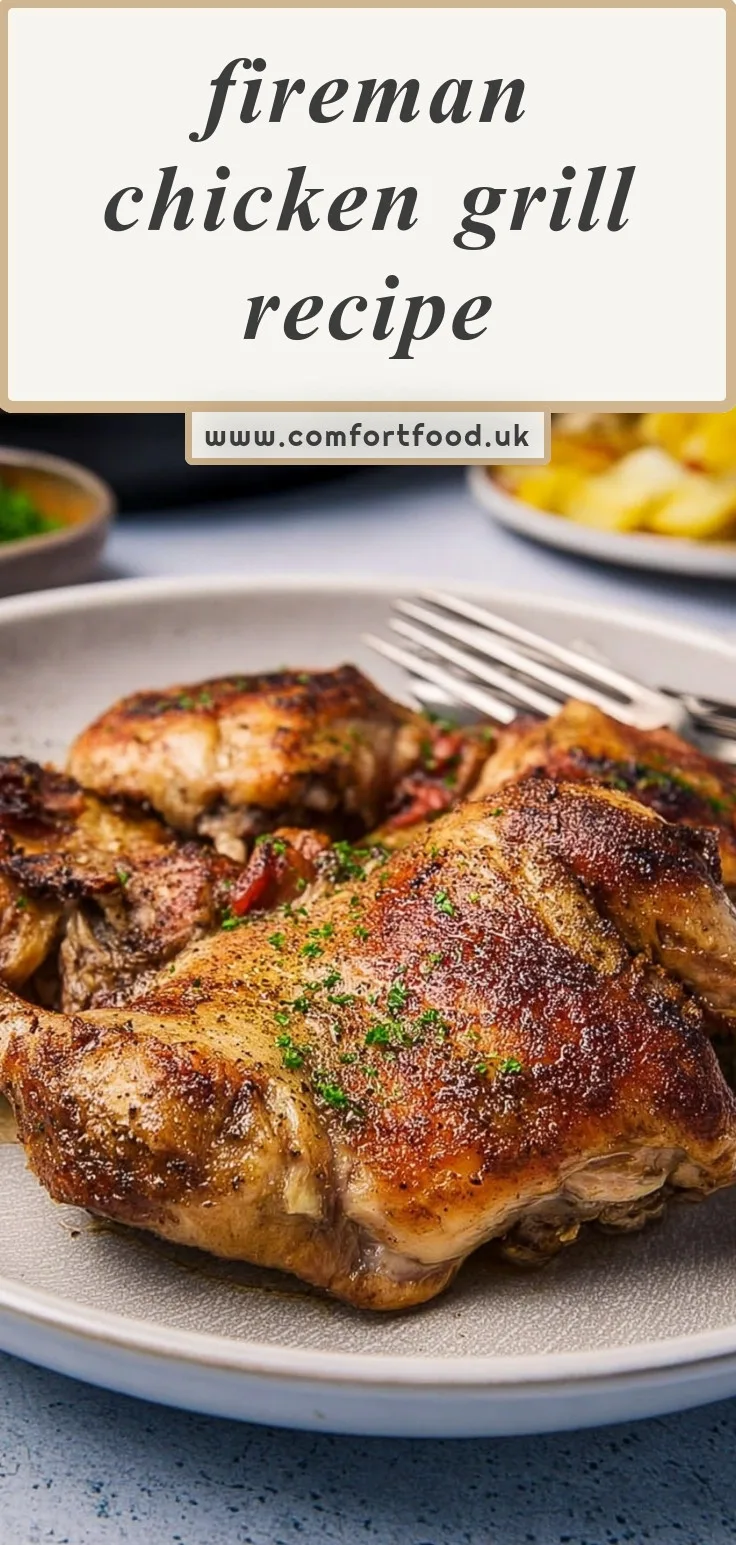
Fireman Chicken features chicken quarters marinated in apple cider vinegar and spices, grilled with basting for charred, juicy layers. Ready in under an hour, this grilled dish balances tangy, savory, and smoky flavors.
Prep:
10 min
Cook:
40 min
Total:
50 min
Servings:
4 servings
I’ve been making this Fireman Chicken Grill Recipe for a while now and honestly it’s the one chicken marinade I actually want to use. Last Tuesday I tested it again after work and yeah, it still holds up.
Why You’ll Love This Recipe
- The apple cider vinegar does something weird and good to the chicken texture
- You pierce the meat with a fork first which sounds dumb but it actually works
- Basting while it cooks keeps adding layers instead of just one flavor note
- The switch from indirect to direct heat gives you juicy meat and crispy skin at the same time
- Takes under an hour start to finish if you marinate in the morning
- That crackling sound when you move it to direct heat tells you exactly when the skin’s ready
The Story Behind This Recipe
I got tired of dry grilled chicken recipe attempts that tasted like cardboard with grill marks. A friend mentioned this vinegar-heavy method firefighters use at station cookouts and I thought it sounded too acidic. Tried it anyway because I had chicken quarters thawing and nothing else planned.
The first time I made it I didn’t pierce the meat and the marinade just sat on top doing nothing. Second attempt I stabbed it all over with a fork like the instructions said and suddenly the chicken had actual flavor through the whole bite not just on the surface. Now it’s my summer grilling default when I don’t want to think too hard.
What You Need
You need 2 cups apple cider vinegar which sounds like way too much until you taste how it mellows out on the grill. The acid does the heavy lifting here so don’t swap it for regular vinegar or lemon juice. 1 cup vegetable oil goes in next and it’s gotta be vegetable not olive because olive gets weird at high heat and you’re grilling this thing. Then 1/2 cup mayonnaise which I know sounds strange in a chicken marinade but it helps everything stick and adds this richness that cuts through all that vinegar sharpness.
For seasoning you’re using 1 tablespoon coarse kosher salt not table salt because the texture matters when you’re whisking this together. 1 tablespoon poultry seasoning is the backbone flavor and 1 tablespoon garlic powder brings that savory punch. Don’t use fresh garlic because it’ll burn on the grill and taste bitter. 1 teaspoon paprika adds a little color and 1/2 teaspoon ground black pepper finishes it off.
4 chicken quarters are what you’re grilling. Leg and thigh attached. Don’t use breasts for this because they’ll dry out with all that acid and the longer cook time.
How to Make Fireman Chicken Grill Recipe
Whisk together 2 cups apple cider vinegar, 1 cup vegetable oil, 1/2 cup mayonnaise, 1 tablespoon coarse kosher salt, 1 tablespoon poultry seasoning, 1 tablespoon garlic powder, 1 teaspoon paprika and 1/2 teaspoon ground black pepper in a bowl until it looks consistent. The mayo will fight you at first then suddenly it’ll all come together into this pale peachy liquid that smells intensely like salad dressing and chicken seasoning had a baby.
Take a regular fork and stab each of the 4 chicken quarters all over like you’re mad at them. I’m talking 15 to 20 times per piece. This lets the marinade actually get inside instead of just coating the surface which is the whole point of this summer grilling method.
Drop the stabbed chicken into a big plastic bag or container and pour most of the marinade over it but keep back 1/2 cup in a separate container for basting later. Seal it up and stick it in the fridge for at least 2 hours but honestly I always do 4 hours or overnight if I remember. The longer it sits the more that vinegar breaks down the meat fibers in a good way.
When you’re ready to cook heat your grill to medium-high and set up indirect heat. If you’ve got a gas grill turn on one side only. Charcoal users push your coals to one side. Place the chicken on the cooler side first so it cooks through without torching the outside. That gentle heat is where the magic starts.
Baste the chicken with that reserved marinade every 5 minutes or so and flip it around. You’ll hear a steady sizzle that’s not aggressive just persistent. Keep this up for 35 minutes and you’ll notice the chicken starts smelling less raw and more cooked, juices bubbling up through the skin. The skin will look wet and pale still but that’s fine.
Now move everything to direct heat to crisp up the skin and get char marks. Stop basting now because the sugars in the marinade will burn if you keep adding more. Listen for that crackling sound to get louder and more insistent. Check the thickest part with a thermometer until it hits 165°F which took me about 5 more minutes last time.
Pull it off and let it rest 5 to 10 minutes on a plate. The juices redistribute and the texture firms up just enough. Toss whatever marinade is left because it touched raw chicken and you don’t want to deal with that.
What I Did Wrong the First Time
I used the same marinade for basting that the raw chicken had been sitting in because I didn’t read the part about setting aside 1/2 cup first. Had to dump the whole batch halfway through grilling and finish without basting which meant the chicken was way less flavorful and the skin didn’t get that layered taste I was expecting. Now I always pour off the basting portion before the chicken even touches the rest of the marinade because I learned that lesson the hard way standing at the grill realizing I had nothing left to brush on.
Fireman Chicken Grill Recipe
Prep:
10 min
Cook:
40 min
Total:
50 min
Servings:
4 servings
Ingredients
- 2 cups apple cider vinegar
- 1 cup vegetable oil
- 1/2 cup mayonnaise
- 1 tablespoon coarse kosher salt
- 1 tablespoon poultry seasoning
- 1 tablespoon garlic powder
- 1 teaspoon paprika
- 1/2 teaspoon ground black pepper
- 4 chicken quarters
Method
- 1 Whisk together 2 cups apple cider vinegar, 1 cup vegetable oil, 1/2 cup mayonnaise, 1 tablespoon coarse kosher salt, 1 tablespoon poultry seasoning, 1 tablespoon garlic powder, 1 teaspoon paprika, and 1/2 teaspoon ground black pepper until overall mixture is consistent.
- 2 Using a fork, pierce the 4 chicken quarters multiple times so the marinade penetrates deeper.
- 3 Place chicken quarters into a large airtight plastic bag or container and pour marinade over them, keeping back 1/2 cup to use later for basting. Refrigerate for at least 2 hours and up to 24 hours so the flavors develop.
- 4 Heat the grill to medium-high. Whether gas or charcoal, make sure the heat source holds long. Set the chicken on indirect heat first to cook gently without burning.
- 5 Baste the chicken repeatedly with the reserved marinade throughout the grilling, turning every so often. The gentle sizzle should be steady but not flare up. Allow this to continue for 35 minutes until juices start bubbling and aromas deepen.
- 6 Shift the chicken to direct heat to crisp the skin and get those good char marks. Stop basting here to avoid burning sugars. Listen for a more intense crackling sound as the skin crisps up. Aim for internal temperature of 165°F checked by digital thermometer.
- 7 Remove chicken from the grill and let it rest 5 to 10 minutes. The juices will redistribute, and the final texture will be tender but firm. Discard leftover unused marinade to be safe.
- 8 Serve and reflect on how the tang, fat, and heat interplay. The vinegar bite tames into mellow tanginess while the char adds a subtle smoke aroma.
Nutritional information
Calories
550
Protein
30g
Carbs
2g
Fat
45g
Tips for the Best Fireman Chicken Grill Recipe
Don’t flip the chicken more than once every 5 minutes during the indirect heat phase. I kept fiddling with it the second time I made this grilled chicken recipe and all that flipping just tore the skin and let the juices run out before they had a chance to cook into the meat.
The chicken will look kind of pale and wet even after 30 minutes on indirect heat and that’s exactly what you want. It’s not Instagram-ready yet but that’s the stage where the inside is getting done without torching the outside into leather.
Your grill thermometer is lying to you. Check the actual chicken temp with a probe thermometer stuck into the thickest part of the thigh away from the bone because that’s where it takes longest to hit 165°F and if you guess wrong you’re either eating raw chicken or hockey pucks.
Save a tiny bit of that reserved basting marinade in a separate cup and taste it after it’s been sitting for an hour. You’ll understand why this chicken marinade works when you notice how the vinegar mellows and the oil carries all those spices into something that tastes way less harsh than it smells in the bowl.
The crackling sound changes pitch when the skin goes from wet to crispy. It starts as a gentle sizzle then gets sharper and more aggressive right before the skin’s ready and that’s your audio cue to check the temp.
Serving Ideas
I put this straight on a big platter with nothing fancy and people just grab pieces with their hands. It’s not delicate food.
Serve it with potato salad that’s got a vinegar base not a mayo base because the chicken’s already rich and you want something sharp to cut through all that fat. White bread on the side soaks up the drippings if you’re into that.
Grilled corn still in the husk goes on the grill at the same time as the chicken moves to direct heat. They finish together and the sweetness plays well against all that tang.
Cold beer. That’s it.
Variations
Swap the chicken quarters for bone-in thighs only if you want faster cooking and more dark meat but cut the indirect heat time to 25 minutes because they’re smaller. Wings work too but they dry out easier so watch them close.
Add 2 tablespoons of hot sauce to the marinade if you want heat that builds through each bite. The vinegar in the hot sauce just adds to the acid so the chicken gets even more tender but spicy now.
Try smoked paprika instead of regular paprika for a deeper smoke flavor that makes people think you used a fancy wood chip setup when you didn’t. It’s a small switch that changes the whole summer grilling vibe.
Skip the mayo if you’re weird about it but know the marinade won’t stick as well and you’ll lose some of that richness. I tried it once and the chicken was fine but noticeably less interesting.
FAQ
Can I use chicken breasts instead of quarters?
Don’t. Breasts dry out with this much acid and the longer cook time. The quarters have dark meat and skin that protect them from drying and actually benefit from the vinegar breakdown.
How long can the chicken sit in the marinade?
At least 2 hours but I’ve done 24 hours and it was better. After 24 hours the texture starts getting mushy so don’t push past that.
Do I really need to pierce the chicken with a fork?
Yeah you do. I skipped it once and the marinade just pooled on top doing nothing while the inside tasted plain. Those fork holes let the acid and seasonings actually get in there.
Can I use a different vinegar?
Apple cider vinegar has a sweetness and mellow acid that works here. White vinegar is too harsh and rice vinegar is too mild. Red wine vinegar might work but I haven’t tried it so I can’t say for sure.
What if I don’t have poultry seasoning?
Mix together equal parts dried sage, thyme, marjoram and rosemary. That’s basically what poultry seasoning is anyway. Or just use Italian seasoning and accept it’ll taste different but still fine.
Can I make this in the oven?
You can but you’ll lose the char and smoke flavor that makes this worth doing. Roast at 400°F for about 45 minutes but it won’t have that crispy skin or the layered flavor from basting over fire.
Why vegetable oil and not olive oil?
Olive oil breaks down and tastes off at high grill heat. Vegetable oil has a higher smoke point and stays neutral so all you taste is the spices and vinegar not burnt oil.
How do I know when to move the chicken to direct heat?
When you’ve hit 35 minutes on indirect heat and the internal temp is around 155°F to 160°F. It’ll climb that last 5 to 10 degrees fast on direct heat while the skin crisps.
Can I reuse the marinade?
No. It touched raw chicken so it’s contaminated. That 1/2 cup you set aside before the chicken went in is the only safe stuff for basting.
What’s the best way to set up indirect heat on a gas grill?
Turn on the burners on one side only to medium-high. Put the chicken on the other side where there’s no flame directly under it. Close the lid to keep the heat circulating.
My chicken skin isn’t getting crispy what am I doing wrong?
You’re probably not drying the chicken before it goes on the grill or you’re basting too late into the direct heat phase. Pat it dry after marinating and stop basting as soon as you move to direct heat.
How do I store leftovers?
Stick them in an airtight container in the fridge for up to 4 days. The vinegar actually helps them keep a bit longer than regular grilled chicken.
Can I reheat this without drying it out?
Wrap pieces in foil and warm in a 300°F oven for 15 minutes. Microwave turns the skin rubbery and sad so don’t do that unless you have no choice.
Does the mayo cook into the chicken or does it just burn off?
It emulsifies into the marinade and helps everything cling to the meat. You won’t taste mayo flavor in the finished chicken it just adds richness and helps the marinade stick during all that basting.
What if I don’t have a thermometer?
Cut into the thickest part near the bone. Juices should run clear not pink and the meat shouldn’t look raw or translucent. But honestly just buy a cheap instant-read thermometer because guessing leads to dry chicken or food poisoning.
Can I make the marinade ahead of time?
Yeah mix it up to 3 days before and keep it in the fridge. Whisk it again before using because the oil separates. It actually tastes better after sitting a day because the flavors meld.
Why is my chicken tough even though I marinated it long enough?
You probably overcooked it past 165°F or you didn’t let it rest after grilling. That resting time is when the muscle fibers relax and reabsorb moisture.
Can I cut the chicken into smaller pieces before marinating?
Sure but adjust your cook times way down because smaller pieces cook faster. I’d say 20 minutes indirect then 3 minutes direct for drumsticks separated from thighs.
What does the apple cider vinegar actually do to the meat?
The acid breaks down proteins and muscle fibers making the texture more tender. It also adds that sharp tang that mellows into something savory and slightly sweet on the grill.
My grill keeps flaring up when I baste what do I do?
Move the chicken to a cooler spot temporarily or close the lid to starve the flames. Oil dripping onto hot coals causes flare-ups so baste lighter or wait a few seconds between basting and closing the lid.
How much charcoal do I need for this?
A full chimney of charcoal pushed to one side gives you enough heat for the 40 minute cook time. Add a few more briquettes after 25 minutes if your fire’s dying down.
Can I freeze marinated raw chicken?
Put the chicken and marinade in a freezer bag and freeze for up to 3 months. Thaw it in the fridge overnight and it’ll keep marinating as it defrosts then grill like normal.
What’s that smell when the marinade first hits the grill?
Vinegar steam mixed with garlic and poultry seasoning. It’s strong and kind of aggressive for the first few minutes then it settles into something that smells like tangy roasted chicken.
Do I need to wash the chicken before marinating?
No and actually don’t because you’ll just splash bacteria around your sink. The cooking process kills everything and washing chicken is pointless according to food safety people.
Why does the recipe say coarse kosher salt specifically?
The larger crystals dissolve slower and give you more control when whisking the marinade. Table salt would make the marinade too salty because the grains are finer and pack tighter in a measuring spoon.
You’ll Love These Too
Explore all →
Bread Pudding with Banana, Mandarin & Pecans

Pierogi Kielbasa Bake with Cheddar
Rainbow French Bread Pizza with Fresh Veggies

Easy Peach Cobbler with Cinnamon Sugar

Crispy Salami Cups with Ricotta & Mozzarella

Cookie Ice Cream Bowls with Chocolate Chips
Poaching Eggs Recipe with Za'atar Chickpeas
Chocolate Mousse Dessert with Espresso

Slow Cooker Chicken Tacos with Cream Cheese
Microwave Toasted Nuts with Smoked Paprika
Light Caesar Salad with Tofu Mayo & Turkey Bacon
Roasted Veg and Salmon with Carrot Purée
Chili Con Carne Dish with Ground Beef
Creamy Coconut Mussels with Lemongrass
Pumpkin Chocolate Brownies with Spice

Cheddar Bacon Hash Brown Casserole

Roasted Sweet Potato with Guacamole

Hasselback Potatoes with Cheddar and Pancetta

Gluten Free Crepes with Corn Flour & Eggs