Honey Garlic Pecan Chicken
By Emma
Certified Culinary Professional
·
Recipe tested & approved
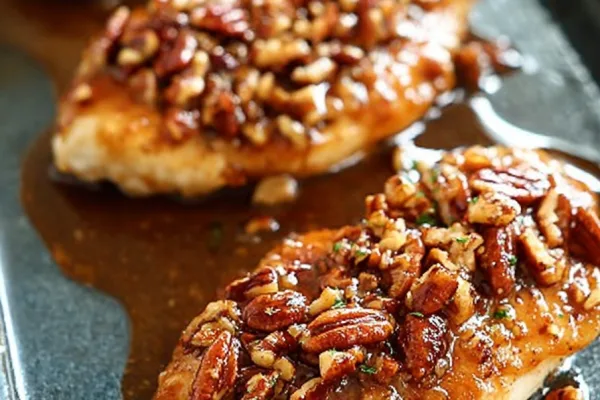
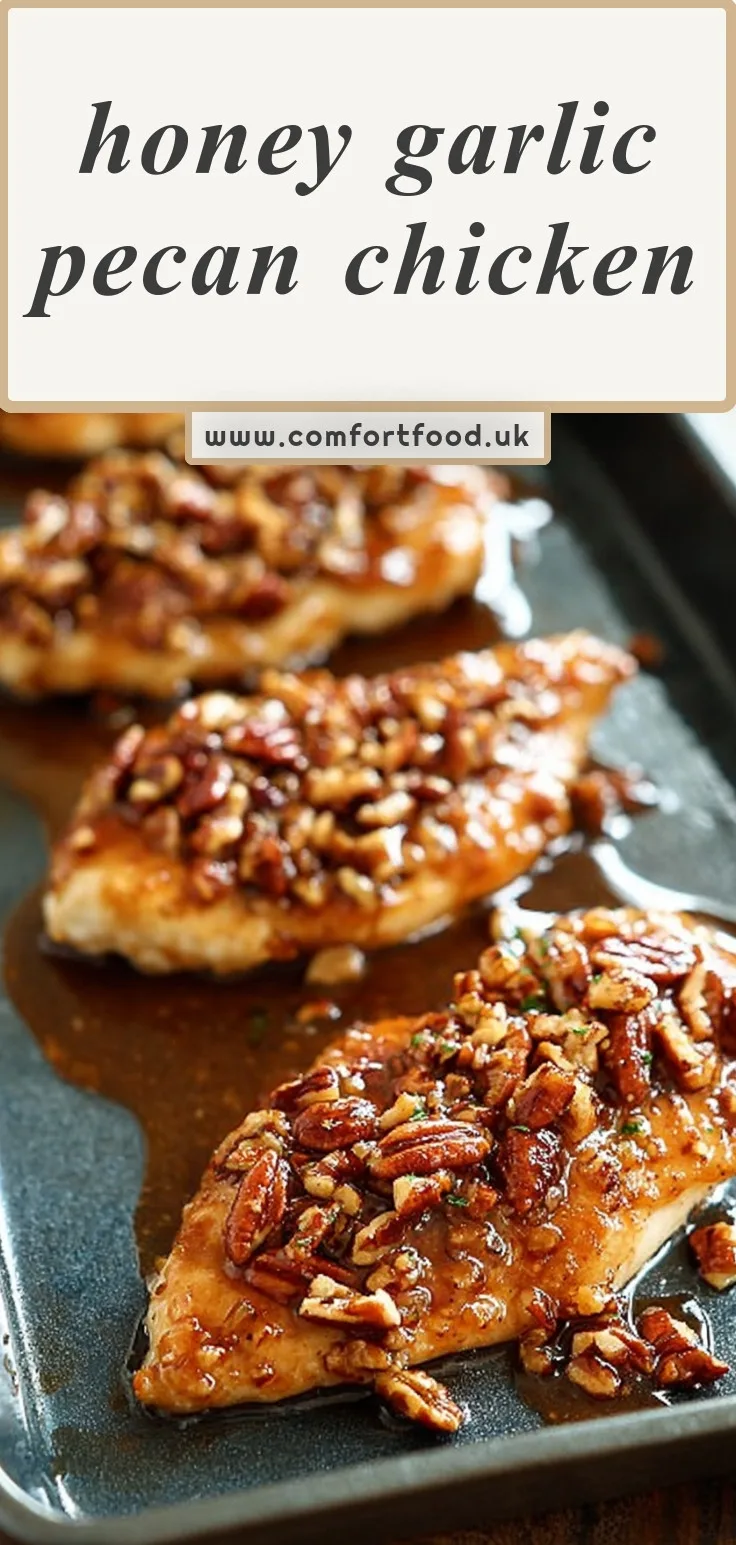
Honey Garlic Pecan Chicken cooks chicken breasts seared golden, topped with a rich honey-garlic pecan sauce thickened with chicken broth and butter. Ready in 35 minutes, it serves 4 with 483 calories per serving.
Prep:
10 min
Cook:
25 min
Total:
35 min
Servings:
4 servings
I made this Honey Garlic Pecan Chicken last Tuesday and it’s one of those recipes where you don’t overthink it. The chicken stays moist because you pound it thin first, and the sauce gets thick enough to coat without being gloppy. Also the pecans toast in butter which smells better than it has any right to.
Why You’ll Love This Recipe
- Everything cooks in one skillet so cleanup is fast
- Pounding the chicken to 1/2-inch means it cooks evenly and you don’t get that weird dry-on-the-outside raw-in-the-middle thing
- The fond from searing becomes the base of your sauce, so you’re basically recycling flavor
- Toasting pecans in butter changes them completely—they go from regular nuts to something with actual depth
- It’s ready in 35 minutes which is less time than most takeout
- You can taste the garlic without it punching you in the face because you add it after the pecans
The Story Behind This Recipe
I needed a chicken breast recipe that didn’t taste like cardboard. I’ve cooked a lot of boring chicken in my life and this one happened because I had pecans sitting in the pantry and honey in the cabinet. The technique of pounding the chicken thin came from a cooking class I took years ago and forgot about until recently. It actually works. The sauce builds itself if you just follow the order—butter, pecans, garlic, broth, honey. I tested it after work on a Tuesday when I was already tired and it still came out right, so that tells you something about how forgiving it is.
What You Need
You need 4 boneless skinless chicken breasts that you’ll pound down to 1/2-inch thickness. Don’t skip pounding them because uneven chicken cooks unevenly and you’ll hate yourself later. The seasoned salt goes on both sides—1 teaspoon total—but if you don’t have it just use whatever all-purpose seasoning is already open in your cabinet.
The 1/4 cup all-purpose flour is just for dredging and it creates that crust when the chicken hits the oil. You need 2 tablespoons olive oil for searing because it handles the heat without smoking everywhere. Then 2 tablespoons butter goes in after for toasting the pecans—1/2 cup of them—and butter does something to nuts that oil just doesn’t.
The garlic is 3 cloves, minced, and you add it after the pecans so it doesn’t burn. I learned that one the annoying way. You’ll need 1/2 cup chicken broth to deglaze and 1/4 cup honey to sweeten the whole thing into a sauce. Salt and pepper at the end lets you adjust after tasting because the seasoned salt already added some.
Don’t use pre-chopped garlic from a jar for this honey garlic chicken. Fresh garlic matters when it’s one of two flavors doing all the work.
How to Make Honey Garlic Pecan Chicken
Put your chicken breasts between two sheets of plastic wrap or inside a ziptop bag. Pound them with something heavy until they’re roughly 1/2-inch thick all over. I used a small skillet because I don’t own a meat mallet and it worked fine. Lay them on a tray and sprinkle both sides with the seasoned salt, then leave them alone while you get the skillet ready.
Heat 2 tablespoons olive oil in a large heavy-bottomed skillet over medium heat. Wait until it’s actually hot—the chicken should sizzle sharply the second it touches the pan. If it just sits there quietly you need to wait longer.
Pour your 1/4 cup flour onto a plate. Drag each chicken breast through it lightly and shake off the extra so you don’t get clumps. Add the chicken to the hot oil and listen for that sizzle.
Don’t touch it for 4 to 5 minutes. Just let it sit there and develop a crust. Flip it and cook the other side another 4 to 5 minutes until it’s cooked through and darker golden. Pull the chicken out and set it on a wire rack, then tent it loosely with foil so it stays warm without getting soggy.
Turn the heat down a bit. Add 2 tablespoons butter to the same skillet and when it melts and starts foaming add the 1/2 cup pecans. Stir them around frequently for about 3 minutes until they smell toasted and get a shade darker. The butter will foam a lot and that’s where the flavor lives.
Toss in your minced garlic and stir constantly for about 1 minute. You’ll smell it bloom but don’t let it brown hard or it’ll taste bitter.
Pour in the 1/2 cup chicken broth and scrape the bottom of the skillet with your spatula. All those brown bits stuck there are what makes this pecan chicken actually taste like something, so get them up. Lower the heat to a gentle simmer and stir in the 1/4 cup honey plus salt and pepper. Keep stirring as it thickens—takes around 5 minutes—until it coats the back of a spoon and looks syrupy.
When you’re pouring the broth in, the sauce will look thin and wrong for about 30 seconds before the honey starts pulling it together. That moment always makes me think I messed up but I haven’t yet.
Spoon the sauce over each chicken breast and serve it hot.
What I Did Wrong the First Time
I added the garlic at the same time as the pecans because I wasn’t paying attention to the order. By the time the nuts toasted the garlic had burned into these bitter little brown specks that ruined the sauce. I had to start the sauce over which meant dirtying another pan, and I was already annoyed from work. The second time I waited until after the pecans were done and it was completely different—the garlic stayed bright and sharp instead of tasting like an ashtray. Timing matters more than I thought it would with this chicken breast recipe.
Honey Garlic Pecan Chicken
Prep:
10 min
Cook:
25 min
Total:
35 min
Servings:
4 servings
Ingredients
- 4 boneless skinless chicken breasts, pounded to 1/2-inch thickness
- 1 teaspoon seasoned salt or preferred all-purpose seasoning
- 1/4 cup all-purpose flour
- 2 tablespoons olive oil
- 2 tablespoons butter
- 1/2 cup pecans
- 3 cloves garlic, minced
- 1/2 cup chicken broth
- 1/4 cup honey
- Salt and pepper to taste
Method
- 1 Place chicken breasts between two sheets of plastic wrap or inside a ziptop bag and pound to roughly 1/2-inch thickness. Lay on a tray and sprinkle both sides with seasoned salt or your choice of all-purpose seasoning. Set aside while you prep the skillet.
- 2 Heat 2 tablespoons olive oil in a large heavy-bottomed skillet over medium heat. You want it hot enough that the chicken sizzles immediately when it touches the pan; if not, let it heat a bit longer.
- 3 Pour the flour onto a plate. Lightly dredge each chicken breast in flour, shaking off excess. Add the chicken to the hot oil; listen for the sharp sizzle that tells you it's searing correctly.
- 4 Let the chicken cook undisturbed for 4 to 5 minutes on one side until it develops a golden crust. Flip and cook the other side another 4 to 5 minutes until cooked through and deep golden brown. Remove the chicken and place on a wire rack; tent loosely with foil to keep warm and avoid sogginess.
- 5 Reduce heat slightly and add 2 tablespoons butter to the same skillet. When the butter melts and begins to foam, add 1/2 cup pecans. Stir frequently, toasting them for about 3 minutes until the nuts give off a fragrant aroma and start to darken a shade. The foaming butter is normal and signals flavor building.
- 6 Add minced garlic to the pan and stir constantly for about 1 minute. You'll smell the garlic bloom without browning it harshly.
- 7 Pour in 1/2 cup chicken broth and scrape the skillet bottom with your spatula or wooden spoon, lifting up all the fond – those brown bits carry deep flavor.
- 8 Turn the heat down to a gentle simmer. Stir in 1/4 cup honey along with salt and pepper to taste. Keep stirring as the sauce thickens, usually around 5 minutes. You'll notice the sauce coat the back of a spoon and reduce to a syrupy consistency.
- 9 Serve your pounded, seared chicken breasts hot with the glossy honey-garlic pecan sauce spooned evenly over each piece.
Nutritional information
Calories
483
Protein
35g
Carbs
21g
Fat
30g
Tips for the Best Honey Garlic Pecan Chicken
Use a heavy skillet with some weight to it—cast iron or stainless steel. Thin pans get too hot too fast and you’ll burn the butter before the pecans even toast properly.
Keep the chicken moving while you pound it so the thickness stays even across the whole piece. If one side is thicker than the other, that part stays raw while the thin edge dries out and you’re back to disappointing chicken breast recipe territory.
The sauce looks thin when you first add the honey but don’t panic and dump in cornstarch or anything. Just keep stirring over low heat and it’ll thicken on its own as the water cooks off. Takes the full 5 minutes though so don’t rush it.
If your pecans start getting dark before they smell toasted, your heat’s too high. Pull the pan off the burner for 30 seconds and let it cool down before you continue. Burnt nuts taste like charcoal and there’s no saving them once they cross that line.
Serving Ideas
I put this over white rice the first time because I needed something to soak up the extra sauce. Worked better than I expected—the honey garlic chicken sauce seeps into the rice and you get flavor in every bite instead of just on top.
Roasted green beans on the side cut through the sweetness. You want something that’s not competing with the honey.
Also good with crusty bread for mopping up what’s left on the plate. I don’t usually do bread with dinner but the sauce is too good to waste and a fork doesn’t get all of it.
Variations
Swap pecans for walnuts if that’s what you have. They’re denser and a bit more bitter but they still toast well in the butter. The sauce tastes slightly different but not in a bad way.
You can use bone-in thighs instead of breasts but you’ll need to cook them longer—closer to 8 minutes per side—and check that they hit 165°F inside. The sauce works the same though.
Maple syrup instead of honey gives you a deeper, smokier sweetness that’s less floral. Use the same amount and it thickens about the same. I liked it but it changes the whole vibe of the pecan chicken into something more fall-appropriate.
Adding a tablespoon of Dijon mustard to the sauce after the broth gives it a slight tang that balances the honey. I did this by accident once when I thought the sauce was too sweet and it actually helped.
FAQ
Can I use chicken thighs instead of breasts?
Yeah but bone-in thighs take longer—about 8 minutes per side. Boneless thighs work too and they cook faster, closer to 6 minutes per side. Check with a thermometer to hit 165°F because guessing gets you sick or you overcook them.
What if I don’t have seasoned salt?
Use whatever all-purpose seasoning blend you already have open. Garlic powder plus onion powder plus a bit of paprika works. Even just salt and pepper is fine—the sauce does most of the flavor work anyway.
Do I have to pound the chicken or can I skip that?
You can skip it but then you’re back to thick chicken that cooks unevenly and the timing in the recipe won’t match. If you’re using thin cutlets from the store that are already about 1/2-inch you’re good to go without pounding.
Can I toast the pecans ahead of time?
Not really because they need to toast in the butter that’s already in the pan from cooking the chicken. That butter has flavor from the fond and the pecans pick it up. Toasting them separately in a dry pan means you lose that.
How do I know when the sauce is thick enough?
Dip a spoon in and run your finger across the back. If the line stays clean and doesn’t run together right away it’s ready. It should look syrupy and coat the spoon instead of just sliding off immediately.
What kind of honey works best?
Regular clover honey from the grocery store is what I used. Fancy honey with strong flavors might overpower the garlic. You just need something that’s liquid enough to pour and sweet enough to balance the savory.
Can I use pre-minced garlic from a jar?
I wouldn’t for this one. The garlic is half the point of honey garlic chicken and jarred stuff tastes flat and a little sour. Fresh garlic takes like 2 minutes to mince and the difference is obvious when there’s so few ingredients.
How do I store leftovers?
Put the chicken and sauce in an airtight container in the fridge. It’ll keep for 3 days. The pecans get softer as they sit in the sauce but they don’t turn mushy or anything.
How do I reheat this without drying out the chicken?
Microwave on 50% power for about 90 seconds, then check it. Full power makes the edges rubbery. You can also reheat it in a covered skillet over low heat with a splash of broth to loosen the sauce.
What if my sauce won’t thicken?
Turn the heat up slightly and keep stirring. It needs to simmer long enough for the water to cook off. If you added too much broth by accident just let it go another few minutes until it reduces down.
Can I double this recipe?
Yeah but you’ll need to cook the chicken in batches unless you have a really big skillet. Crowding the pan means the chicken steams instead of searing and you won’t get that crust. The sauce doubles fine in the same pan after.
Do I need a meat thermometer?
Not if the chicken is pounded to 1/2-inch and you cook it 4 to 5 minutes per side over medium heat. It’ll be cooked through. But if you’re nervous or using thicker pieces then yeah, check for 165°F.
Why did my garlic burn?
You probably added it too early or your heat was too high. Garlic burns fast—it only needs about 1 minute after the pecans are done. If the pan is smoking when you add it, pull it off the heat for a few seconds first.
Can I use salted butter?
Yeah just go easy on the extra salt you add at the end. Salted butter plus seasoned salt plus more salt can push it over the edge into too salty. Taste the sauce before you add any.
What if I don’t have chicken broth?
Water works but the sauce will be less rich. You could also use white wine if you have it—same amount—and it adds a slight acidity that’s actually pretty good with the honey.
My chicken stuck to the pan when I tried to flip it—what happened?
Either the pan wasn’t hot enough when you added it or you tried to flip too early. Let it sit undisturbed for the full 4 to 5 minutes. It’ll release on its own when the crust forms. If you force it early it tears.
Can I make the sauce without the chicken?
Sure, just toast the pecans in butter in a clean pan and follow the rest. You could use it on pork chops or even salmon. The process is the same.
Do raw pecans and roasted pecans work the same?
Raw pecans are what I used and they toast perfectly in the pan. If you use already-roasted ones they might get too dark before the butter finishes foaming. Watch them closer if that’s all you have.
How thin is 1/2-inch really?
About as thick as your phone without the case. If you’re eyeballing it just make sure the whole breast is roughly even and not super thick in the middle tapering to nothing on the edges.
You’ll Love These Too
Explore all →
Chicken Shrimp Carbonara Linguine
Apple Bread Pudding with Caramel Sauce
Roasted Broccoli with Parmesan
Duck Breast Red Wine Cocoa with Kale
Thai Kitchen Curry Paste Red Sauce
Ricotta Spinach Fazzoletti with Plum Tomatoes
Rustic Pici Pasta with Spelt & Chickpea Flour
Crockpot Ziti Bake with Ground Beef
Brown Butter Chocolate Chip Cookies
Tofu Butter Masala with Tomato Cream

Remoulade Sauce with Mayo and Horseradish
Labneh with Kefir and Za'atar: Easy Cheese
Bundt Cake Pumpkin with Maple Whiskey
Gluten-Free Chocolate Cake with Hazelnut Meal

Sheet Pan Pork Chops with Parmesan Potatoes
7 Layer Bars with Dates, Walnuts & Pumpkin
Slow Cooker Chili With Chorizo
Homemade BBQ Sauce
Cranberry Meringue Wreath with Orange Spice