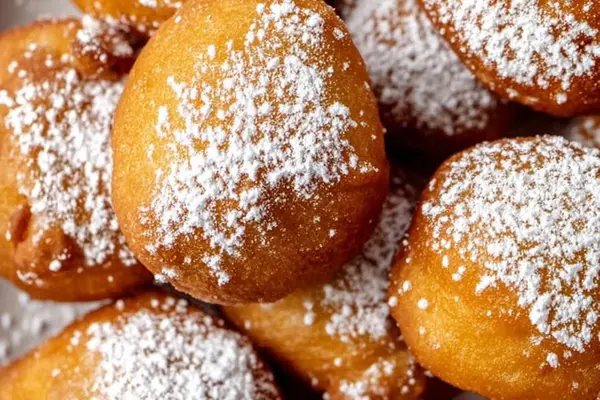
Homemade Zeppole: Crispy Fried Dough Balls
By Emma
Certified Culinary Professional
·
Recipe tested & approved
Make homemade zeppole with flour, butter, and warm milk. These crispy fried dough balls are dusted with powdered sugar for an authentic Italian treat.
Prep:
22 min
Cook:
16 min
Total:
38 min
Servings:
24 servings
Warm oil, heaping tablespoon of dough, and they puff into something golden before you can even think about it. That’s zeppole. Italian fried dough that tastes like it took hours, when you’re actually done in 38 minutes total.
Why You’ll Love This Italian Fried Dough Recipe
Hand-formed, not some uniform factory thing. They’re imperfectly puffed and that’s exactly what makes them good.
Takes 22 minutes to prep, 16 to fry. Cold Tuesday night and you’ve got homemade fried pastry balls sitting warm on a plate. Most people don’t even try because they think it’s complicated.
Vegetarian. Comes together with milk, butter, flour. Nothing else hiding in there.
Tastes better warm. Stays crispy for maybe an hour if the oven’s off and you didn’t crowd the pan. Texture holds. Not sure why some puff bigger than others—hand-formed dough just does that.
One bowl. Wire rack. A skillet. No special equipment.
What You Need for Italian Zeppole
All-purpose flour. One and a quarter cups. Not bread flour, not cake flour. The middle ground is what works here.
Granulated sugar and baking powder—two tablespoons and a teaspoon and a half. Baking powder’s the secret. Makes them puff without yeast sitting around for hours.
Fine salt. Half a teaspoon. Coarse salt doesn’t dissolve right into the dough.
Cold unsalted butter. Three tablespoons cut into small cubes. Vegetable shortening works if butter’s not around, but butter gets you that flavor. Temperature matters—too warm and it blends in instead of staying distinct.
Whole milk, warm. Three quarters cup. Oat milk works. So does almond. Dairy-free happens fine.
Vegetable oil for frying. About an inch deep in the skillet. Doesn’t have to be fancy. Olive oil burns.
Powdered sugar for dusting. Not granulated. Powdered sticks, melts into the warmth a little.
How to Make Italian Fried Dough
Set your oven to low, around 160-170°F. Line a baking sheet with a wire rack on top. This matters more than it sounds—soggy bottoms happen fast if you use paper towels. The air underneath keeps them breathing while you work in batches.
Whisk flour, sugar, baking powder, and salt together in a large bowl. Actually sift it or just run the whisk through a bunch of times. Breaks up clumps, aerates everything. You don’t want pockets of pure baking powder hiding in there.
Cut the cold butter into small cubes. Use your fingers or a pastry cutter to work it in until you get pea-sized lumps. This is the part where temperature actually matters. Warm hands, melted butter, ruined texture. Keep it cold.
Pour the warm milk in slowly. Stir with a spatula until it comes together shaggy. Sticky but holds—that’s right. Don’t overwork it. Zeppole dough that’s overmixed turns tough and doesn’t puff.
Cover the bowl with a damp cloth. Rest it for 15 to 20 minutes. Let it hydrate, let the gluten relax. The dough should still be soft and slightly tacky when you’re done waiting.
How to Get Crispy Golden Fried Dough
Heat vegetable oil in a small heavy skillet. You need about 345-355°F. Use a deep fry thermometer if you have one. If not, drop a tiny piece of dough in—it should bubble immediately and float up.
Grease a tablespoon measure with cooking spray or oil. Scoop a heaping tablespoon of dough. Loosely shape it in your hand, nothing tight. Drop it gently into the oil.
Cook about 50 to 70 seconds total. Flip halfway through with a slotted spoon. Watch it puff up. The color goes from tan to amber.
Don’t crowd the pan. Temperature drops fast when you do that and suddenly you’ve got greasy dough instead of crispy dough. Work in batches. It takes longer but it works.
Transfer to the wire rack. Not paper towels. The airflow underneath keeps the crust actually crisp instead of softening back up as it sits.
Keep the oven running the whole time. Warm cooked zeppole in there while you finish the rest. Everything stays hot, everything’s ready to serve at once.
Dust with powdered sugar right before serving. Generously. The contrast between warm fried dough and sweet powder is the whole point. You can mix cinnamon in if you want something different. Works fine either way.
Italian Fried Pastry Balls Tips and Common Mistakes
Don’t skip the baking powder. This isn’t cake—you need that lift and you need it fast.
Oil temperature is actually non-negotiable. Too low and they absorb oil. Too high and they brown before they puff. 345-355°F. That’s the range.
The dough should be sticky. If it’s dry enough to roll in your hands, you’re heading for dense zeppole. Warm milk matters. Cold milk and the butter doesn’t integrate right.
Tried frying in a deeper pan once. Bad call. The dough didn’t get as much surface area contact with the heat. Smaller batches in a skillet work better. Something about the geometry.
Size variation happens. Hand-formed dough is imperfect on purpose. Some puff bigger, some stay smaller. That’s not a failure—that’s homemade.
The wire rack step isn’t optional. Learned that the hard way. Paper towels trap steam underneath and the bottom gets soft. Wire rack and the air gets under there and they stay crispy for hours.
Homemade Zeppole: Crispy Fried Dough Balls
Prep:
22 min
Cook:
16 min
Total:
38 min
Servings:
24 servings
Ingredients
- 1 1/4 cup all-purpose flour
- 2 tablespoons granulated sugar
- 1 1/2 teaspoons baking powder
- 1/2 teaspoon fine salt
- 3 tablespoons cold unsalted butter (substitute vegetable shortening)
- 3/4 cup warm whole milk (can swap for oat milk for dairy-free)
- Vegetable oil for frying (about 1-inch depth)
- Powdered sugar for dusting
Method
- 1 Set oven to low warm, about 160-170°F. Place wire rack on baking sheet. Prevents soggy bottoms, keeps dough oxygenated while waiting.
- 2 Whisk together flour, sugar, baking powder, and salt in large bowl. Make sure to sift or aerate it for lightness—no clumps hiding.
- 3 Cut cold butter into small cubes. Use pastry cutter or fingers to work it into flour mix. Look for pea-sized lumps—too much warmth, butter melts or blends in, ruining texture.
- 4 Pour warm milk slowly into flour mixture. Stir with spatula until shaggy dough forms. Sticky but holds together—that’s right. Avoid overworking or dough turns tough.
- 5 Cover with damp cloth. Rest 15-20 minutes. Allows hydration, gluten relaxes. Dough should remain soft, slightly tacky to touch.
- 6 Heat vegetable oil in small heavy skillet to about 345-355°F. Use deep fry thermometer or test with small dough piece—it should bubble immediately and float up.
- 7 Lightly grease tablespoon measure with cooking spray or oil to prevent sticking. Scoop heaping tablespoon of dough. Loosely shape, but no tight packing. Drop gently into oil.
- 8 Cook about 50-70 seconds total per side. Flip gently halfway through with slotted spoon. Balls puff, develop evenly golden color from tan to amber.
- 9 Work in batches not to crowd pan; oil temp drops fast causing greasy dough. Drain on wire rack over baking sheet, not paper towels—better airflow keeps crust crisp.
- 10 Keep cooked zeppole warm in oven set earlier. Makes frying all uniform temperature and ready to serve hot.
- 11 Dust generously with powdered sugar when serving. Offers sweet contrast to warm fried dough. Can sprinkle cinnamon mixed with sugar if you want a twist.
- 12 Expect some variation in puffiness and size—hand-formed dough, not precise shapes. Perfectly imperfect.
Nutritional information
Calories
110
Protein
2g
Carbs
12g
Fat
6g
Frequently Asked Questions About Italian Fried Dough
Can you make the dough ahead of time? Yeah. Make it the night before, cover it, stick it in the fridge. Fry the next day. Might add a few seconds to the cook time since it’ll be colder, but it works.
What if the zeppole don’t puff up? Oil temperature. Usually. If it’s not hot enough they flatten instead of puff. Or you overworked the dough and killed the gluten. Or both. Happened to me once. Start over, don’t overwork it this time.
Can you use all-purpose flour instead of cake flour? That’s what the recipe calls for. All-purpose. Use that.
Why do you need baking powder instead of yeast? Yeast takes hours. Baking powder works instant when heat hits it. Different technique, different timeline. Both make fried dough—just not this one.
Is oat milk really the same as whole milk here? Close enough. The butter and sugar do most of the flavor work. Milk’s just hydration. Almond works too. Haven’t tried coconut. Probably fine.
Can you bake them instead of frying? You could try. Won’t be zeppole. They need the oil to get that specific texture. Baked would be more like a donut and not in a good way. Just fry them.
How long do they stay crispy? Maybe an hour if the oven’s completely off and you did the wire rack thing. After that they start to soften. They’re still good, just different. Eat them warm.
What’s the difference between vegetable oil and other oils? Vegetable oil doesn’t have a strong flavor and doesn’t burn at this temperature. Olive oil burns. Coconut oil burns. Avocado oil works but tastes weird in fried dough. Stick with vegetable.
You’ll Love These Too
Explore all →
Black Bean Stew Recipe with Pork & Linguiça

Eggless Macaroons with Coconut Yogurt
White Chocolate Brownies with Cream Cheese

Peanut Soba Chicken with Cashew Butter
Maple Glazed Upside-Down Apple Cake
Salsa Chicken Bake with Cheddar Cheese

Cinnamon Toast Crunch Cheesecake Bites

Grilled Whole Sea Bass with Lemon & Herbs

Carrot Ginger Rum Cocktail with Elderflower

Buffalo Wing Egg Rolls with Cheddar
Shortbread Millionaire Bars with Pecans

Crispy Corn Fritters with Smoked Paprika
Chutney Fig with Blueberries & Balsamic

Vietnamese Spring Rolls with Pork

Crab-Stuffed Lobster Tail Recipe

Monster Rice Treats with Candy Eyes

Chocolate Chip Cookie Ice Cream Sandwiches

Grilled Vegetable Salad with Chimichurri
Pork Parmigiana Patties with Eggplant