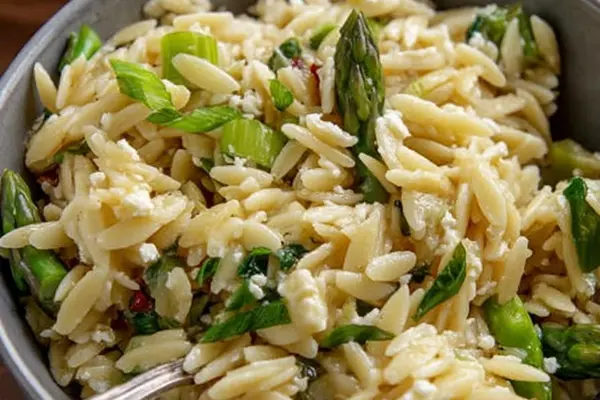
Orzo Salad with Goat Cheese and Asparagus
By Emma
Certified Culinary Professional
·
Recipe tested & approved
Creamy orzo salad with asparagus, herbed goat cheese, and bright lemon juice. Cooked risotto-style in vegetable broth with olive oil for a tender, flavorful side dish.
Prep:
12 min
Cook:
22 min
Total:
34 min
Servings:
4 servings
Cut the asparagus first. Broth sizzles in the pan, orzo goes in right after. Twelve minutes total, maybe less if your heat runs hot. Done before you know it.
Why You’ll Love This Orzo Pasta Salad
Takes 34 minutes start to finish — actual time, not the optimistic kind. Goat cheese melts into creamy pockets that don’t try too hard. Just sits there, tangy, letting the lemon do the work. Works cold or warm. Tastes better the next day, which sounds weird but isn’t. One pan. One saucepan. That’s the whole thing. No colander, no second pot, no drama. Asparagus stays bright green and actually crispy, not sad. The orzo absorbs everything without turning into mush — vegetarian pasta that doesn’t apologize for itself.
What You Need for Asparagus Goat Cheese Orzo
Vegetable broth. Two and a quarter cups. Chicken broth works. Water with a bouillon cube works. Low sodium matters — the goat cheese brings salt.
Orzo pasta. A cup and a quarter. Whole wheat orzo if you have it — the texture’s different, grainier, holds up better. Regular works fine.
Asparagus. One bunch, trimmed, cut into inch-long pieces. The thin ones cook faster. Doesn’t matter.
Goat cheese. Four ounces, herbed if you can find it. Feta works. Ricotta makes it creamier, less tang. I’ve used all three.
Lemon. One large one. Juice and zest both. The zest matters more than you think.
Basil. Fresh. One tablespoon, chopped. Dill works. Mint too. Changes the whole thing.
Olive oil. Extra virgin. Three tablespoons total — two for cooking, one for finishing. Don’t skimp on the finishing one.
Salt and pepper. You’ll need both. Taste as you go.
How to Make Creamy Goat Cheese Pasta
Heat olive oil in a medium saucepan over medium-high. Two tablespoons. Watch it shimmer — not smoking, just hot.
Pour the broth in. It’ll bubble immediately. Let it go until you see that rolling simmer happening. Little pops, hissing sounds, the whole surface moving.
Add the orzo and asparagus right in. Don’t stir like you’re possessed. Just enough to coat everything in oil, spread the asparagus around. One or two movements with a wooden spoon. That’s it.
Now patience starts. About ten to thirteen minutes, uncovered. The broth will shrink down. Watch for it — little pools turning glossy, thick, clinging to each orzo piece. Stir every couple minutes. Not constantly. Constantly makes it gluey and awful.
The asparagus gives first — poke it with a fork around minute eight. You want slight resistance. A crisp bite. Not tender yet. It’ll get there.
The orzo should look plump. Still a little chew in the center. Like risotto at the right stage. Not dry. Not soupy. Mostly absorbed but some moisture still there.
How to Get This Lemon Orzo Pasta Perfect
Pull the pan off heat. Right away. Don’t wait.
Stir in the remaining olive oil. The goat cheese — just drop it in chunks, it’ll melt into creamy pockets. The lemon juice and zest. The basil.
The cheese melts into the residual heat. You get these tangy streaks mingling with the orzo. The lemon cuts through it all. Bright. Sharp. Exactly what it needed.
Taste it. Add salt. Add pepper. Goat cheese is salty already but balance matters — the lemon needs salt to sing.
One more gentle stir. Everything should be combined but not beaten. Plump orzo, asparagus flecks, little stringy bits of cheese.
Orzo Salad Tips and Common Mistakes
Overstir and it turns gluey. Stop stirring when you want to stir more.
Undercook the orzo and it stays grainy in the center. The broth should be almost gone. Almost. Not totally gone. A light sheen coating everything.
Asparagus cooks faster than orzo. If yours is getting too soft while the pasta’s still firm, cut it bigger next time. Or add it later — maybe minute five instead of minute zero. Doesn’t matter which way.
If the broth evaporates too fast, add water. A quarter cup. Hot water. Room temp works too, just takes longer.
Goat cheese that’s too funky — swap half for ricotta. Creamier. Less aggressive tang.
Lemon zest. Don’t skip it. The juice alone isn’t enough. The zest has the aromatics, the actual lemon smell that makes people stop eating and ask what you made.
Cold version: let it cool to room temp, then refrigerate. When you eat it, bring it back to room temp. The orzo gets firmer when cold. Thickens up. Textures shift. Some people like it better that way.
Prep asparagus while the broth heats. Zest the lemon then. Nothing sits around waiting. By the time heat’s up, you’re ready to go.
Orzo Salad with Goat Cheese and Asparagus
Prep:
12 min
Cook:
22 min
Total:
34 min
Servings:
4 servings
Ingredients
- 2 1/4 cups low sodium vegetable broth (can swap chicken broth or water with bouillon cube)
- 1 1/4 cups orzo pasta (preferably whole wheat orzo for texture twist)
- 2 tablespoons extra virgin olive oil, divided (1 tbsp for cooking, 1 tbsp for finishing)
- 1 bunch asparagus, trimmed and cut into 1-inch pieces
- 4 ounces herbed goat cheese (can replace with feta or ricotta for creamier profile)
- Salt to taste
- Freshly ground black pepper to taste
- Juice and zest of 1 large lemon
- 1 tablespoon finely chopped fresh basil (added twist for aromatics)
Method
- 1 Start by heating 2 tablespoons of olive oil in a medium saucepan over medium-high heat. Pour in the vegetable broth and bring it to a rolling simmer—bubble dance at the surface, little pops and hissing sounds.
- 2 Add the orzo plus your cut asparagus right away. Stir briefly to coat the pasta in oil and distribute asparagus evenly. Resist the urge to stir constantly; just enough to keep things moving.
- 3 Now, this part takes patience and feel. Cook uncovered for about 10-13 minutes. Watch closely for the broth to reduce—little liquid pools turning glossy and thick, clinging to each orzo piece. Stir every couple minutes—not too often, no mush. If broth evaporates too fast, splash in a tad more hot water.
- 4 The asparagus should be just tender—not limp or mushy. Poke a piece with a fork for slight resistance, a crisp bite. The orzo itself—plump but with a little chew still inside. Like a perfect al dente risotto stage. No grains sticking or drying out; some moisture should remain but mostly absorbed.
- 5 Pull the pan off heat. Immediately stir in the remaining olive oil, goat cheese, and fresh lemon juice and zest. The goat cheese will melt into creamy pockets—we want that tangy richness contrasting the bright lemon heat. Add finely chopped basil now for a herbal lift.
- 6 Taste and tweak salt and black pepper here. Goat cheese can be salty but some extra seasoning balances it out. Give it a final gentle stir to combine everything—little stringy cheese bits mingling with the plump orzo spheres and flecks of green asparagus.
- 7 Serve right away warm and creamy, or cool to room temp. For a chill version, refrigerate covered and bring to room temp again before eating to revive softness. Leftovers stamina well—good next day—the flavors meld and thicken, perfect for a quick lunch or picnic side.
- 8 Pro tip: If orzo cooks too fast and dries before asparagus softens, add 1/4 cup more broth or water. If the goat cheese is too tangy, swap half for ricotta next time for extra milky mellow.
- 9 Common tripups? Overstirring turns dish gluey; underscooking leaves grainy noodles. Patience watching broth foam recede, checking tooth in asparagus saves the day.
- 10 When using alternative herbs, try fresh dill or mint for a refreshing contrast. Lemon zest has power here; don't skip for aroma.
- 11 Visuals to trust: orzo almost swollen but still firm in center, broth gone thin except sheen coating pasta, asparagus bright green, tender but springy. Aromas of olive oil and lemon zing fill kitchen when done.
- 12 Efficiency hack: prep asparagus and zest while broth heats so no downtime. Use wide pan for faster evaporation and even cooking.
- 13 No stirring frenzy, just mindful nudges—keep rhythm, trust senses not clock.
Nutritional information
Calories
320
Protein
10g
Carbs
38g
Fat
14g
Frequently Asked Questions About Lemon Orzo With Asparagus
Can I make this salad ahead of time? Yeah. Cools down fine. Refrigerate it. Bring back to room temp before eating — the orzo loosens up again, gets creamy instead of stiff. Tastes better the next day anyway. Flavors meld overnight.
What if I use whole wheat orzo instead of regular? Texture’s different. Grainier. Holds up better in the fridge. Takes maybe a minute longer to cook — watch it, not the clock. Everything else stays the same.
Can I substitute the goat cheese? Feta works. Drier, more crumbly. Ricotta works better — creamier, milder, less aggressive. Half and half is good too. Don’t use cream cheese. Just don’t.
How do I keep the asparagus from getting mushy? Cook it with everything else but pull it out early if it’s going soft fast. Or cut it bigger. Thin asparagus cooks in eight minutes. Thick asparagus takes twelve. Choose based on what you have.
Is this actually vegetarian pasta dishes material? Totally. Swap the vegetable broth for chicken broth and it’s still vegetarian. The goat cheese, the lemon, the asparagus — all there. The orzo absorbs all the flavor. Vegetarian pasta that doesn’t feel like a compromise.
What herbs work besides basil? Dill is good. Fresh mint changes it completely — lighter, summery. Parsley works. Chives work. Don’t use dried herbs here. Doesn’t hit the same. Fresh only.
Can I add other vegetables? Peas work. Zucchini. Sun-dried tomatoes. Cherry tomatoes at the end so they don’t fall apart. The broth-pasta ratio stays the same though. More vegetables means less orzo, basically.
You’ll Love These Too
Explore all →
Red Wine Sangria with Peaches and Cinnamon

Grilled Shrimp On Grill with Smoked Paprika

Cranberry Chocolate Rustic Loaf Recipe

Buffalo Chicken Mac and Cheese Recipe

Olive Garden Bread Sticks with Garlic & Cheese
Roast Lamb Dinner with Garlic and Sage

Raspberry Yogurt Sherbet Recipe with Greek Yogurt
Muhammara Recipe: Roasted Red Pepper Dip
Pinto Bean Chili with Smoked Paprika
Maple Slow Cooker Pudding with Bourbon

Maple Glazed Oatmeal Cookies with Cinnamon
Arrabbiata Sauce Pasta with Spicy Sausage
Caramel Sheet Cake with Espresso & Brown Sugar
Lemon Bars with Cake Mix & Oats

Chocolate Icing Recipe with Mascarpone

Classic Apple Pie with Cinnamon and Nutmeg
Beef Steak Marinade with Spice Rubs

Coconut Oil Baking: Ginger Steamed Pudding
Chunky Fiery Salsa Recipe with Chipotle