Rustic French Baked Onions with Gruyère
E
By Emma
Certified Culinary Professional
•
Recipe tested & approved
Slow-baked onions in beef consommé with melted Gruyère cheese and sage. Tender, caramelized halves steamed low and slow until velvet-smooth for ultimate comfort.
Prep:
20 min
Cook:
1h 10min
Total:
1h 30min
Servings:
4 servings
Trim the root. Lay them flat, cut side up. Consommé goes in—not water, the broth matters. This is one of those dishes that looks like it takes forever and technically it does, but you’re barely in the kitchen. Just baste every twenty minutes and something genuinely French happens. Had a version at a bistro in Lyon that was basically this—expensive, simple, exactly what it needed to be. Tried to recreate it for years. This works.
Why You’ll Love This Rustic French Baked Onions
Takes 90 minutes total but maybe 10 of actual work. Prep the onions, pour the broth, walk away. The oven does everything.
Gruyère gets melty and the onions go sweet and soft—not mushy, just giving. Way better than the watery vegetarian cheese bakes you’ve probably had.
Tastes like a French bistro made it, which means it’s fancy enough for guests but honestly? Weeknight side. Works with roasted chicken, works with fish, works alone with bread.
No fancy technique. No weird equipment. Just patience and basting.
What You Need for French Baked Onions
Six medium onions. Medium matters—big ones take longer, small ones fall apart. Halve them lengthwise, keep the root end intact or they come apart mid-cook.
Beef consommé. Not beef broth. The difference is the consommé is clear, concentrated—has more flavor in less liquid. Mushroom broth works if you’re vegetarian. Tastes a little lighter but still good. Maybe slightly more sage to make up for it.
Gruyère cheese. The nutty kind. Sliced, not shredded—eight slices, about two per onion half. Swiss works. Emmental works. American cheese doesn’t. Just doesn’t.
Dried sage. Two teaspoons split across the whole dish—some goes in the liquid, some on top with the cheese. Fresh sage would be better but dry works fine.
Sea salt and black pepper. A baking dish that fits six halves flat—9×13 is standard. Butter or cooking spray to coat it.
Water. One cup. Keeps the environment steamy so the onions roast instead of drying out while they soften.
How to Make French Baked Onions
Heat the oven to 295 degrees. Sounds low—it is. That’s the whole point. Slow roasting makes the onions caramelize without burning, makes the liquid reduce without evaporating completely.
Coat the baking dish. Doesn’t matter if it’s butter or cooking spray—just enough so the onions don’t stick.
Onions next. Trim the root but leave it in—that’s what holds the halves together when they soften. Peel the papery skin off but leave the white layers. Lay them cut side up, snug but not overlapping. They shouldn’t touch if you can help it—overlapping means steamed onions, roasted is what you want.
Pour consommé over everything. Just enough to coat the cut sides and get into the layers a little. Not drowning them—maybe a quarter inch of liquid pooling at the bottom. Then add the water to the empty spaces, the parts where there’s no onion. That water creates steam. The consommé cooks the onions.
In the oven it goes. Uncovered. Bake for about an hour—maybe a bit less if your onions are smaller, maybe a bit more if they’re huge.
Every twenty minutes, stop and baste. Pour the broth from the bottom back over the tops. This is not optional. This is what keeps the exposed parts soft instead of turning into cardboard. Takes 30 seconds. Do it anyway.
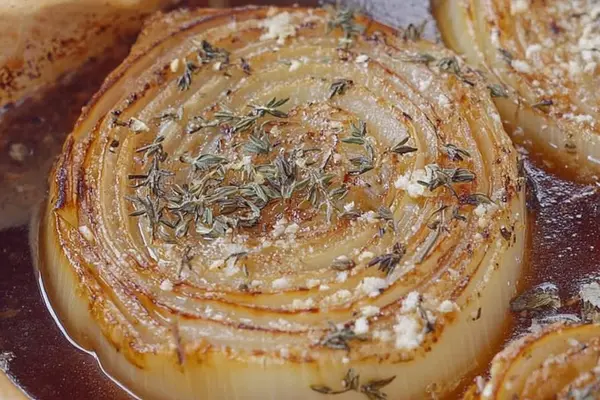
Watch the color. The outer layers start golden, then shift to this deep amber. The skin blisters slightly. When a fork slides into the thickest part without resistance, you’re close—maybe five more minutes.
How to Get French Baked Onions Perfectly Tender
The meat of it is basting. Every twenty minutes. If you skip this, the parts that stick above the liquid get dry. Basting keeps them soft all the way through.
Don’t rush the temperature. 295 degrees is slower than most ovens run but it’s intentional. Higher heat and you’ll dry them out before they get tender. The whole thing takes 70 minutes because that’s what slow roasting means.
If the broth evaporates too fast—watch the liquid level after 40 minutes—cover the dish loosely with foil. Not tight. Just enough to trap some steam. Uncover it for the last 15 minutes so you get a little caramelization on the tops.
The cheese goes on when the onions are fully tender. Not before. Fork or skewer through the thickest part should slide in with basically zero resistance. Poke from the side if you’re not sure. One or two slices per half. Sprinkle a pinch of sage on top of each one—maybe a quarter teaspoon per half. Salt and pepper now, not before. The consommé is already salty and the seasoning needs to hit the cheese.
Back in the oven for four minutes. Watch it. The cheese melts, bubbles a little fuzzily at the edges. You don’t want brown spots—they taste bitter. Four minutes usually does it. Five if your oven runs cool.
Rustic French Baked Onions Tips and Common Mistakes
Don’t use large onions if you can avoid it. They cook unevenly—the outside layers get done while the center is still hard. Medium is the sweet spot.
Beef consommé is not beef broth. Broth is cloudy, has bones in it, needs to reduce more. Consommé is clear and already concentrated. It matters. If you can’t find consommé at your store, look for a brand that says “concentrated.” Same thing, different name.
If you’re doing mushroom broth instead—totally fine for vegetarian—increase the sage slightly. Maybe three teaspoons total instead of two. The mushroom broth is earthier but gentler. The sage brings savory depth back.
Don’t make this in a crowded baking dish where the onions overlap. They’ll steam instead of roast. If you’ve got only six halves and your dish is huge, use a smaller one.
The liquid at the end should be reduced—darker, less watery. If it’s still thin when the onions are done, scoop the onions onto plates and simmer the remaining broth in a pan on the stove for a minute or two. Drizzle it over. Better than watery plates.
Gruyère adds a nuttiness that pushes back against the sweetness. Swiss works but it’s blander. Don’t skip the cheese step thinking it’s optional. It’s not.
Rustic French Baked Onions with Gruyère
Prep:
20 min
Cook:
1h 10min
Total:
1h 30min
Servings:
4 servings
Ingredients
- 6 medium onions halved lengthwise
- 2 cups beef consommé; substitute mushroom broth for lighter notes
- 1 cup water for steaming
- 8 slices Gruyère cheese (replaces Swiss)
- 2 teaspoons dried sage, divided
- Fine sea salt
- Freshly ground black pepper
- Cooking spray or butter to coat baking dish
Method
- Oven prep and dish
- 1 Set oven to 295 degrees Fahrenheit (lower by 5 degrees than usual). Lightly grease a 9×13 baking dish or just smaller if onions don't crowd. No overlap, must sit flat.
- Onions and broth
- 2 Trim onions, peel carefully leaving root intact so halves hold shape. Lay them cut side up in dish. Pour consommé evenly over onions, just enough to coat and get into layers. Add water to the empty bottom spaces of dish—keeps environment steamy so onions roast, don’t dry out.
- Baking and basting
- 3 In goes the dish. Bake uncovered. Every 20 minutes pause and baste onions with broth pooled at bottom—don’t skip this or you’ll get dry edges. Onions soften gradually, translucent skin blisters slightly, color shifts to golden amber; liquid bubbles gently.
- Cheese and sage finish
- 4 Once onions feel tender when poked—a fork or skewer slides in without resistance, skins slightly wrinkled—top each half with 1-2 slices Gruyère. Sprinkle 1/2 teaspoon dried sage over cheese. Season with salt and pepper now. Return to oven just long enough for cheese to melt and bubble fuzzily, about 4 minutes. Watch carefully; no browning needed.
- Serving
- 5 Serve piping hot. Liquid reduced and aromatic, cheese stretchy but not greasy. If too watery, remove onions and simmer remaining broth in pan to thicken slightly; drizzle over before plating.
- Efficiency and pitfalls
- 6 Do not rush the bake. Patience pays in onion texture. If broth evaporates too fast, cover loosely with foil but only mid-way through bake. Avoid large onion pieces—they cook unevenly. Below 6 halves, reduce liquid volume proportionally but keep basting schedule. Substitute beef consommé for mushroom broth for vegetarian-friendly, but increase sage by 50% for flavor depth. Gruyère adds nuttiness against onion sweetness, a step up from plain Swiss in past trials.
Nutritional information
Calories
180
Protein
8g
Carbs
20g
Fat
7g
Frequently Asked Questions About Rustic French Baked Onions
Can I make this ahead? Yeah. Prepare the onions, pour the broth, refrigerate overnight. Bake the next day—might add 10 minutes since they start cold. Or bake it fully, refrigerate the whole thing, reheat at 350 for 20 minutes covered. Cheese won’t be quite as melty but close enough.
What if I don’t have beef consommé? Mushroom broth works. So does vegetable broth if that’s all you have—the onions will be less deep but still good. Chicken broth is too light. Just doesn’t have enough going on to balance the onions.
Does the water actually matter? Yeah. It steams the onions so they don’t dry out while they roast. Without it you’re depending on the consommé not evaporating. It evaporates. Add the water.
How do I know when they’re done? Fork test. Stab the thickest part from the side. Should go through with almost no pressure. The flesh should be translucent, not opaque. Skin should be slightly wrinkled. If you’re not sure, they’re probably not done yet—wait five more minutes.
Can I use fresh sage instead of dried? Sure. Double the amount—so four teaspoons. Chop it fine. Add half to the broth, half on top of the cheese. It’s brighter than dried sage, which is fine but different.
What if the cheese burns before the onions are done? Don’t add it until the very end. The onions need the full 70 minutes or so. The cheese takes four minutes. If you add it early, it’ll brown. Wait until they’re actually tender, then add the cheese right before the final oven time.
You’ll Love These Too
Explore all →
Garlic Herb Lamb Chops with Crispy Crust
Rabbit with Pancetta and Mushrooms

Tortellini Casserole with Sausage & Pepperoni
Caprese Pesto Quesadillas with Fresh Mozzarella
Korean Beef Bowl with Sesame Oil & Soy

Air Fryer Cauliflower with Tahini-Dijon Sauce

Cheesy Arepas with Cotija & White Cheddar

Maple Rosemary Twist Cocktail Recipe

Curried Beef Stuffed Peppers with Sweet Potatoes

Cream Wafers with Vanilla Buttercream
Red Velvet Brownies with Mascarpone Swirl
Homemade Baby Broccoli Purée with Cauliflower
Pan Roasted Turkey Breast with Pear Stuffing
Peanut Butter Bars with Almond Butter
Beef Kabobs with Soy Worcestershire Marinade

Homemade Cauliflower Pizza Crust Recipe

Tim Hortons Apple Cinnamon Tea Recipe

Deviled Eggs: Three Elegant Styles
Amaretto Cherry Hazelnut Brownies Recipe