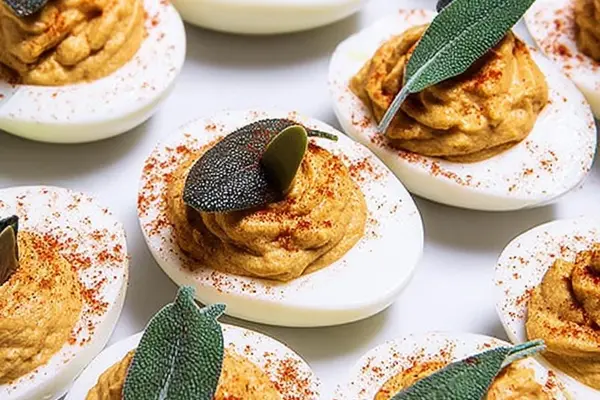
Pumpkin Deviled Eggs with Fried Sage
E
By Emma
Certified Culinary Professional
•
Recipe tested & approved
Twelve eggs. Twenty-two minutes to boil them, eight to fry the sage, thirty total if you’re moving. Sounds like work. Isn’t.
Why You’ll Love This Pumpkin Deviled Eggs Recipe
Takes 30 minutes start to finish. Works as an appetizer for fall gatherings, Halloween parties, or any time you need something that looks impressive but isn’t — cream cheese and pumpkin puree do all the heavy lifting while you fry three seconds of sage. The filling gets creamy without being heavy. Pumpkin adds that seasonal warmth without tasting like dessert, and smoked paprika brings smoke that makes people ask what’s different about your deviled eggs this year. Fried sage on top. That’s the crunch part. Most people don’t expect it. You can make these ahead. Chill them. Bring them out cold or let them sit on the counter for ten minutes before serving.
What You Need for Easy Deviled Eggs
Twelve large eggs. Use ones older than a week — they peel cleaner. Four ounces cream cheese, softened. This matters. Cold cream cheese makes lumps. Leave it out for a bit. Pumpkin puree. Not pie filling. Pie filling has spices and sugar already. You want plain pumpkin. Three tablespoons mayo. Greek yogurt works if you want it tangier, but the filling gets softer — pipe slower. Dijon mustard. One tablespoon. Sharper than yellow. Actually matters here. Smoked paprika. A teaspoon for the filling. Extra for dusting on top. Apple cider vinegar. A tablespoon and a half. Not white vinegar — too aggressive. Salt and black pepper. Half a teaspoon and a quarter teaspoon. Eight sage leaves. Fresh. Dried won’t crisp the same way. Olive oil or avocado oil for frying the sage. Olive oil burns if it’s the expensive kind. Use the regular bottle.
How to Make Deviled Eggs with Pumpkin and Sage
Boil water. Twelve eggs in it. Eight minutes if you like them fully hard. Let them cool in ice water. Peel them under cool running water — older eggs separate from the whites easier, newer ones cling and tear.
Slice each egg lengthwise. Pop the yolks out into a bowl. The whites go on a platter. If you break a white, it still works — just looks uneven. Use a potato ricer on the yolks if you have one. Makes them velvety. A fork works fine too, just mash until no chunks.
Cream cheese goes in next. Stir it in. Keep stirring until smooth. This is what holds everything together.
Pumpkin puree now. Just stir it in. The mixture starts smelling like fall already — not sweet, just warm.
Mayo, mustard, paprika, vinegar, salt, pepper. All of it at once. Mix until it’s one color. Cover it. Into the fridge. Twenty-five minutes minimum. The filling needs to get cold or it won’t hold a shape when you pipe it.
How to Fry Sage for Crispy Deviled Eggs
Medium heat. Small skillet. Oil in it. Listen for the sizzle — not loud, just a whisper.
Four or five sage leaves at a time. Drop them in. Twenty to thirty-five seconds. That’s it. The leaves go limp. They look oily. Not brown. If edges brown you burned them — start over, it tastes bitter.
Paper towels. Transfer them immediately. Oil drains off. They crisp up as they cool. Store them in an airtight container if you’re making them ahead. They stay good a couple hours.
Easy Deviled Eggs Assembly and Storage
Get a piping bag. Sturdy zip-top bag with a corner snipped works too — adjust how big you cut depending on how thick the filling is.
Fill the bag. Pipe into the egg white halves. Don’t overstuff. It looks messy. Spills everywhere.
One sage leaf on top of each egg. Dust with smoked paprika. The sage crunches when you bite it. That’s the surprise.
They sit in the fridge covered until you serve them. Ten minutes at room temperature before eating — cold eggs don’t taste like much. Room temp ones actually taste like something.
No cream cheese? Greek yogurt. Mascarpone. Both work but softer filling. Butternut squash instead of pumpkin works too — nuttier. Fresh thyme or rosemary instead of sage, fried the same way.
Yolk mixture too dry? Splash of milk. Cream. Whatever.
Sage won’t fry crispy? You’re either cooking too long or the leaves are wet. Pat them dry first.
Pumpkin Deviled Eggs with Fried Sage
Prep:
22 min
Cook:
8 min
Total:
30 min
Servings:
24 servings
Ingredients
- 12 large hard-boiled eggs
- 4 ounces cream cheese softened
- 1/4 cup pumpkin puree (not pumpkin pie filling)
- 3 tablespoons mayonnaise (or Greek yogurt for tang)
- 1 tablespoon Dijon mustard
- 1 teaspoon smoked paprika plus extra for garnish
- 1 1/2 teaspoons apple cider vinegar
- 1/2 teaspoon salt
- 1/4 teaspoon freshly ground black pepper
- 8 sage leaves
- 1 tablespoon olive oil (or avocado oil for frying sage)
Method
- Filling Prep
- 1 Peel eggs then slice in half. Gently pop yolks out into a bowl. Arrange white halves on a platter. Don’t rush popping yolks or whites will break and spill.
- 2 Roughly mash yolks with a fork or pass through potato ricer if you want velvety texture. I prefer ricer – no lumps no grainy bits.
- 3 Add softened cream cheese to yolks. Beat or stir until creamy without chunks. Cream cheese thickens and steadies the filling—skip it, and mixture gets too loose.
- 4 Stir in pumpkin puree, mayo, Dijon mustard, smoked paprika, apple cider vinegar, salt, and pepper. Blend thoroughly. Creaminess plus aromatic smokiness plus tanginess. The pumpkin pulp is key; not too watery.
- 5 Cover bowl and chill for about 25 minutes. Cold filling pipes easier and stays put in whites. If too stiff afterward, stir briefly before piping.
- 6
- Sage Garnish
- 7 Heat olive oil medium heat in a small skillet. Use oil with neutral flavor or mild fruitiness—extra virgin olive oils can burn quickly.
- 8 Fry sage leaves in batches—4 or 5 at a time. About 20 to 35 seconds. Leaves will look limp and slick but not brown or crispy yet. Browning saps flavor. Timing is tricky. Listen for faint sizzle, leaves soften but edges stay smooth.
- 9 Transfer leaves to paper towels to drain oil. Store in airtight container at room temp if not using immediately. They stay good a few hours crisp.
- 10
- Assembly
- 11 Fill a piping bag or sturdy zip-top bag with filling. Snip a small hole in corner—adjust size depending on how thick your filling is.
- 12 Pipe filling into egg white cavities. Don’t overstuff; spilling looks messy and wastes filling.
- 13 Top each filled egg with one crispy fried sage leaf and dust with smoked paprika. The sage crunch surprises with its earthy whisper.
- 14
- 15 Store covered in fridge until serving. Bring to room temp 10 minutes before eating to unlock full flavors.
- 16
- Tips & Substitutions
- 17 No cream cheese? Use full-fat Greek yogurt or mascarpone but filling gets softer, pipe carefully.
- 18 Pumpkin can be swapped with roasted butternut squash puree for nuttier flavor.
- 19 No fresh sage? Try fried fresh thyme leaves or crispy rosemary for woody herbaceousness.
- 20 If mayo missing, swap with extra cream cheese or sour cream, adjust seasoning.
- 21 Piping bag not on hand? Small spoon and steady hand work fine, just slower.
- 22 Don’t overcook sage. If edges brown, remake batch. Bitter burnt taste ruins topping.
- 23 Use your nose and eyes as cooking guide for frying leaves and eggs doneness. Avoid timers as much as possible.
- 24 Eggs older than a week peel better.
- 25 If yolk mix too dry add splash milk or cream.
Nutritional information
Calories
85
Protein
5g
Carbs
1g
Fat
6g
Frequently Asked Questions About Deviled Eggs
Can you make these easy deviled eggs ahead of time? Yeah. Make them the night before. Store them covered in the fridge. The filling actually tastes better the next day — flavors settle. The fried sage stays crisp if you keep it separate and add it right before serving, or just before eating.
What’s the best way to cook eggs for deviled eggs? Boil them. Eight minutes for hard yolks that aren’t gray inside. Older eggs — a week or more — peel way easier than fresh ones. Cool them in ice water immediately. Peel under running water, it helps separate the white from the membrane.
Can you use Greek yogurt instead of mayo? Totally. Adds tang. The filling gets softer, so pipe it carefully and chill it longer. Works fine otherwise.
Why use pumpkin puree instead of pumpkin pie filling? Pie filling has sugar and spices already mixed in. You lose control of the taste. Straight pumpkin puree lets you season it how you want. Plus it’s thinner — won’t make the filling grainy.
How long does the fried sage stay crispy? Few hours at room temp if it’s in an airtight container. Don’t put it on the eggs until right before serving or it gets soggy. The oil from frying helps it stay good, weirdly.
What if the filling is too stiff or too loose? Too stiff after chilling? Stir in a splash of milk or cream. Too loose before chilling? Add a bit more cream cheese. It’s flexible. Taste as you go.
You’ll Love These Too
Explore all →
Lemon Ricotta Fritters with Sage & Gruyere

Veggie Naan Flatbreads with Lemon Basil Mayo

Rustic Breakfast Sausage Patties
Panzanella Salad with Pancetta and Grape Tomatoes
Vanilla and Chocolate Mousse with Whipped Cream

Butter Sauce with White Wine and Lime

Chicken Sandwich with Prosciutto & Spinach

Recipe For Cinnamon Cupcakes With Cream Cheese
Cakes With Coconut: Easy Vanilla Cake
Dry Rub For Ribs With Chipotle & Cumin

Cauliflower Mornay Sauce with Sharp Cheddar

Zuppa Toscana Recipe with Chorizo & Kale

Raspberry Pound Cake with Cream Cheese Frosting

Grilled Tilapia with Pineapple Salsa
Scalloped Potatoes with Sole and Swiss Chard

Creamy Carrot Soup with Tahini Sauce

Kiwi Strawberry Smoothie with Coconut Water
Old-School Peanut Butter Fudge Recipe
Roasted Turkey Recipe with Smoked Paprika