Strawberry Pudding Trifle Remix
E
By Emma
Certified Culinary Professional
•
Recipe tested & approved
Layered dessert mixing vanilla custard, whipped cream cheese, and Nilla Wafers with fresh strawberries. Prep involves slicing fruit, whipping cream cheese, and assembling layers for chill-time that softens textures without sogginess. Garnish with whole berries, mint, and extra cookies. Keep refrigerated but don’t exceed a day to avoid overt mushiness. Timing hinges on creamy layers moistening wafers just so—turning crunch into tender bite. Substitute mascarpone or Greek yogurt for cream cheese for tang and smoothness. Use homemade custard or instant pudding powder, adjusting thickness to prevent runny or stiff layers. Requires minimal cook time, mostly chill. Target 12 servings.
Prep:
20 min
Cook:
0 min
Total:
5h 30min
Servings:
12 servings
#dessert
#layered dessert
#fruit dessert
#chilled dessert
#summer dessert
#party dessert
#American cuisine
Before You Start
Strawberry pudding trifles beg for patience—the waiting changes everything. Crunchy cookies go soft, mousse-like layers feather into each other, and vibrant red fruit sharpens aromas. Tried it once rushing? Disaster. Let it chill enough, the flavors slide into one another like a slow conversation instead of a rushed shout. Cream cheese and whipped cream mingle creamy clouds while custard steadies the base. Nilla Wafers start brittle but soften with custard’s kiss, transform from snap to tender bite. I swap mascarpone sometimes just for richer tang and silkier texture, cuts the sweetness slightly. Fresh mint isn’t just for show, their herbal twang cuts through sugar, wakes the palate. Fingers crossed for warm weather get-togethers where the trifle is a cool shock of brightness at the table.
Ingredients
- 1 quart fresh strawberries, hulled
- 24 Nilla Wafers
- 3 cups chilled vanilla custard or instant pudding prepared
- 8 oz cream cheese, softened
- 1 1/2 cups whipped cream topping
- Fresh mint leaves for garnish
- Additional Nilla Wafers for garnish
In The Same Category · Desserts
Explore all →
Twisted Washington Balls

Jasmine Tapioca Kiwi

Raspberry Cream Cheese Pie

Kahlua Chocolate Cheesecakes
Apricot Coconut Bars

Rustic Stone Fruit Tart

Almond Joy Bars Remix

Mini Cheesecake Bites

Green Velvet Cupcakes
Chunky Peppermint Bark
Coconut Cream Pie Twist

Double Chocolate Éclairs

Coconut Rhum Panna Cotta Twist

Sunshine Orange Cake
Twisted Mascarpone Frosting

Butter Shortening Frosting
Simplified Black Forest Cake

Melted Snowman Cookies

Coffee Cream Pudding Twist
Peanut Butter Cup Cookies
About the ingredients
Start with fresh, ripe strawberries—don’t skimp. Overripe? Mash-up mess. Under-ripe? Bland and dense. Sub mascarpone or thick Greek yogurt for cream cheese to alter creaminess and tang; mascarpone thins slightly, yogurt adds vibrant bite but watch acidity balance. If no vanilla custard on hand, instant pudding packets work well; just whisk carefully to avoid lumps and adjust thickness with a splash of milk or cornstarch if too runny. Nilla Wafers act like sponge and crunch. If unavailable, ladyfingers or thin graham crackers can substitute, but texture shifts—ladyfingers absorb faster. Whipped cream topping can be fresh whipped heavy cream, adds richness and less processed feel but needs swift folding to avoid deflating. Mint is not optional—it transforms the palate after a heavy bite of cream and cookie. Keep extra cookies for garnish to reclaim texture contrast, especially if fridge timing edges to 24 hours.
Method
- Reserve 12 to 15 whole hulled strawberries for top garnish. Thinly slice the rest across the center—try to keep slices thin so they layer well without bulk.
- Prepare vanilla custard or pudding ahead of time and chill slightly until it holds but isn’t stiff. Too cold and it won’t spread easily, too warm and you risk runny layers.
- In a large bowl, beat softened cream cheese until fluffy and creamy—should lose all lumps and start to lighten in color. Gently fold in whipped cream topping. Mix carefully to avoid deflating but ensure no cream cheese streaks remain.
- Start with a bottom layer of Nilla Wafers. It’s crucial this layer isn’t dry; spread a thin coat of custard over wafers to soften them gradually. Then add whipped cream cheese layer on top until the wafers are fully touched by something creamy. Layer strawberry slices over that.
- Repeat layering same sequence: wafers, custard, whipped cream cheese, strawberries. End with a custard layer on top. Don’t overfill or layers will slide when served.
- Refrigerate for no less than 3 1/2 hours, ideally 5 to 6 hours. Texture changes from firm wafers to soft cake-like bites happen slowly—not instantly. Avoid overnight storage beyond 20 hours or residual sogginess becomes unappealing.
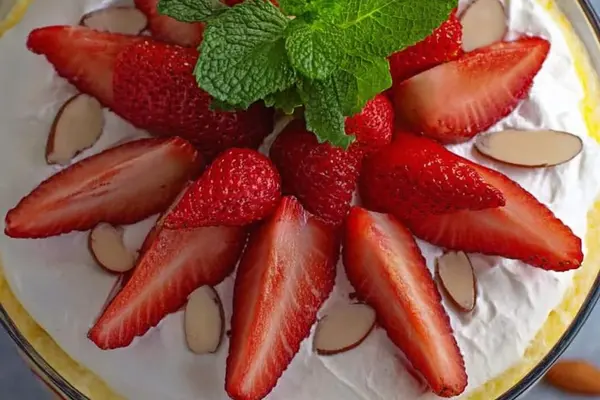
- Just before serving, arrange reserved whole strawberries and fresh mint sprigs on top. Fallout from an ingredient imbalance? Crumbled wafers can add crunch garnish instead.
- Spoon portions carefully to keep layers intact. Neat presentation means not mixing the trifle in the bowl. If unsure, serve in individual glasses instead of a big dish for best effect.
Cooking tips
Use tactile cues more than clocks. Custard should spread like thick velvet—too firm, it won’t soften wafers, too slippery, layers collapse. Cream cheese must be whipped until it holds light peaks; lumps drag flavor and ruin silkiness. Fold whipped cream with gentle movements, not a blitz; preserves volume. Layering matters—always creamy coating hugging crunch. Those wafers soaking too dry or exposed turn chalky. Alternating thick and thin helps texture; no thick pudding mountain one spot. Chilling makes trifle cohesive but don’t stall too long—the softer wafers lose all crunch and taste pasty. Watch refrigerator temperature—too cold slows softening, too warm melts creams. Mint freshens top, but add as last step to prevent wilting. When serving, scoop down layers to serve balanced bites—avoid mixing the entire trifle or you end with pudding soup. Individual glasses help control portions and showcase the pretty layers. If custard is homemade and tight, thin slightly with splash cream before layering to improve spread.
Chef's notes
- 💡 Slice strawberries thin but not mushy; helps layers stack without bulk. Keep slices cool to prevent early juice release; fresh edges visually sharper, colors stay bright longer. Reserve whole berries for top garnish only—adds contrast in texture and height. Bulkier slices throw off layering balance; keep rhythm even.
- 💡 Whip cream cheese until almost fluffy—approach carefully. Lumps ruin smoothness, create uneven mouthfeel. Fold whipped cream topping gently, slow strokes; pressing or zigzag mixing deflates volume. Watch temperature: too cold cream cheese resists fluff, too warm can separate or soften too much. Use bowl scraping to catch hidden lumps consistently.
- 💡 Custard thickness matters. Too firm can trap wafers dry under, turning chalky in fridge. Thin slightly with milk or cream if homemade; spread like thick velvet. Too loose layers slump and layers blend tastelessly. Use instant pudding as fallback but add cornstarch or chill while stirring to avoid lumps. Thick layers can become ‘pudding mountain’ with texture issues.
- 💡 Bottom wafer layer needs custard coat. Essential step for softening but keep thin to avoid soggy base. Wafers act like sponge first few hours—watch fridge temp; very cold stalls softening, warmer speeds to pasty mush. Balance fridge settings carefully, fridge door swings can cause shifts; monitor texture with touch, not clock.
- 💡 Chill time minimum 3 1/2 hours; texture shifts slow, tactile only cue. Past 20 hours? Watch out—wafers lose crunch fully, turn pasty. Overnight storage bad idea, unless you want a spoonful of softness without crunch. Mint goes on last, just before serving; stops wilting, brightens aroma. Garnish should not sit in fridge long or dry out.
Common questions
Can mascarpone replace cream cheese?
Yes, mascarpone gives milder tang, silkier mouthfeel. Cuts sweetness slightly. Thinner consistency, so maybe less cream topping or adjust folding. Greek yogurt adds vibrancy but watch acidity; can curdle custard if fridge temp swings. Experiment with small batch first. Texture alters bite distinctly.
What if custard is too runny?
Whisk in cornstarch slurry or chill longer while stirring to boost thickness. Homemade custard can be fixed with splash cream or chill adjustments. Instant pudding often needs quick chill stir combo. Too runny layers collapse; wafers slip, mess up layers. Layer control is crucial; thin but stable spread wins.
Why do wafers turn chalky sometimes?
Usually dry spots, no custard contact. Wafers soak slowly, so bottom layer coat crucial. Overexposed wafers dry to chalk taste, especially if fridge too cold or uneven. Use close layers with cream cheese coating to maintain moisture. Alternative cookies absorb differently; ladyfingers overwhelm by soaking fast.
How long can leftovers keep?
Best within same day, max 20 hours. Longer soaks wafers mushy, flavors blend flat, loss of texture contrast. Cover tightly, refrigerate immediately. Some opt for single-servings in glasses to limit exposure. Avoid freeze; custard and cream textures break. Real talk: freshness over storage.
You’ll Love These Too
Explore all →
Crispy Yukon Gold Fries
Greek Yogurt Strawberry Dip

Vegetable Broth Remix

Stuffed Sweet Pepper Bites

Broccoli Cheddar Skins Remix

Sheet Pan Chicken Nachos

Pear Almond Muffins

Logan County Burgers Twist

Smoky Marinated Veggies

Slow Cooker Spiced Lamb Chili
Cool Whip Chocolate Candy

Haddock Apricot Glaze

Crunchy Apple Fritters

Coconut Flan Twist
Beef Beer Chili

Curried Tofu Avocado Wraps

Roasted Parsnip Onion Soup

Monster Rice Treats

Lemon Saffron Risotto

Balsamic Herb Vinaigrette