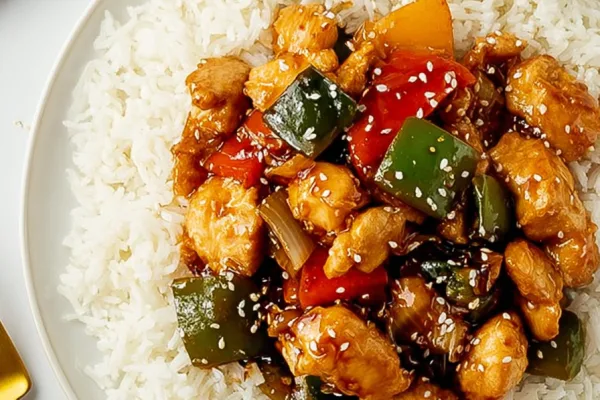
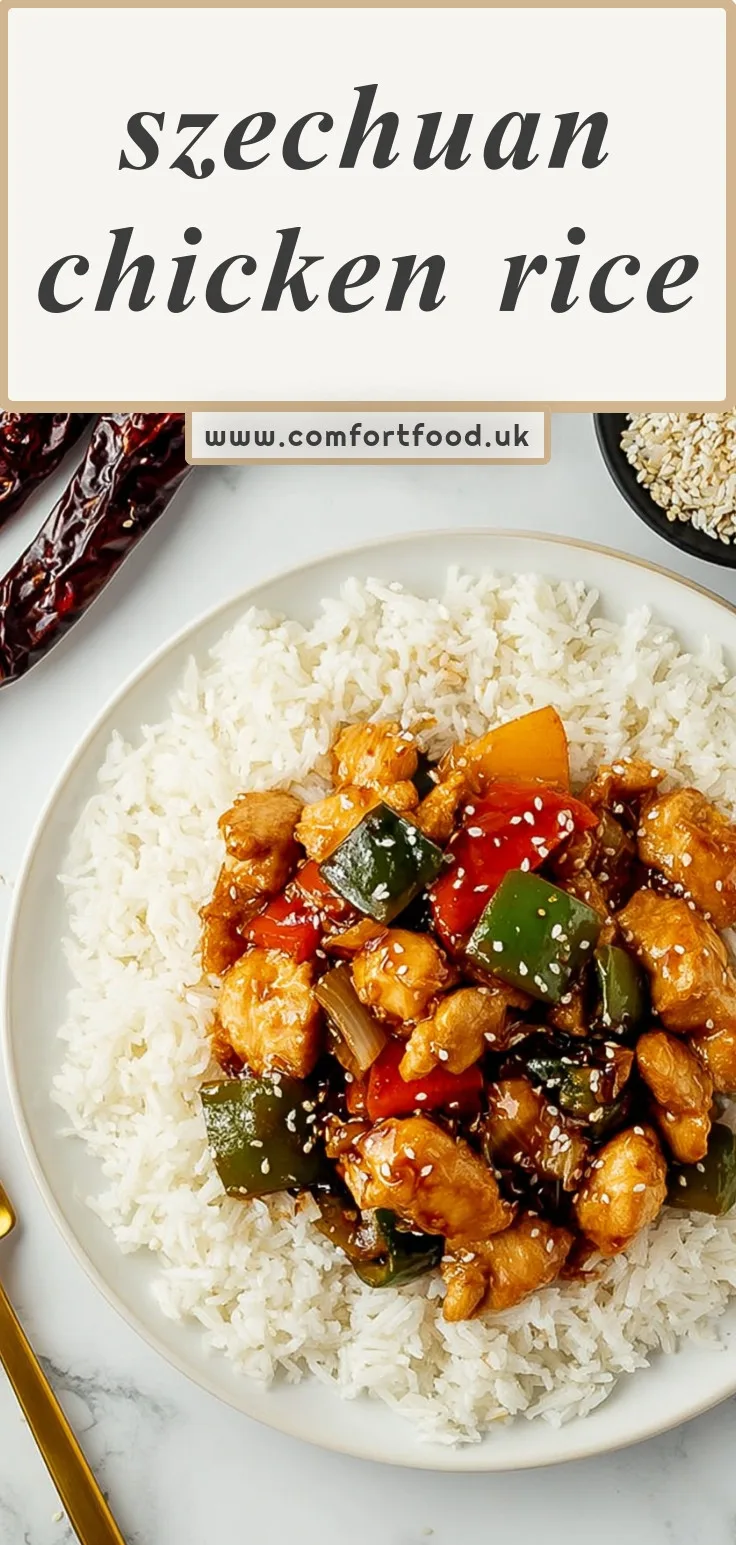
Szechuan Chicken Rice
By Emma
Certified Culinary Professional
·
Recipe tested & approved
Szechuan Chicken Rice blends tender chicken with crunchy veggies and a glossy, spicy sauce. This quick 15-minute meal offers a bright punch of Sichuan peppercorns and fresh garlic over fragrant rice.
Prep:
5 min
Cook:
10 min
Total:
15 min
Servings:
4 servings
I made Szechuan Chicken Rice last Tuesday and honestly it’s one of those dinners that comes together so fast you almost don’t believe it worked. The sauce gets this shine to it that makes everything look way fancier than the 15 minutes you actually spent cooking. You need rice obviously but the chicken stir fry part is where all the action happens.
Why You’ll Love This Recipe
- Takes 15 minutes start to finish which is less time than most delivery orders
- The cornstarch coating on the chicken creates this thin crust that isn’t breading but gives you something to bite into
- Sichuan peppercorns do that tingly-numb thing on your tongue that regular heat doesn’t
- Vegetables stay crunchy even after you toss everything together with the sauce
- You can see when the sauce is ready because it literally changes from watery to glossy right in front of you
- The garlic hits twice—once in the sauce and again at the end with the ginger
The Story Behind This Recipe
I got tired of ordering spicy Chinese chicken and then being disappointed by soggy vegetables and that weird gloppy sauce. So I started making it at home and realized the whole thing hinges on not overcrowding your pan and letting the chicken actually brown instead of steam. Last Tuesday I made it after a long day and timed it—15 minutes including the part where I let the coated chicken sit on the counter while I prepped everything else. The Sichuan peppercorns were kind of an accident because I found them in the back of my spice drawer but now I can’t make this without them.
What You Need
You’re starting with 3 tablespoons soy sauce, 1 tablespoon vinegar, 1 tablespoon brown sugar, 2 cloves garlic that you’ll mince, and 1/4 teaspoon crushed red pepper for the sauce base. That’s the liquid part that becomes glossy later. You’ll also need 1 1/2 teaspoons cornstarch mixed with 2 tablespoons water to thicken it up—don’t skip this or you’ll just have watery soy sauce.
For coating the chicken you need another 1 1/2 teaspoons cornstarch plus 1/2 teaspoon salt and 1/4 teaspoon black pepper. This goes on 1 pound of chicken that you’ve already cut into bite-sized pieces. The coating seems like nothing but it’s what gives you that thin crust situation.
3 tablespoons vegetable oil gets split between cooking the chicken and the vegetables. For the vegetables you want 1/2 cup each of sliced onions, red bell pepper, green bell pepper and sugar snap peas. I used one of those tri-color pepper packs from the store and it was fine.
The spicy part comes from 1-2 dried red chiles if you want them and 1/4 teaspoon Sichuan peppercorns that you crush yourself. Then another 2 cloves minced garlic and 1 teaspoon minced ginger go in at the end. Cooked rice for serving but you already knew that.
How to Make Szechuan Chicken Rice
Mix your soy sauce, vinegar, brown sugar, the first 2 cloves of minced garlic and crushed red pepper in a small saucepan. Put it on low heat until you see tiny bubbles around the edges and the garlic smell hits you in the face. While that’s warming up whisk your cornstarch and 2 tablespoons water in a small bowl until there’s no lumps—I used a fork because I couldn’t find my whisk.
Pour the cornstarch slurry into the sauce and keep whisking. It’ll go from thin to glossy in about 2-3 minutes and you’ll see it actually cling to your whisk instead of just running off. Take it off the heat and set it aside.
In a big bowl dump the other 1 1/2 teaspoons cornstarch with the salt and pepper. Add your cut-up chicken and toss everything so each piece gets coated. Tap off the excess powder—there shouldn’t be clumps—and let it sit on a plate for 10-20 minutes at room temperature. This sitting time isn’t optional because the coating needs to stick to the surface of the meat.
Heat 1 tablespoon of the oil in a large skillet on medium until it shimmers. Add half your chicken in one layer and don’t touch it for 2 minutes so it can brown. The pieces should sizzle when they hit the pan. Flip them to get all sides golden and cooked through then move them to a paper towel-lined plate. Do the second batch the same way with more oil if your pan looks dry.
Wipe out the skillet or grab a bigger one if you have it. Heat the rest of your oil until it ripples and add the onions and both bell peppers. Stir them around for 3-4 minutes until they soften but still have some snap to them—the edges will get darker while the centers stay kind of crisp.
Toss in the sugar snap peas, dried chiles if you’re using them and the crushed Sichuan peppercorns. Stir fast for about 1 minute until the peas turn that bright green color. Add your second batch of minced garlic and the ginger, stir for another 1-2 minutes until you can smell it. The garlic should just barely start to color but don’t let it burn.
Put the chicken back in. Pour all that sauce over everything and toss it hard to coat every piece. Let it heat through for 2-3 minutes and you’ll see the sauce bubble a little and turn into this shiny glaze on the chicken stir fry. The moment when the sauce hits the hot pan and starts coating everything is when you know it’s working—it literally looks wet and glossy instead of matte.
Spoon everything over your rice while it’s still hot. The textures fall apart if you let it sit.
What I Did Wrong the First Time
I crowded all the chicken into the pan at once instead of doing it in two batches because I was impatient. Everything steamed instead of getting that seared crust and the coating just turned into this weird paste on the bottom of the pan. The spicy Chinese chicken ended up kind of gray and soft instead of browned. Now I always do half at a time even though it feels like it’s taking longer—it actually doesn’t and the difference in texture is massive.
Szechuan Chicken Rice
Prep:
5 min
Cook:
10 min
Total:
15 min
Servings:
4 servings
Ingredients
- 3 tablespoons soy sauce
- 1 tablespoon vinegar
- 1 tablespoon brown sugar
- 2 cloves garlic, minced
- 1/4 teaspoon crushed red pepper
- 1 1/2 teaspoons cornstarch
- 2 tablespoons water
- 1 1/2 teaspoons cornstarch
- 1/2 teaspoon salt
- 1/4 teaspoon black pepper
- 1 pound chicken, cut into bite-sized pieces
- 3 tablespoons vegetable oil
- 1/2 cup onions, sliced
- 1/2 cup red bell pepper, sliced
- 1/2 cup green bell pepper, sliced
- 1/2 cup sugar snap peas
- 1-2 dried red chiles (optional)
- 1/4 teaspoon Sichuan peppercorns, crushed
- 2 cloves garlic, minced
- 1 teaspoon ginger, minced
- Cooked rice for serving
Method
- 1 Combine soy sauce, vinegar, brown sugar, minced garlic, and crushed red pepper in a small saucepan. Warm gently over low heat until tiny bubbles appear around the edges and the aromas become assertive.
- 2 In a small bowl, whisk cornstarch and water until lump-free. Pour into the simmering sauce, whisking briskly. Keep heat low, stirring constantly until the sauce thickens, shifts to glossy, and clings lightly to the whisk—about 2-3 minutes. Remove from heat and set aside.
- 3 In a large bowl, mix cornstarch, salt, and pepper. Add chicken pieces and toss thoroughly to coat each piece evenly with the dry mixture. Lift chicken from the bowl, tapping off excess powder, and let rest on a plate at room temperature for 10-20 minutes. This dry coating helps develop a slight crust when searing.
- 4 Heat 1 tablespoon vegetable oil in a large skillet over medium heat until it shimmers. Add half the chicken in one even layer, letting it brown without disturbing until golden on one side, about 2 minutes, then turn to brown all sides and cook through. The chicken should sizzle audibly and achieve a slightly crisp, dry exterior. Transfer to a paper towel–lined plate. Repeat with remaining chicken, adding more oil if needed, so all pieces brown evenly.
- 5 Wipe out or use a larger skillet and heat remaining vegetable oil over medium heat until it ripples gently. Toss in sliced onions, red and green bell peppers. Stir and sauté for 3-4 minutes until softened but still holding their structure; you’ll see edges deepen while the centers stay crisp. The kitchen fills with a sweet vegetal aroma.
- 6 Add sugar snap peas, dried red chiles if using, and crushed Sichuan peppercorns. Stir quickly, letting the peppers toast and snap peas turn vivid green, about 1 minute. Add minced garlic and ginger, stirring for another 1-2 minutes until fragrant—watch for the garlic to just color without burning.
- 7 Return the browned chicken to the skillet. Pour the thickened sauce over everything. Toss vigorously to coat chicken and vegetables thoroughly, heating for an additional 2-3 minutes. Watch for the sauce to bubble slightly and coat each piece with a shiny, spicy glaze.
- 8 Dish out the chicken and stir-fry over piping hot rice. Serve immediately to keep textures distinct and vibrant.
Nutritional information
Calories
350
Protein
35g
Carbs
20g
Fat
12g
Tips for the Best Szechuan Chicken Rice
Crush your Sichuan peppercorns in a mortar and pestle right before you cook instead of using pre-ground ones. The oils go stale fast and you lose that electric tingle on your tongue that makes this different from just regular spicy food.
When you’re coating the chicken don’t dump all the cornstarch mixture on at once. Sprinkle it over in stages and toss between each addition so you get even coverage without weird clumps forming in the corners of your bowl.
The sauce will look too thin when you first add the cornstarch slurry and then suddenly it’ll catch and thicken all at once. Don’t panic and add more cornstarch—just keep whisking through that moment and it’ll turn glossy like it’s supposed to.
Your skillet needs to be hot enough that a drop of water sizzles and evaporates in 2 seconds before you add the chicken. If it’s not that hot the coating will absorb oil instead of crisping up and you’ll end up with greasy Szechuan chicken instead of the seared kind.
I noticed the sugar snap peas release a tiny bit of water when they hit the hot pan and that’s actually good because it loosens up any browned bits stuck to the bottom. Those bits mix into the sauce later and add flavor you didn’t even know you were getting.
Serving Ideas
Put this over fried rice instead of steamed and you get this double-texture thing where the crispy rice edges contrast with the glossy sauce. I did that Thursday with leftover rice from the fridge and it was better than the first time.
Spoon it into lettuce cups if you’re trying to skip the carbs. The cool crunch of iceberg or butter lettuce against the hot spicy Chinese chicken actually works and you can eat it with your hands.
Top it with crushed peanuts and sliced scallions right before serving. The peanuts soak up some of the sauce and get soft on one side while staying crunchy on the other and the scallions add that sharp raw bite that cuts through all the oil.
Variations
Swap the chicken for shrimp and cut your cook time in half since shrimp only needs 2 minutes per side. The cornstarch coating works the same way but you have to be more careful not to overcook them or they turn rubbery.
Use snap peas and broccoli instead of bell peppers if you want something less sweet. The broccoli takes an extra minute to soften but it grabs onto the sauce better than peppers do because of all those little florets.
Double the Sichuan peppercorns and add a tablespoon of chili oil at the end if you want it actually spicy instead of just tingly. The oil makes the whole thing slick and red and way more intense but some people can’t handle it.
Make it with pork tenderloin cut into thin strips and it tastes more like what you’d get at a Sichuan restaurant. Pork holds up to the coating better than chicken and doesn’t dry out as fast when you’re searing it in batches.
FAQ
Can I use chicken thighs instead of chicken breast?
Yeah thighs work great and stay juicier than breast meat. Just trim off the excess fat before you cut them into pieces or your pan will get too greasy. They take the same amount of time to cook through.
What can I substitute for Sichuan peppercorns if I can’t find them?
You can’t really replace that numbing tingly feeling but if you just want heat use more crushed red pepper or a pinch of cayenne. It won’t taste the same but the chicken stir fry will still be spicy. Black peppercorns don’t work—they’re completely different.
How do I know when the sauce is thick enough?
Drag your whisk through it and if the trail stays visible for a second before filling back in you’re done. It should coat the back of a spoon and not immediately run off in a thin stream.
Can I make the sauce ahead of time?
You can make it a few hours early and leave it in the pan on the counter. Just whisk it again before you pour it over the chicken because the cornstarch settles. Don’t refrigerate it or it’ll get weird and separated.
Why does my chicken coating fall off in the pan?
You either didn’t let it rest long enough after coating or your pan wasn’t hot enough when you added the chicken. The coating needs those 10-20 minutes to stick to the meat and the heat needs to be high enough to set it immediately when it hits the oil.
Can I use frozen vegetables?
Not really because they release too much water when you stir fry them and everything gets soggy. If you have to use frozen let them thaw completely and pat them dry with paper towels first but fresh is way better for this.
What kind of rice should I serve this over?
Plain white jasmine rice or medium-grain white rice works best. Brown rice is too chewy and competes with the texture of the vegetables. Sticky rice clumps up too much with the sauce.
How do I store leftovers?
Put it in an airtight container in the fridge for up to 3 days but keep the rice separate if you can. The sauce makes the rice mushy if they sit together overnight. The chicken stays fine though.
Can I reheat this in the microwave?
You can but the coating on the chicken loses its texture and everything gets soft. Better to reheat it in a skillet over medium heat with a splash of water to loosen the sauce. Takes 5 minutes and tastes way closer to fresh.
What if I don’t have rice vinegar?
Regular white vinegar or apple cider vinegar both work in the sauce. White vinegar is sharper and apple cider is a little sweeter but neither one ruins it. Don’t use balsamic—that’s too strong and dark.
Should I use light or dark soy sauce?
Light soy sauce is better because dark soy sauce will make everything too salty and the color gets really dark brown instead of that glossy medium brown. If you only have dark use 2 tablespoons instead of 3 tablespoons.
How small should I cut the chicken pieces?
About 1-inch cubes or a little bigger. If they’re too small they overcook before they brown and if they’re too big the outside burns before the inside cooks through. Try to keep them all the same size so they finish at the same time.
Can I skip the sugar in the sauce?
You could but the sauce won’t have that balance between spicy and sweet that makes it taste right. Even 1 tablespoon of brown sugar doesn’t make it dessert-sweet—it just rounds out all the salty and spicy flavors.
What if my sauce is too thick?
Add a tablespoon of water at a time and stir it over low heat until it loosens up. Sometimes the cornstarch keeps thickening after you take it off the heat and you just need to thin it back down.
Do I really need to cook the chicken in two batches?
Yes or everything steams instead of sears. Crowding the pan drops the temperature and all the moisture gets trapped so your spicy Chinese chicken turns gray and soft. Two batches only adds 4 minutes and the texture is completely different.
Can I use cornstarch from a box that’s been open for a year?
Cornstarch doesn’t really go bad but if it’s clumpy or smells weird throw it out. Old cornstarch sometimes doesn’t thicken as well and you’ll end up with runny sauce that won’t cling to the chicken right.
What size skillet do I need?
At least 12 inches or you won’t be able to fit all the vegetables without piling them on top of each other. If you only have a smaller pan cook the vegetables in batches too after you finish the chicken.
How do I crush Sichuan peppercorns without a mortar and pestle?
Put them in a ziplock bag and smash them with the bottom of a heavy mug or a rolling pin. You want them broken into pieces not ground into powder—they should look like coarse black pepper.
Why does my garlic burn every time?
You’re adding it too early or your heat is too high. Garlic only needs 1-2 minutes and it should go in after the vegetables are already soft. If your pan is smoking when you add the garlic it’ll burn before you can even stir it once.
You’ll Love These Too
Explore all →
Grilled Garlic Butter Shrimp with Herb Butter
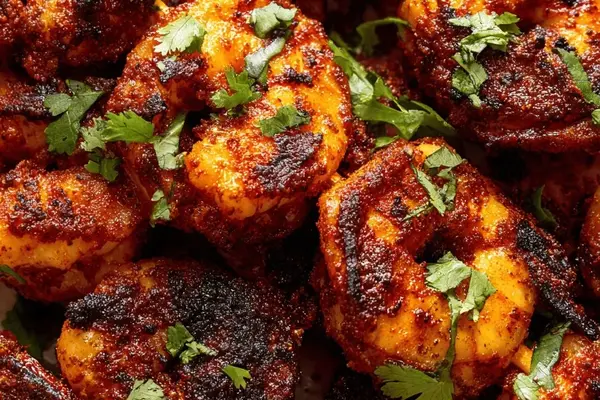
Grilled Shrimp On Grill with Smoked Paprika
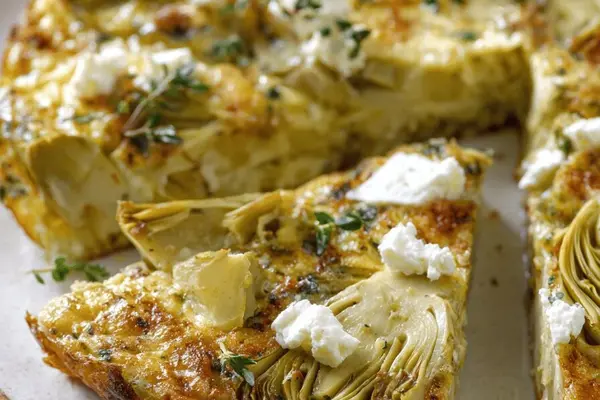
Artichoke Frittata with Goat Cheese
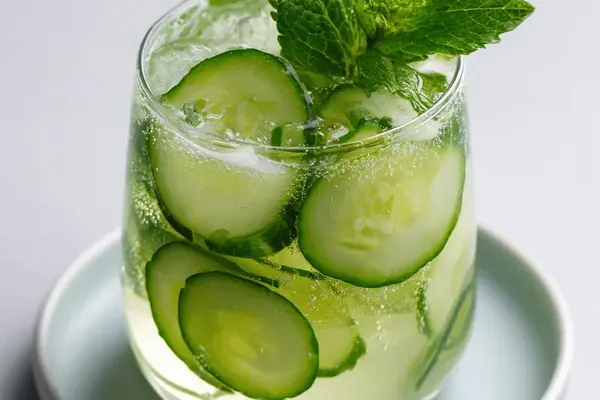
Cucumber Gin Sparkler Cocktail Recipe
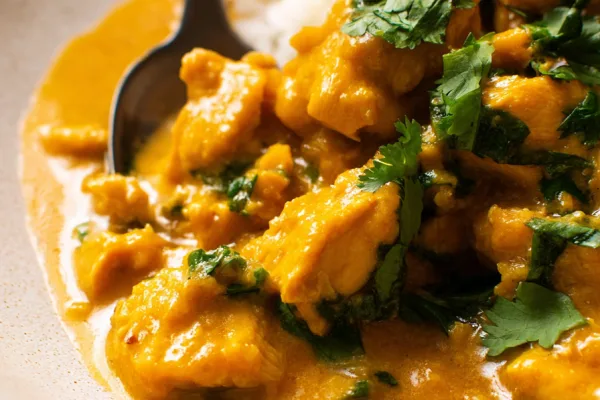
Pumpkin Chicken Curry

Pecan Butter Biscuits with Cardamom
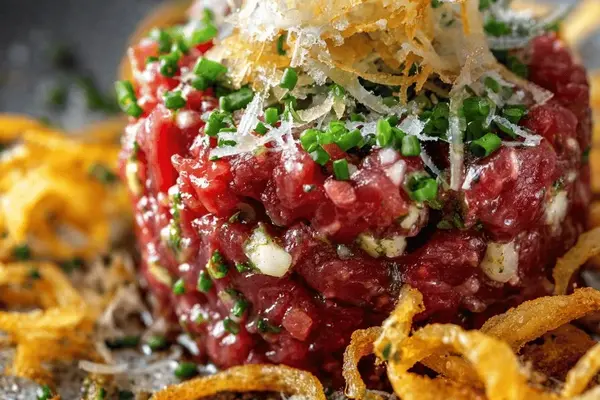
Beef Tartare with Bone Marrow & Crispy Potatoes

Chocolate Cookie Cocoa Powder Recipe
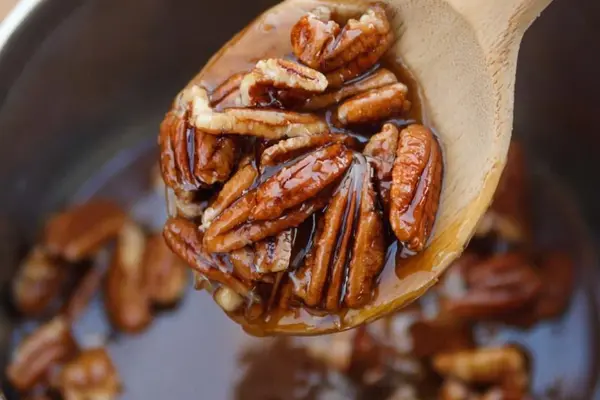
Pecan Caramel Sauce with Sea Salt
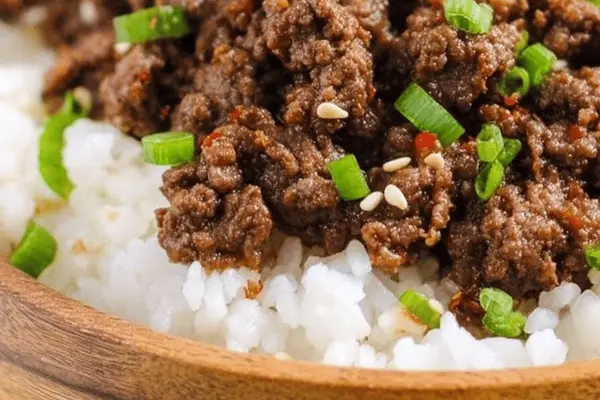
Korean Beef Bowl with Sesame Oil & Soy
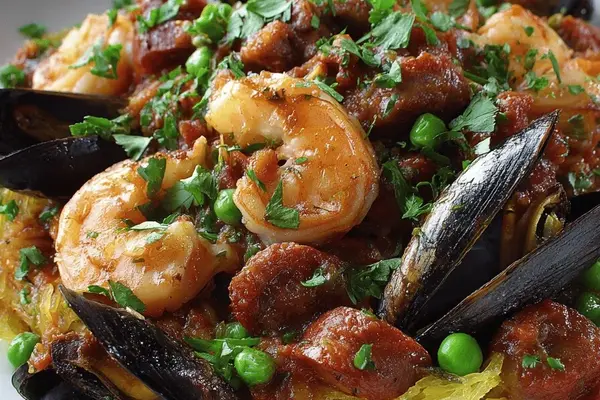
Seafood Paella with Spaghetti Squash

Air Fryer Grilled Cheese with Mayo
Herb Buttermilk Fried Chicken

Mini Cheesecake Cupcakes with Lemon Frosting
Maple Pudding Cake with Cream Sauce

Mini Goat Cheese Quiche with Pine Nuts
Citrus Lime Rice with Basmati & Cilantro
Brie and Cheese Puff Pastry Bites
Banana Foster French Toast with Dark Chocolate