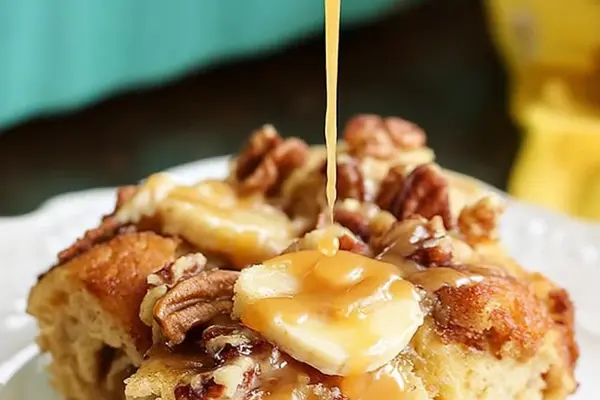
Bread Pudding with Banana, Mandarin & Pecans
By Emma
Certified Culinary Professional
·
Recipe tested & approved
Cut the bread into chunks first—stale brioche works best, not the soft stuff. Eggs, milk, sugar, vanilla, cinnamon whisked together. That’s the base. Pour it over the bread and wait. The magic happens when you’re not looking.
Why You’ll Love This Bread Pudding
Tastes like dessert but honestly feels like comfort food. Warm bread soaked through, bananas going soft, pecans adding crunch that doesn’t quit. The caramel sauce hits different—salty cuts through all the sugar in a way that just works. Makes 48 minutes in the oven feel worth it. Leftovers are better the next day, maybe because the flavors settle overnight. Brioche instead of regular bread means it doesn’t turn into mush. One pan. Done.
What You Need for Bread Pudding
Day-old brioche. Not fresh. Fresh bread turns to mush—doesn’t matter how careful you are. Cubed rough, about an inch each. Six eggs. Two and a half cups whole milk. Coconut sugar brings this mellow molasses thing going on. Regular brown sugar works but tastes different—not bad, just different. Vanilla extract. Cinnamon. Two ripe bananas diced. Really ripe. The darker they are the better. Mandarin orange segments from a can, drained. That brightness matters more than you’d think. Half a cup brown sugar for the top. Pecans chopped. Five tablespoons melted butter. For the sauce—six tablespoons butter, three-quarters cup brown sugar, heavy cream, flaky sea salt.
How to Make Bread Pudding
Preheat to 350. Spray the 9x13 pan. Get it ready. Whisk the eggs with milk, coconut sugar, vanilla, cinnamon in a bowl until it looks uniform. No streaks. Pour it over the cubed bread immediately—don’t wait around. Stir it so every piece gets coated. Actual milk has to touch actual bread or you get dry pockets. Rest ten minutes. Stir once in the middle of that. You’ll feel the bread getting softer, absorbing the liquid. Not soggy yet. Just soaked.
Fold in the bananas carefully. They bruise if you’re rough with them. Add the drained mandarin oranges. The juice would make it waterlogged. Spread everything into the baking dish, get it even. Brown sugar sprinkled over top. Then the pecans. Drizzle the melted butter slow, steady. Clumping happens fast if you pour it all at once.
How to Get Bread Pudding Golden and Set
Bake 45 to 50 minutes. Not 48 exactly—your oven’s different than mine. The center should jiggle slightly when you move the pan. Insert a knife near the middle. If the liquid that comes out looks clear, you’re done. Milky white means it needs more time. Edges should pull away from the pan a little, the top golden brown with hints of crisp. Don’t overbake or it gets dense and weird.
While that’s going, make the sauce. Combine butter, brown sugar, cream, salt in a saucepan over medium heat. Stir until the butter melts and sugar dissolves. Let it bubble—actual rolling boil—for three to four minutes. Watch the color. Light amber is right. Burnt is gone. Remove it from heat. It thickens as it cools. If it gets too thick, rewarm it gently. Low heat. Stirring. That reincorporates everything.
Bread Pudding Tips and Common Mistakes
Fresh bread is the enemy. Stale, dry bread mandatory. Can’t stress this enough—it’s the whole thing. Comes out soggy? You used fresh bread. Don’t bake it longer hoping it fixes itself. It won’t. Pudding tastes dry before baking? Add a splash of milk. Just a bit. Overbaking yields that dense texture nobody wants. Underbaking leaves the center wet in a bad way—not custardy, just raw feeling. The sauce breaks when it cools? Normal. Heat it gently to bring it back together. Mandarin oranges are better than pineapple here. The brightness cuts differently. And actually drain them completely or everything gets watery. Pecans can be swapped for walnuts if that’s what you have. Tastes different but works.
Bread Pudding with Banana, Mandarin & Pecans
Prep:
27 min
Cook:
48 min
Total:
1h 15min
Servings:
8 servings
Ingredients
- 6 large eggs
- 2 1/2 cups whole milk
- 3/4 cup coconut sugar
- 1 tablespoon pure vanilla extract
- 1 teaspoon ground cinnamon
- 1 loaf day-old brioche bread cubed roughly
- 2 ripe bananas diced
- 1 cup canned mandarin orange segments drained
- 1/2 cup brown sugar
- 1/2 cup chopped pecans
- 5 tablespoons unsalted butter melted
- FOR SALTED CARAMEL SAUCE===
- 6 tablespoons unsalted butter
- 3/4 cup packed brown sugar
- 3/4 cup heavy cream
- 1/2 teaspoon flaky sea salt
Method
- 1 Preheat oven 350°F. Spray 9x13-inch pan with nonstick spray, done. Bread choice really matters here; brioche or challah absorbs best, stale is best; fresher bread can get soggy nightmare. Cubed about 1-inch chunks.
- 2 Whisk eggs, whole milk, coconut sugar, vanilla, cinnamon in medium bowl till homogenous. Coconut sugar brings mellow molasses undertone, skip if unavailable; regular brown sugar works but shifts taste.
- 3 In big mixing bowl toss cubed bread, pour egg mixture over immediately. Stir to coat each chunk. Rest 10 minutes. Stir once midway to redistribute milk-egg liquid. Watch texture change; bread looks soaked not soggy.
- 4 Add diced bananas, use very ripe; substitute pineapple tidbits with drained mandarin oranges for surprising bright twist. Both bring juicy pockets; mandarin peel off is key or bitter. Fold gently, avoid banana mush.
- 5 Transfer mixture to baking dish, spread even. Brown sugar sprinkle top, followed by chopped pecans for toasty nut crunch. Drizzle with the melted butter, steady slow pour to avoid clumping.
- 6 Bake 45-50 minutes. Check center by inserting knife; liquid should be clear when pulled out, not milky white. If liquid thick or gummy, needs more bake. Edges should pull away slightly from pan, golden brown crisp hints on top.
- 7 Sauce time. Combine butter, brown sugar, cream, salt in saucepan over medium. Stir till butter melts, sugar dissolves; bubble to a rolling boil. Remove from heat after 3-4 minutes. Watch color deepen to light amber, not burnt.
- 8 If sauce thickens too much when cooling, rewarm gently on low. Sauce is lifesaver on this sweet pudding, salty hits cut the sugary richness.
- 9 Serve pudding warm with salty caramel drizzle. Goes wild with vanilla ice cream or whipped cream. Leftovers? Reheat gently; sauce separated? Stir over gentle heat to reincorporate.
- 10 Troubleshooting: Fresh bread leads to mush; stale, dry bread mandatory. Too dry pudding? Add splash milk before baking. Overbake yields dense texture; underbake leaves wet center. Sauce burning means heat too high; stir often.
Nutritional information
Calories
390
Protein
7g
Carbs
45g
Fat
21g
Frequently Asked Questions About Bread Pudding
How long does it take to make bread pudding? 27 minutes to get it in the pan. 48 minutes in the oven. Total’s about an hour and fifteen minutes. Plus cooling time if you want to eat it without burning your mouth.
Can I use fresh bread instead of stale? You can. It turns to mush. Don’t do it unless you like pudding the texture of wet paste.
What if I don’t have coconut sugar? Brown sugar works fine. Taste shifts but it’s not bad. Regular sugar works too but you lose that molasses undertone.
Can I make this without the bananas? Yeah. Add more mandarin oranges or just skip the fruit. Bread pudding stands on its own. The fruit’s just pockets of interest.
Does the salted caramel sauce separate? Almost always when it cools. Heat it back up, stir, it comes together. Doesn’t stay separated if you keep it warm. Ice cream on top melts it anyway.
Can I prep this the night before? Make the bread mixture the night before, cover it, refrigerate. Add the pecans and butter right before baking. Sits better that way—bread gets more time to absorb the custard. Sauce has to be fresh though. Makes in ten minutes.
What’s the difference between bread pudding and bread and butter pudding? Bread and butter pudding uses sliced bread with butter between layers. This one’s cubed and mixed in. Texture’s different. Sogginess factor changes. This version’s more forgiving.
Why mandarin oranges and not fresh orange? Canned ones are drained, which means no extra liquid making things watery. Fresh orange juice would throw off the whole ratio. Canned’s also more consistently sweet. Mandarin peel can taste bitter if you leave it on, so peel it off first.
Can I double the recipe? Yeah. Use a bigger baking dish or two 9x13s. Timing might shift—watch it closer. Sauce doubles easy.
How do I know when the center is actually done? Knife test. Center should be just barely set, slight jiggle when you move the pan. A little custard on the knife is fine. If it’s liquidy and opaque white, needs more time.
You’ll Love These Too
Explore all →
Asian Style Sirloin BBQ with Soy & Ginger
Balsamic Vinaigrette Recipe with Avocado Oil
Grapefruit Rosemary Syrup Recipe
White Chili Chicken with Black Beans
Gluten-Free Strawberry Rhubarb Crisp
Kale Salad with Bulgur, Blueberries & Pecans
Chocolate Pudding Cake with Cocoa Sauce
Easy Tomato Soup with Roasted Red Peppers

Buffalo Chicken Pinwheels
No Bake Cookies with Strawberries & White Chocolate
Strawberry Short Cake Recipe Fresh Berries
Caramel Pudding with Pineapple Juice
Pumpkin Olive Oil Cake with Maple Glaze
Peanut Butter Cookies with Honey
Homemade Cauliflower Pizza Crust Recipe

No Knead Bread Recipe with Yogurt
Roasted Yellow Pepper Potato Soup Recipe

Quinoa Pork Meatball Soup with Udon
Nutella Swirl Brownies with Hazelnut Spread